The Best Markets in Cusco and the Sacred Valley
Markets are where you see everyday life in the Andes: women in traditional dress selling potatoes of every colour, stalls of tropical fruit from the jungle valleys, and weavers who learned their craft from their grandmothers. Here are the markets worth visiting, when to go, what to buy and how to shop fairly.
The markets at a glance
| Market | Best for | When |
|---|---|---|
| San Pedro (Cusco) | Food, juices, local life | Every day; mornings are liveliest |
| Centro Artesanal Cusco | Crafts and souvenirs under one roof | Every day |
| San Blas (Cusco) | Local artisans in the plaza | Saturdays |
| Pisac (Sacred Valley) | Textiles, ceramics, silver | Every day; biggest on Sunday, Tuesday and Thursday |
| Chinchero (Sacred Valley) | Hand-woven textiles, local produce | Sunday market; weaving centres every day |
San Pedro Market: the heart of Cusco
A ten-minute walk from the Plaza de Armas, the Mercado de San Pedro is where Cusco shops. Inside you will find rows of juice stalls, fruit from the jungle valleys, cheeses, breads shaped like faces, dried herbs and medicinal plants, and simple food counters serving soups and set lunches at local prices. Go in the morning, try a fresh juice, and keep an eye on your bag in the busy aisles.
Markets, ruins and weavers in one day
Pisac, Ollantaytambo, Maras, Moray and Chinchero with a bilingual guide — from US $35 per person.
Pisac and Chinchero: textiles and crafts
The Pisac market fills the town square with alpaca textiles, ceramics, silver jewellery and souvenirs; it runs every day and is busiest on Sundays, Tuesdays and Thursdays. Our Pisac guide also covers the Inca terraces above the town.
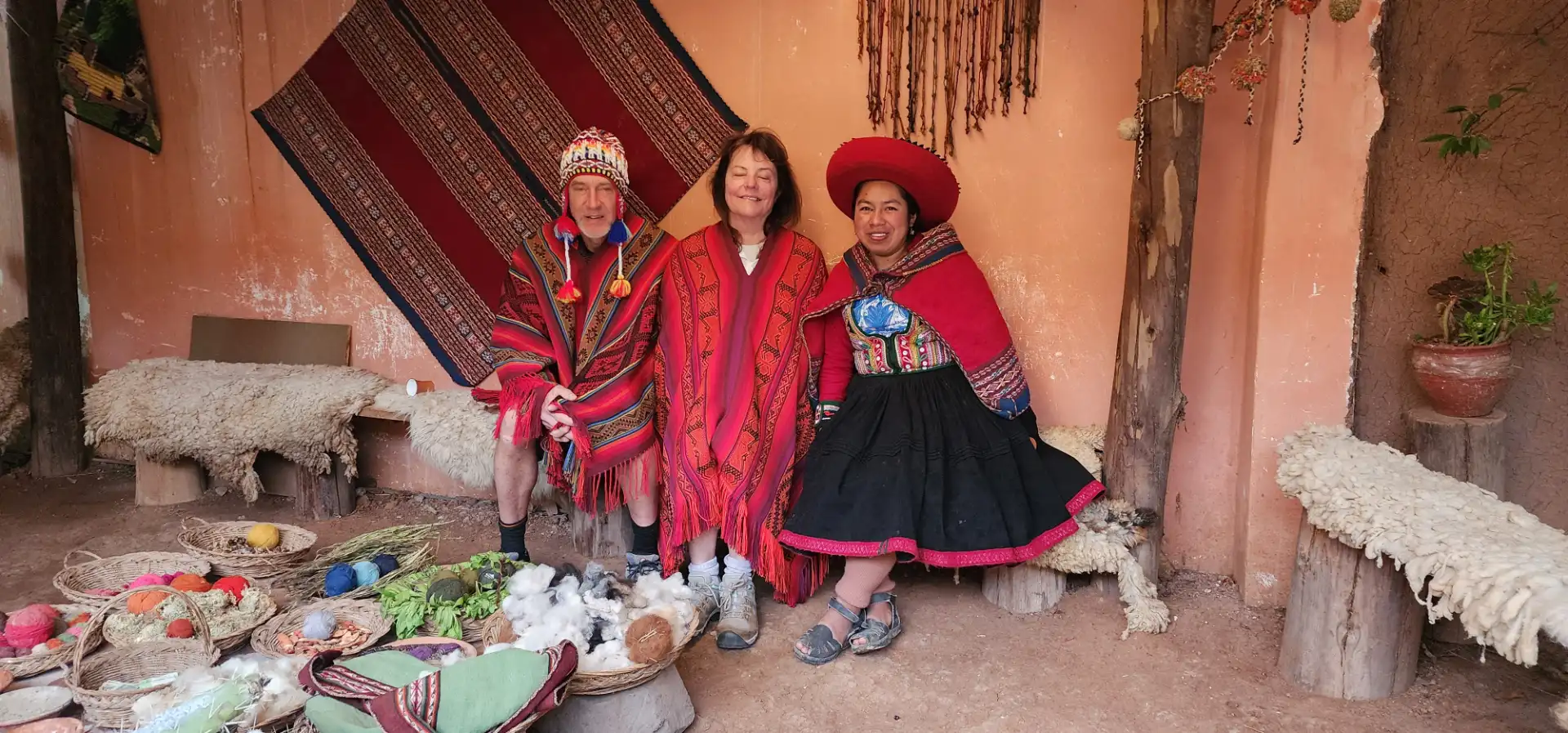
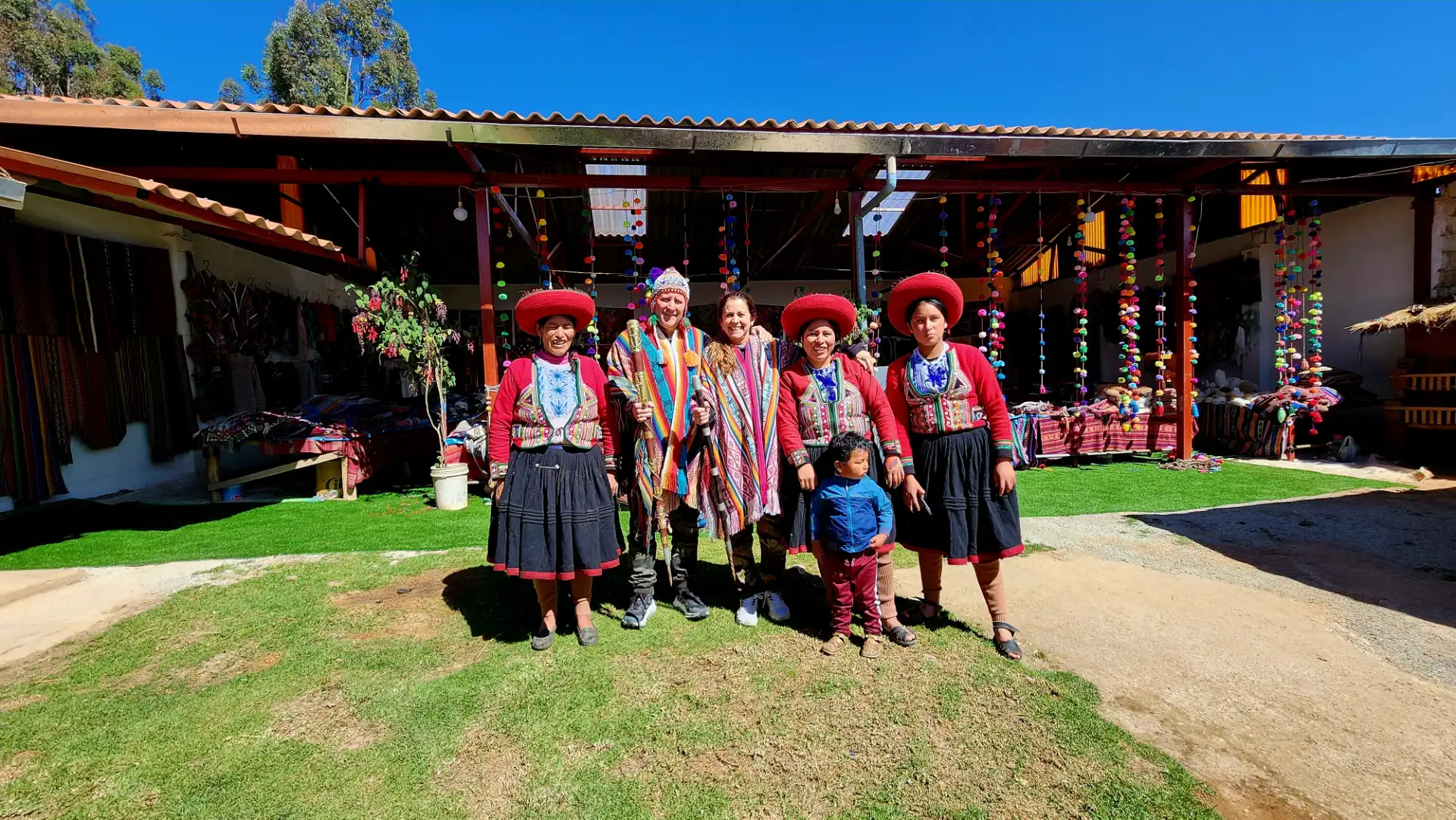
In Chinchero, weaving cooperatives show how wool is spun, dyed with plants and minerals, and woven on backstrap looms. Buying there means buying close to the source. The Sunday market also has a section where local families still barter produce. See our Chinchero guide.
Both places are on our Sacred Valley day tour.

What to buy
- Alpaca textiles: scarves, sweaters and blankets. Real baby alpaca is soft and warm; very cheap “alpaca” is often synthetic.
- Hand-woven textiles: table runners, belts and wall hangings with traditional patterns, especially from Chinchero.
- Ceramics and silver jewellery with Andean designs.
- Edible gifts: chocolate, coffee, quinoa and Andean salt from Maras.
- Useful souvenirs: knitted hats, gloves and ponchos for the cold Andean nights.
How to shop well
- Bargain gently at craft stalls, with a smile; prices at food stalls are usually fixed.
- Carry small notes and coins in soles: most stalls do not accept cards. Our money in Peru guide explains cash and ATMs.
- Buy from the makers when you can, at cooperatives and weaving centres, so more of the money stays with them.
- Watch your belongings in crowded markets; see our Cusco safety guide.
Frequently asked questions
For food and local life, San Pedro Market. For crafts and textiles, the Pisac market and the weaving centres of Chinchero in the Sacred Valley.
It runs every day, and it is biggest on Sunday, Tuesday and Thursday.
Rarely. Carry cash in soles, preferably small notes and coins.
Yes, gently, at craft stalls. Food prices are usually fixed.
Real alpaca, especially baby alpaca, is soft, light and warm, and costs more. Very cheap items are often synthetic blends.


