Waqrapukara: History and Legends of the Horned Fortress
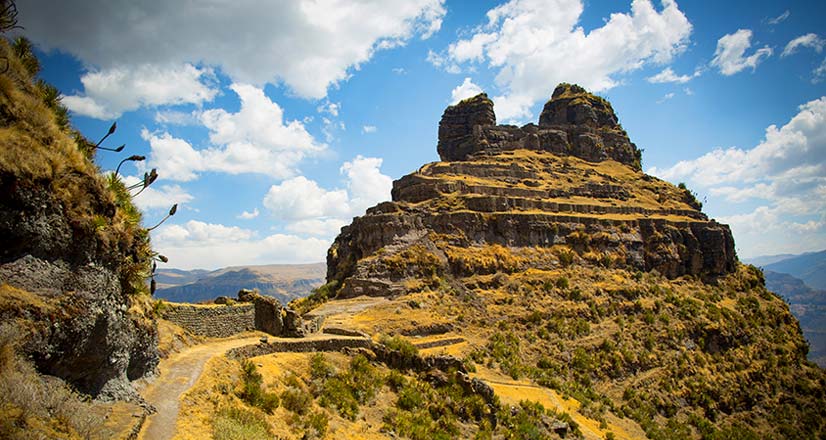
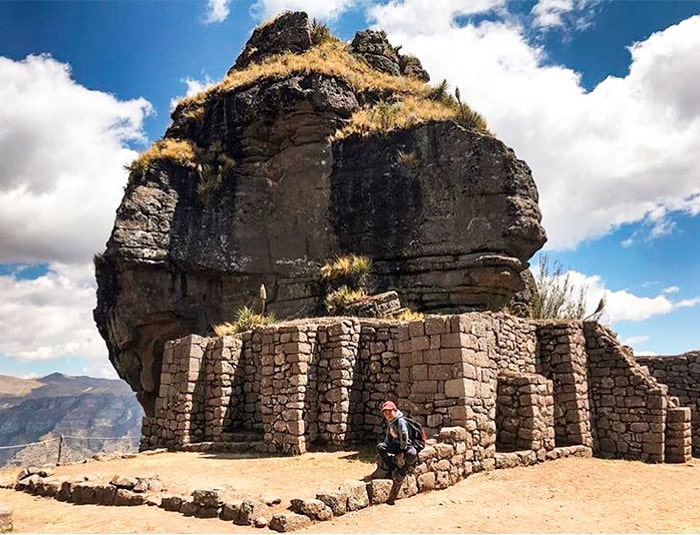
On a ridge above the Apurímac canyon, south of Cusco, two great horns of rock rise from the mountain, with fine Inca walls built against them. Waqrapukara — the “horned fortress” — is one of the most dramatic archaeological sites in the region, and one of the least visited. Here is what is known about it, what local tradition says, and how to get there.
A fortress with horns
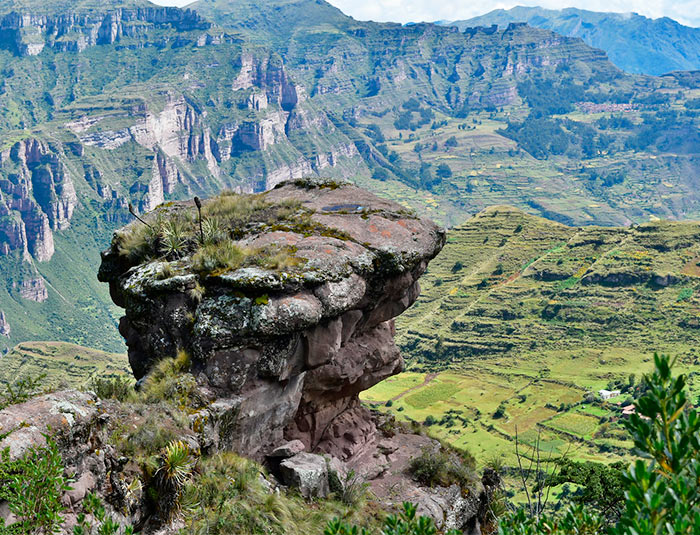
In Quechua, waqra means horn and pukara a fortress or fortified high place. The name describes the site perfectly: two rock pinnacles crown a narrow ridge, and around and beneath them the builders added terraces, stairways and walls of finely fitted stone. Below, the slopes fall away into the canyon of the Apurímac River, one of the deepest in Peru.
Who built it
Waqrapukara lies in the province of Acomayo, the land of the Qanchis, a people who lived south of Cusco before the Inca expansion. The site is believed to have begun as a Qanchis sanctuary and to have been enlarged by the Incas, who added the finest stonework. Despite the name, most archaeologists see it as a ceremonial site rather than a military fort: its position is spectacular but hard to defend in a long siege, and its architecture points to ritual use.
Hike to the horned fortress
Waqrapukara in a day from Cusco, with breakfast, box lunch, entrance, poles, guide and oxygen — from US $50 per person.
The beliefs around the horns
In the Andes, prominent peaks and rocks are often seen as apus, protective mountain spirits, and Waqrapukara is no exception. For the communities nearby, the twin horns are a sacred place where offerings were — and sometimes still are — made to the mountains and to Pachamama, the earth. Local stories link the site to the ancestors who lived here before the Incas, and to the idea of a sanctuary between the earth and the sky, high above the river.
Because so little was written about Waqrapukara in colonial times, much of its meaning remains uncertain. That mystery is part of its appeal: you will hear different interpretations from guides and villagers, and the place itself invites you to imagine its ceremonies.
The hike and the day
| Time | Step |
|---|---|
| 4:30 am | Pickup in Cusco and drive south, with breakfast in Cusipata |
| 8:00 am | Santa Lucía and the trailhead at Punta Carretera |
| 9:00 am | Hike of about 1.5 hours (2.5 km) to the fortress |
| 11:00 am | Guided visit and free time |
| 12:30 pm | Box lunch, then the walk back |
| 6:00 pm | Back in Cusco |
The hike is moderate: about 1.5 hours each way on a mountain path with some ups and downs, between 4,000 and 4,300 m. There are no shops or toilets at the site, so carry water and snacks. Spend two or three days acclimatizing in Cusco first.
Tips for the visit
- Best season: the dry months, from April to October, for firm paths and clear views.
- Layers: close to freezing at dawn, warm in the midday sun.
- Sun protection: SPF 50+, hat and sunglasses; the sun is intense at 4,300 m.
- Respect the site: do not climb on the walls or the rock horns.
- Other quiet places: see our best day trips from Cusco, including the Pallay Punchu mountain and the Q’eswachaka bridge.
Frequently asked questions
“Horned fortress” in Quechua: waqra means horn and pukara a fortress or fortified high place, after the two rock horns that crown the site.
It is believed to have been a sanctuary of the Qanchis people, later enlarged by the Incas.
Probably not mainly. Most researchers think it was a ceremonial site, despite its name.
About 1.5 hours and 2.5 km each way, at 4,000–4,300 m. The whole day from Cusco takes about 13 hours.
From US $50 per person in a shared group, or US $120 private, with breakfast, box lunch, entrance and guide.