Choquequirao trek in 4 days: complete day-by-day guide
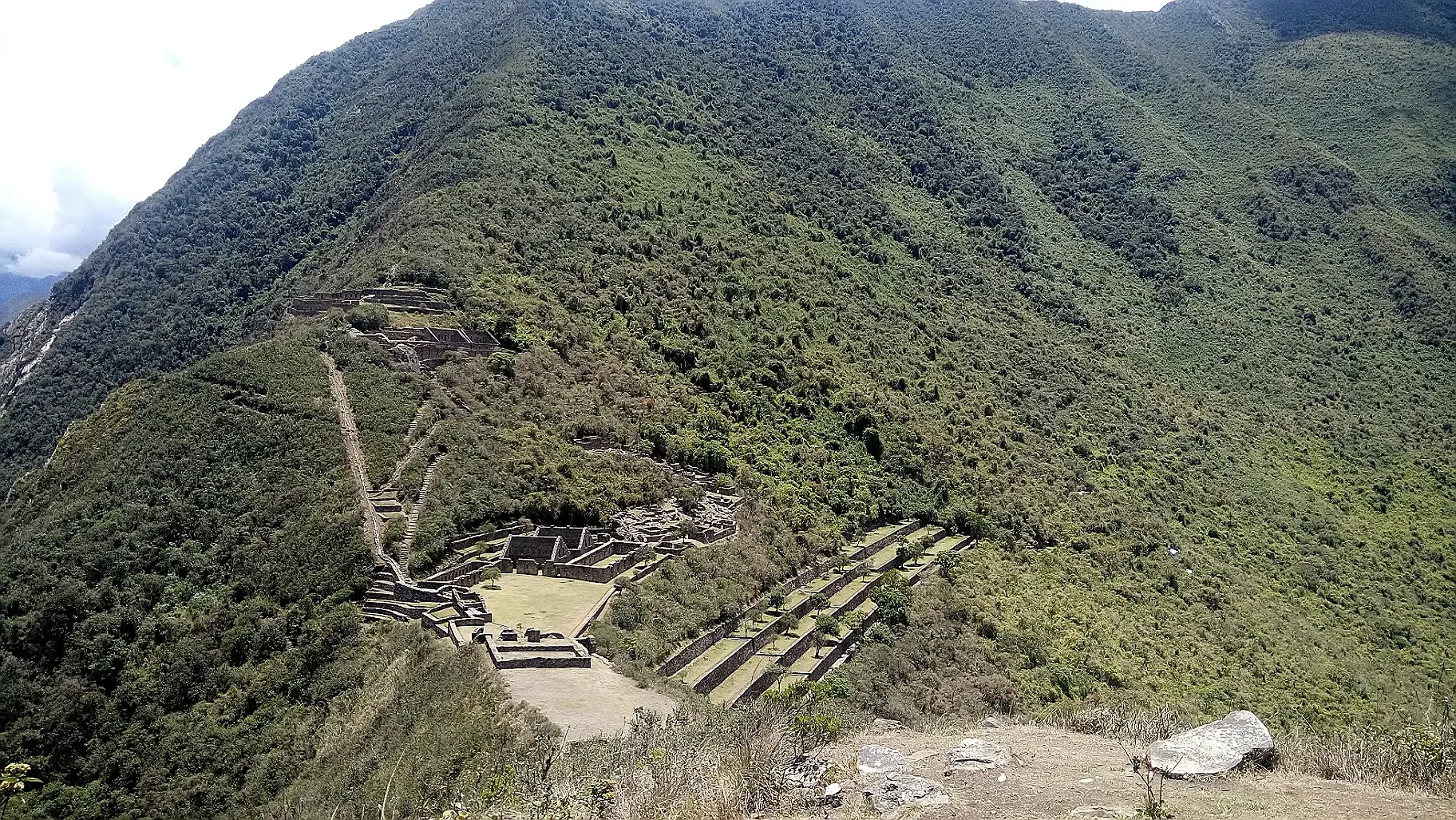
Choquequirao, the “cradle of gold”, is the great Inca city that can only be reached on foot. Hidden above the deep Apurímac Canyon, it receives a tiny fraction of Machu Picchu’s visitors, and much of it is still covered by forest. Getting there means a tough descent into the canyon and an even tougher climb out — and that is exactly what makes it special.
The trek at a glance
| Fact | Detail |
|---|---|
| Duration | 4 days, 3 nights camping |
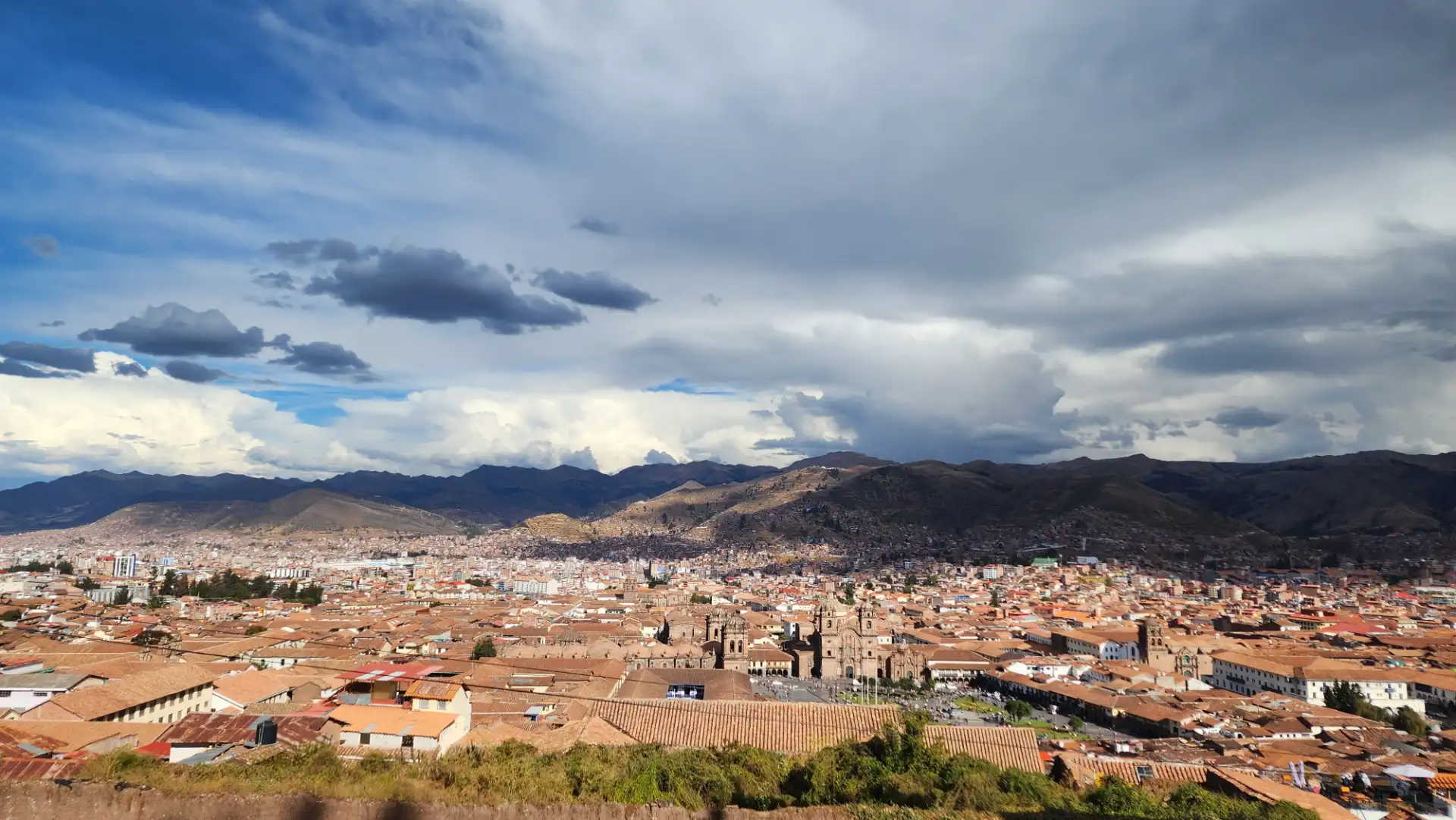
| Start and finish | Cachora (about 2,800 m), about 4 hours by road from Cusco |
| Altitude range | From about 1,800 m (Chikisca) to 3,033 m (Choquequirao) |
| Difficulty | Challenging: big descents and climbs in the heat of the canyon |
| Price with us | US $395 |
Day 1: Cachora to Chikisca
A 5:00 am transfer takes you to Cachora (about 2,800 m). A walk of 6–7 hours crosses highland and cloud forest to the Capulichayoc viewpoint, with your first sight of Choquequirao across the Apurímac Canyon, then descends steeply to camp at Chikisca (about 1,800 m). About 15 km.
Discover Choquequirao with us
Four days with guide, chef, mules, camping gear and Choquequirao entrance — US $395.
Day 2: the climb to Choquequirao
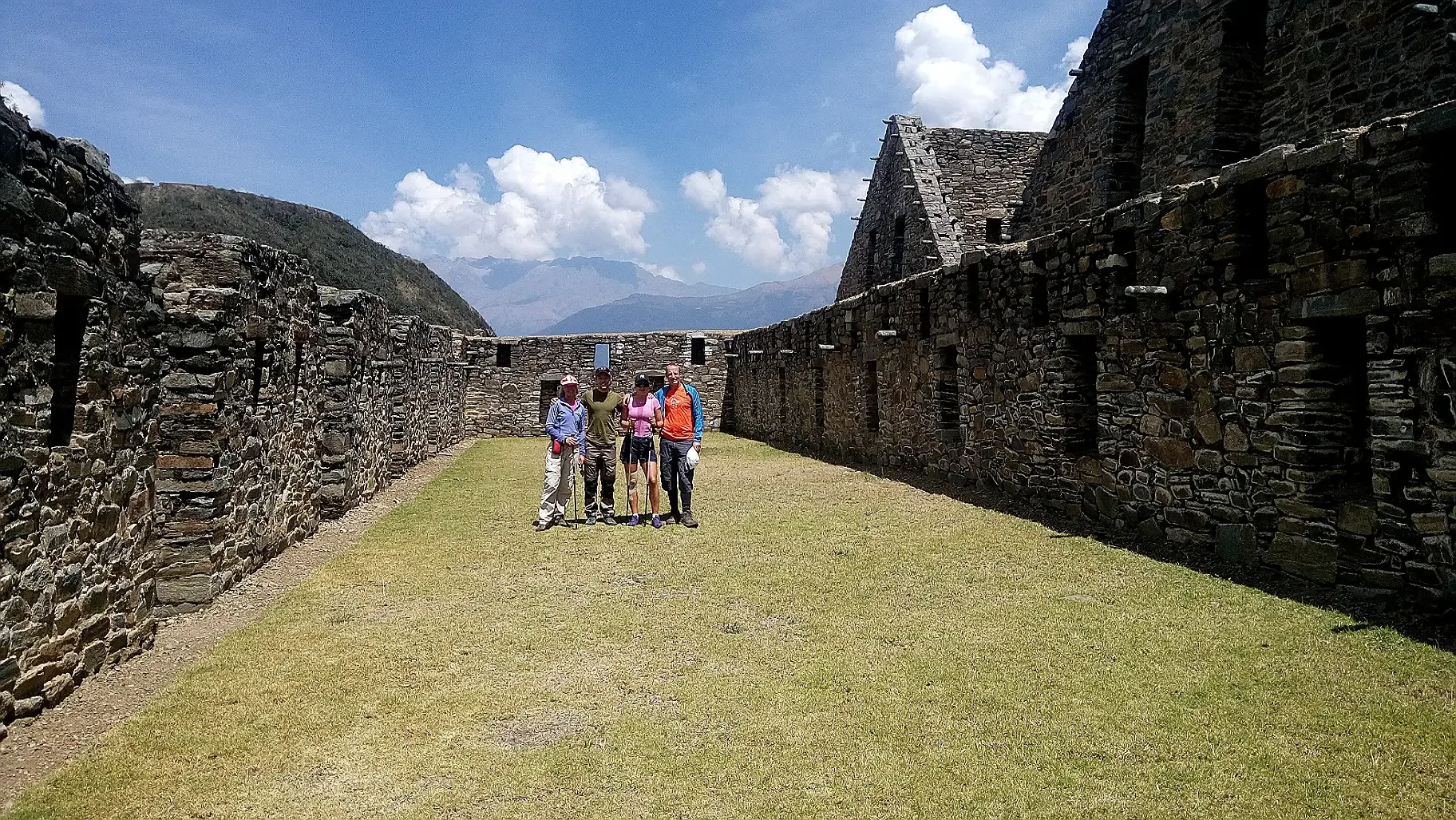
The hardest day: a climb of 4–5 hours up the other side of the canyon to Marampata (about 2,950 m), then on to Choquequirao (3,033 m) for a guided tour of its urban, agricultural and religious sectors — often with condors circling overhead. About 17 km.
Day 3: back into the canyon
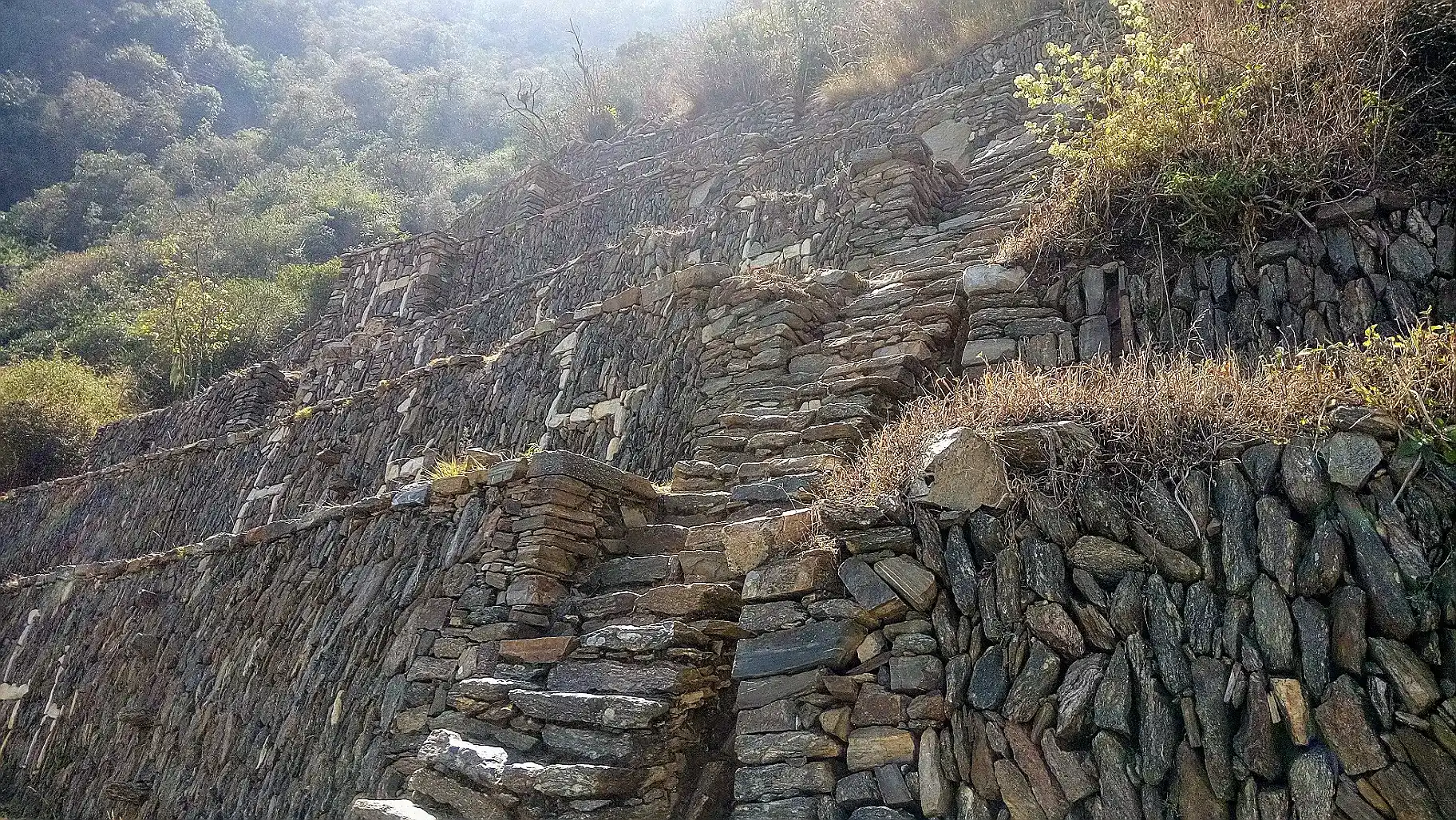
After sunrise over the ruins, you descend to Playa Rosalina, by the Apurímac River, for lunch, then climb back to camp at Chikisca. About 12 km.
Day 4: Chikisca to Cachora and Cusco
A final 5–7 hours of ups and downs, with lunch at Capulichayoc, brings you back to Cachora for the private drive to Cusco. About 15 km.
What is included
| Included | Not included |
|---|---|
| Hotel pickup and private transport to Cachora and back | Sleeping bag (rent in Cusco) |
| Bilingual professional guide | Trekking poles (rent in Cusco) |
| Choquequirao entrance ticket | Tips and personal expenses |
| Chef, full camping equipment, mules and muleteers | — |
| Meals as detailed (vegetarian on request), oxygen and first-aid kit | — |
How to prepare
- Fitness: this is one of the hardest treks near Cusco because of the long descents and climbs; train on hills and stairs.
- Heat and sun: the canyon bottom is hot; start early, carry water and use sun protection and insect repellent.
- Season: the dry season (May to September) is best; the rainy season makes the trail muddy and slippery.
- More time? The 5-day version adds a full day at the site, and the 8-day trek continues to Machu Picchu.
Frequently asked questions
Challenging. The altitude is moderate, but you descend about 1,000 m into the Apurímac Canyon and climb more than 1,200 m to the site, often in the heat.
It is an Inca city of a similar style and grandeur, often called Machu Picchu’s sister, but it is only reachable on foot and receives very few visitors.
In the village of Cachora, about four hours by road from Cusco.
No trekking permit is needed; the Choquequirao entrance ticket is included in our tour.
The dry season, from May to September, when the trail is firm and the views clearer.