Cusco and Lake Titicaca in 8 days: from Machu Picchu to the Uros islands
This package links the two great highlights of southern Peru: Cusco with Machu Picchu, and Lake Titicaca. After five days around Cusco you travel overland to Puno along one of the most scenic routes in the Andes, then sail to the Uros floating islands and Taquile — with guides, tickets and transport arranged throughout.
The package at a glance
| Fact | Detail |
|---|---|
| Duration | 8 days, 7 nights |
| Highlights | Machu Picchu, Sacred Valley, Humantay, Rainbow Mountain, Andean route and Lake Titicaca |
| Highest point | Rainbow Mountain, 5,030 m |
| Accommodation | Apartment in central Cusco (twin share) and lodging in Puno |
| Group | Shared group of 2 to 14 travellers |
| Price | US $950 per person; 5% less for under-18s |
Why travel overland to Titicaca
Instead of flying, you cross the high plateau by road on day 6, with stops that turn the journey into a sightseeing day: Andahuaylillas, the Temple of Wiracocha at Raqchi, the La Raya pass at 4,335 m and Pucará. By then you are well acclimatised, which matters because Lake Titicaca lies at 3,812 m, higher than Cusco.
The trip ends in Puno, so you fly out from Juliaca, about an hour away, or continue by bus. If you would rather end in Cusco, the 8-day Cusco Complete lasts just as long without the transfer to Puno; with one more day, the 9-day version adds an ATV ride.
Cusco, Machu Picchu and Lake Titicaca in 8 days
Machu Picchu, Sacred Valley, Humantay, Rainbow Mountain, the route to Puno, Uros and Taquile, lodging and transfers — US $950 per person.
Day 1: arrival and Cusco city tour
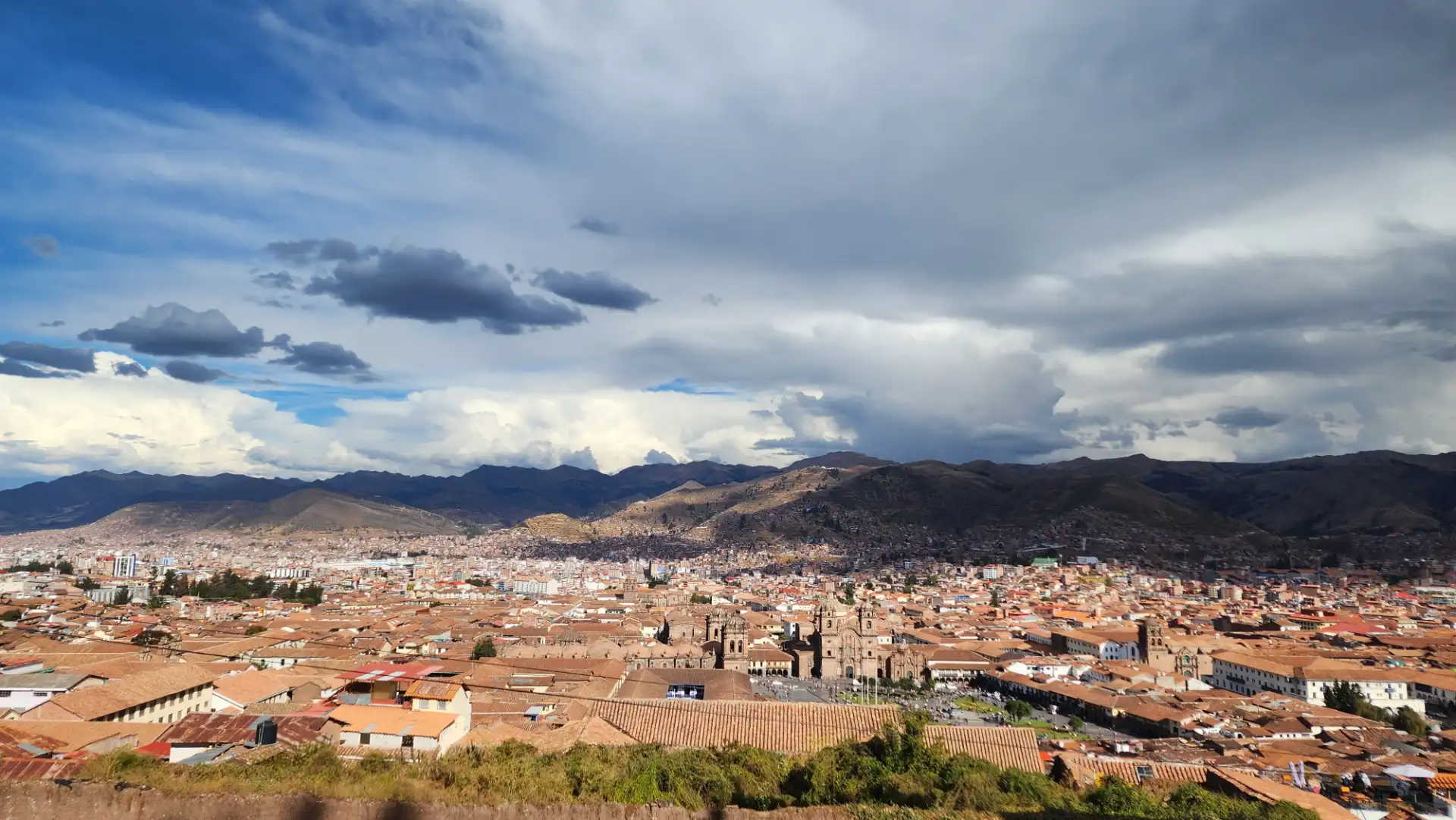
We meet you at the airport or bus terminal and take you to your apartment in central Cusco (3,400 m), with a welcome coca or muña tea and a full briefing on your trip. Then your guide takes you to Qorikancha, the Temple of the Sun, whose Inca walls still carry a colonial convent, and up to the hills above the city: the giant zigzag walls of Sacsayhuamán, the carved rock shrine of Qenqo, the checkpoint of Puca Pucara and the water shrine of Tambomachay.
Included: guide, transport, Cusco Tourist Ticket (BTC) and Qorikancha entrance. Meals: not included on this day.
Day 2: the Sacred Valley of the Incas
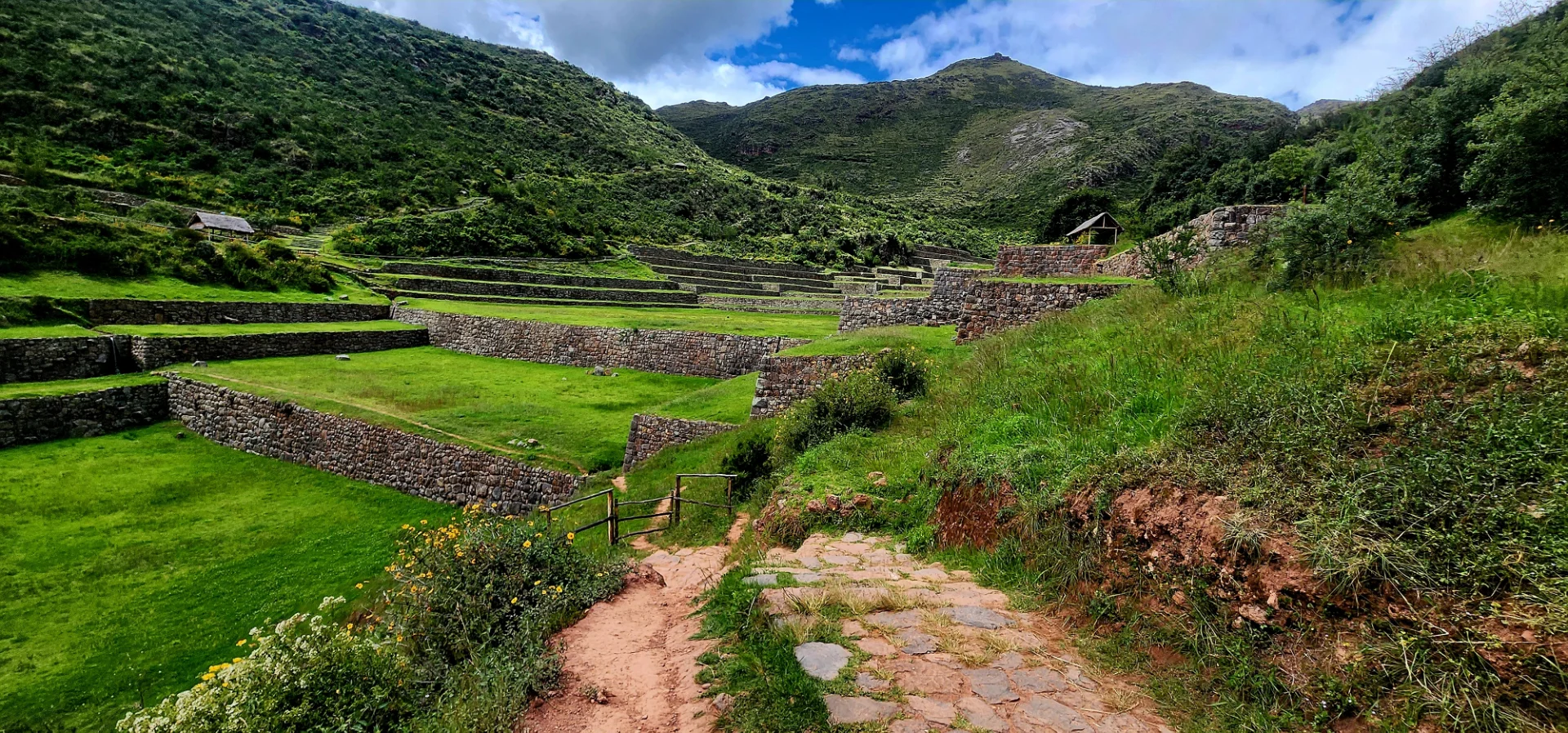
A full day in the valley below Cusco. You start in Chinchero, a weaving village with Inca walls and a colonial church, then see the circular terraces of Moray and the Maras salt pans, still worked by local families. After a buffet lunch in Urubamba come the temple terraces of Ollantaytambo and, to finish, the hillside ruins and craft market of Pisac. The valley lies lower than Cusco, which makes it a gentle day for your body.
Included: transport, guide, entrances and BTC. Meals: breakfast and buffet lunch.
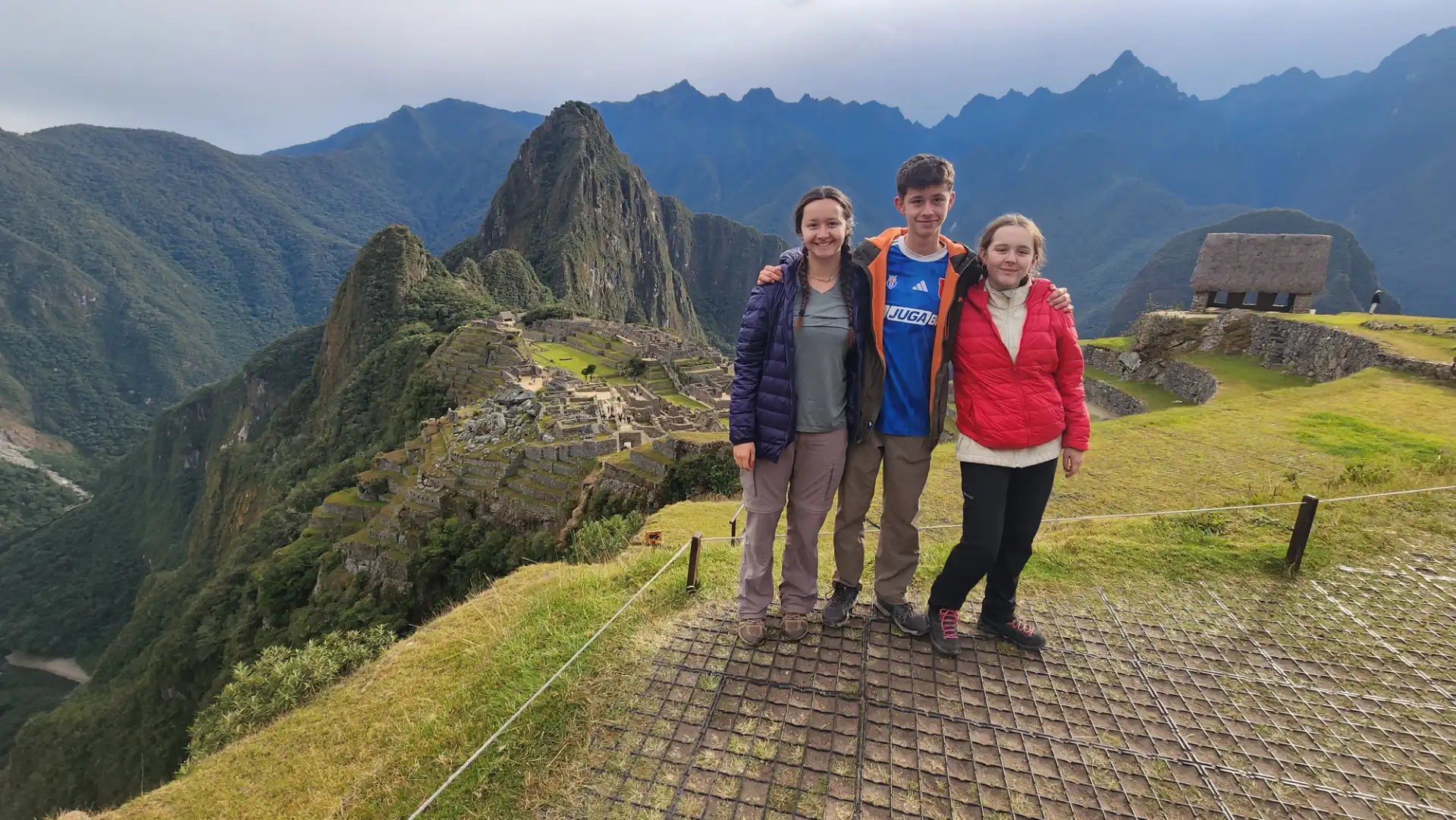
Day 3: Machu Picchu
The big day starts at about 4:30 am. You drive through Chinchero and Urubamba to Ollantaytambo, ride the tourist train along the Urubamba River to Aguas Calientes and take the bus up to Machu Picchu (2,430 m) for a guided tour of its temples, plazas and terraces. After lunch in Aguas Calientes, the train and a road transfer bring you back to Cusco in the evening.
Included: train, buses, Machu Picchu entrance, guide, breakfast and lunch. Bring your original passport: it must match your ticket, so we ask for passport details when you book, together with your choice of Machu Picchu circuit.
Day 4: Humantay Lagoon
An early start at about 4:30 am takes you via Mollepata to Soraypampa (3,900 m). From there a steady climb of about an hour and a half leads to Humantay Lagoon (about 4,200 m), a turquoise lake beneath the glacier of the same name, where you can join an optional Andean offering ceremony. A buffet lunch in Mollepata comes before the drive back to Cusco.
Included: transport, guide, breakfast, buffet lunch, trekking poles and oxygen. Difficulty: moderate to challenging. More in our Humantay Lake guide.
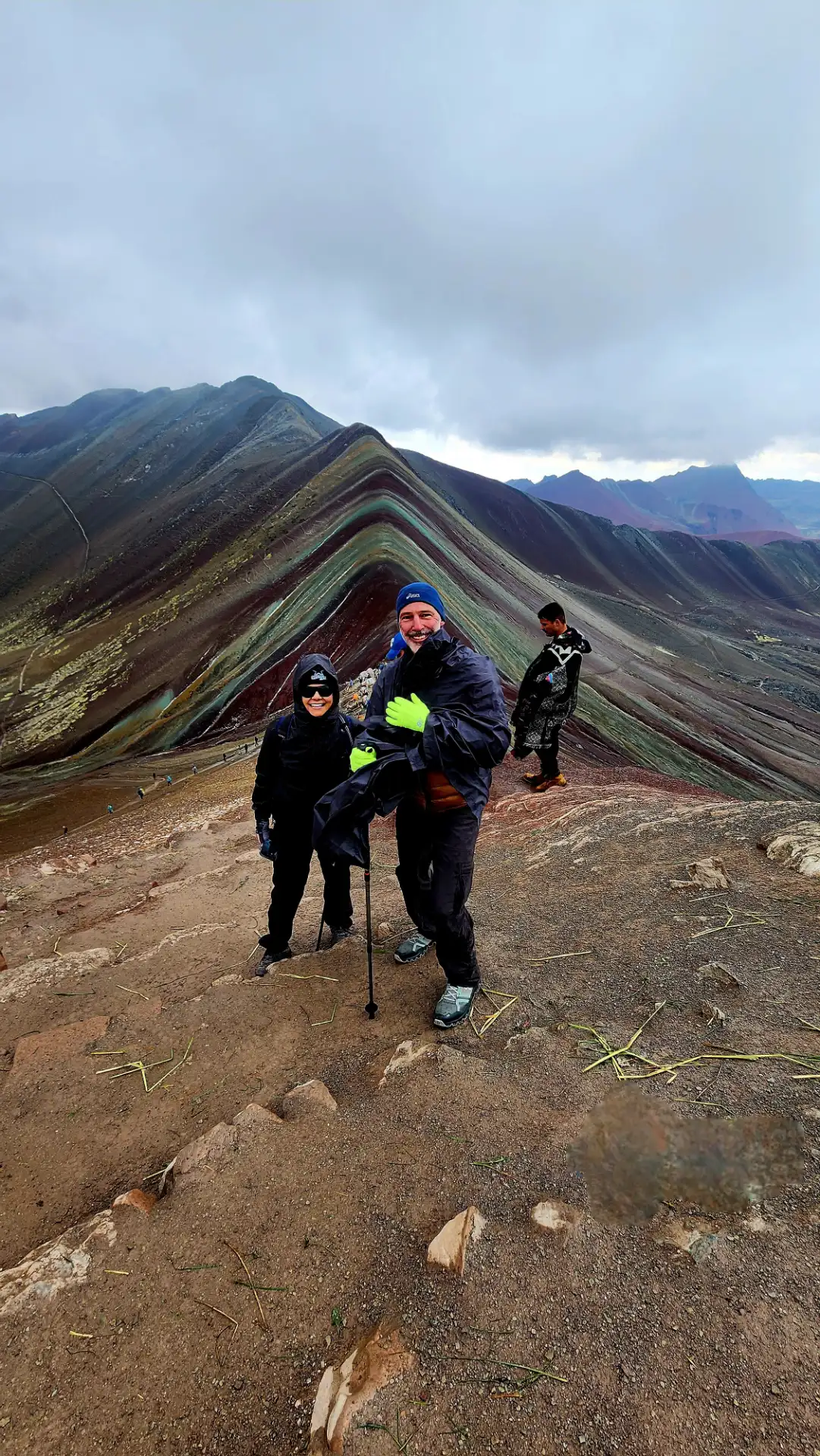
Day 5: Rainbow Mountain (Vinicunca)
You leave at about 4:00 am for Cusipata and the trailhead (about 4,400 m). A gradual climb of around three hours brings you to the Rainbow Mountain viewpoint at 5,030 m, with its bands of coloured minerals and the Red Valley beyond. After the descent you have a buffet lunch in Cusipata and are back in Cusco in the late afternoon.
Included: transport, guide, breakfast, buffet lunch, trekking poles and oxygen. It is the highest point of the trip, which is why it comes after several days of acclimatisation. More in our Rainbow Mountain guide.
Day 6: from Cusco to Puno along the Andean route
A travel day with stops along the way: the church of Andahuaylillas, the Temple of Wiracocha at Raqchi, the high pass of La Raya (4,335 m) and the pre-Inca site of Pucará, with a buffet lunch in Sicuani. You reach Puno at around 5:00 pm and we take you to your lodging.
Included: transport, guide, entrances, breakfast, buffet lunch and lodging in Puno.
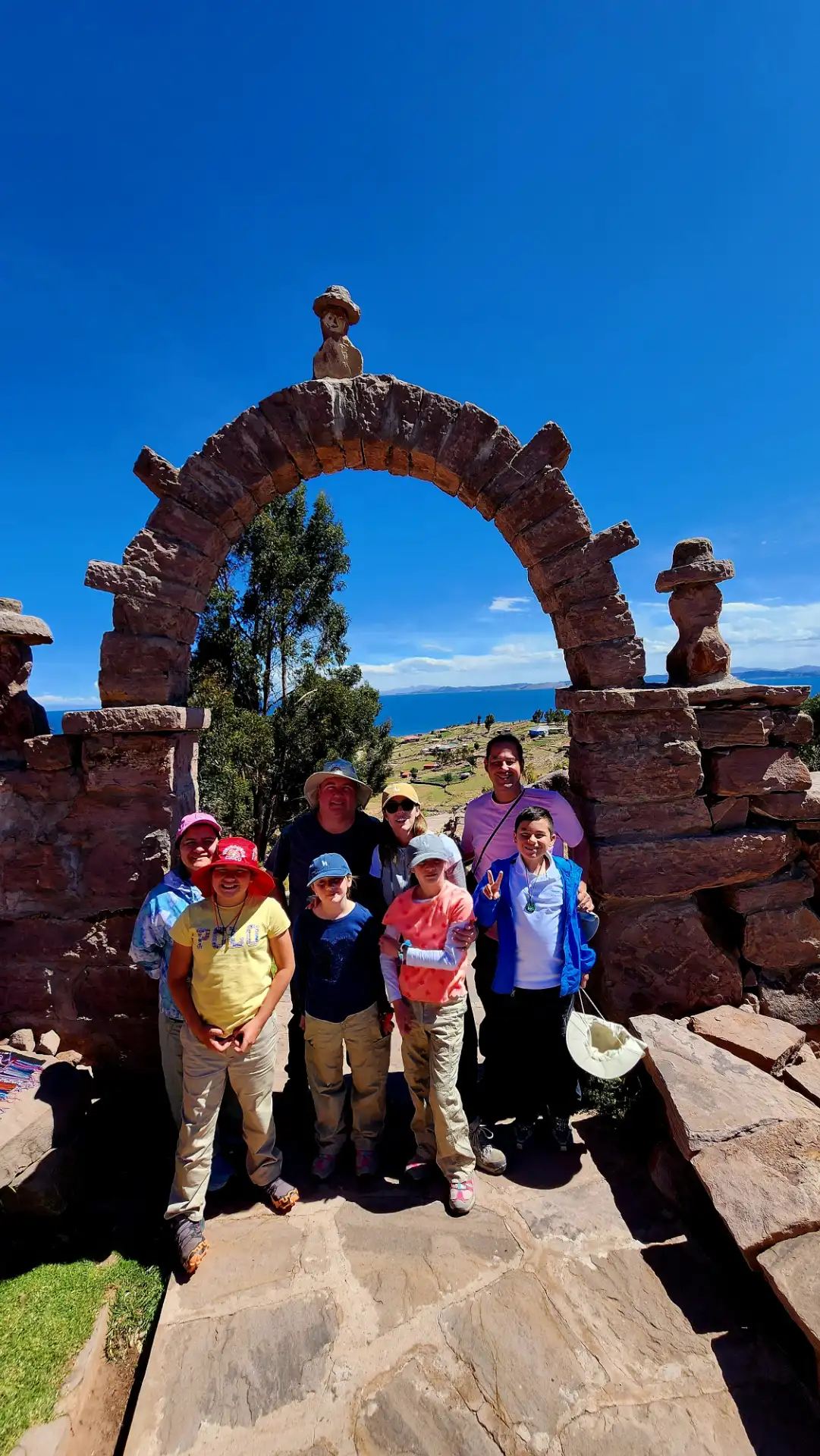
Day 7: Lake Titicaca, Uros and Taquile
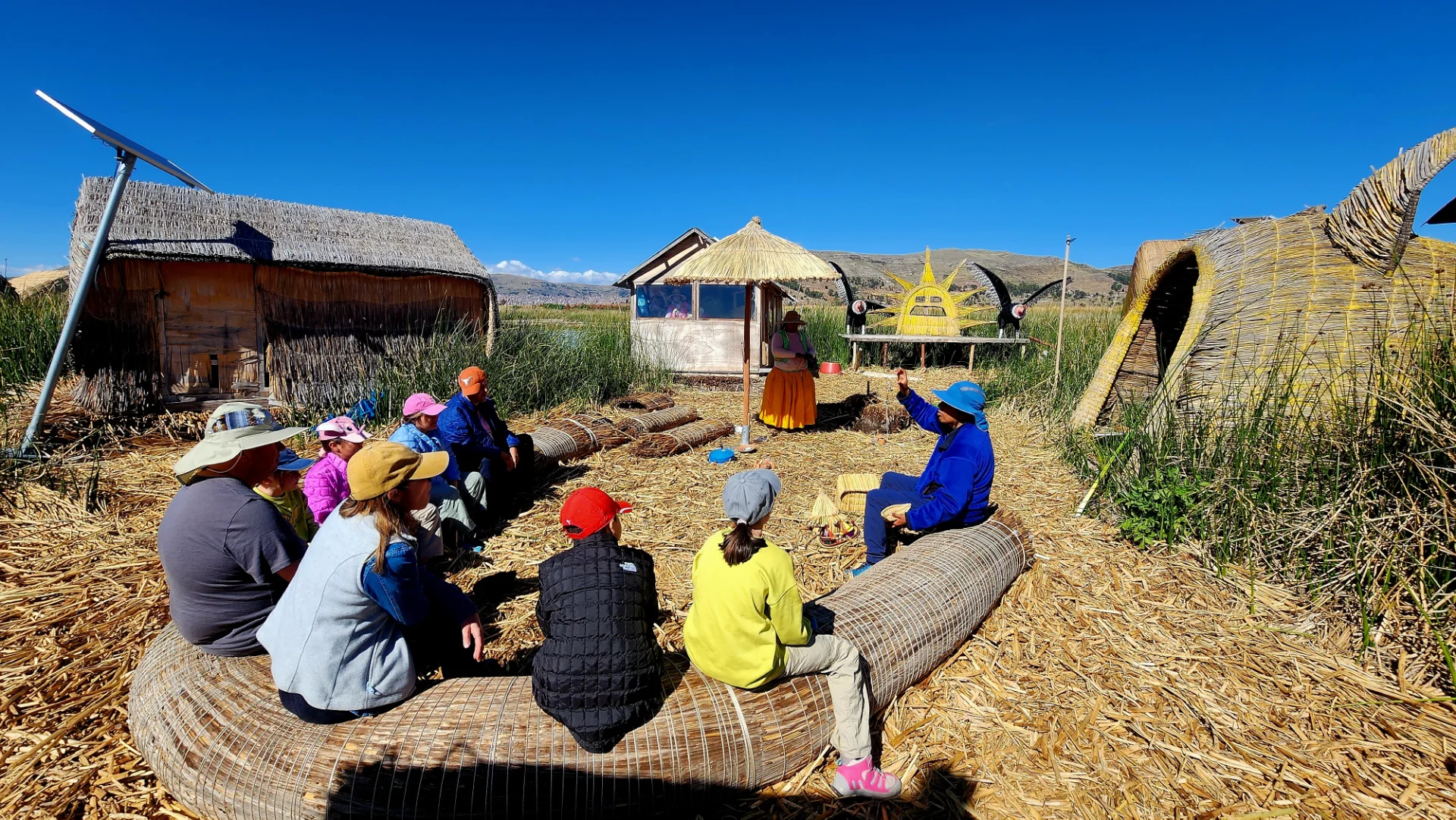
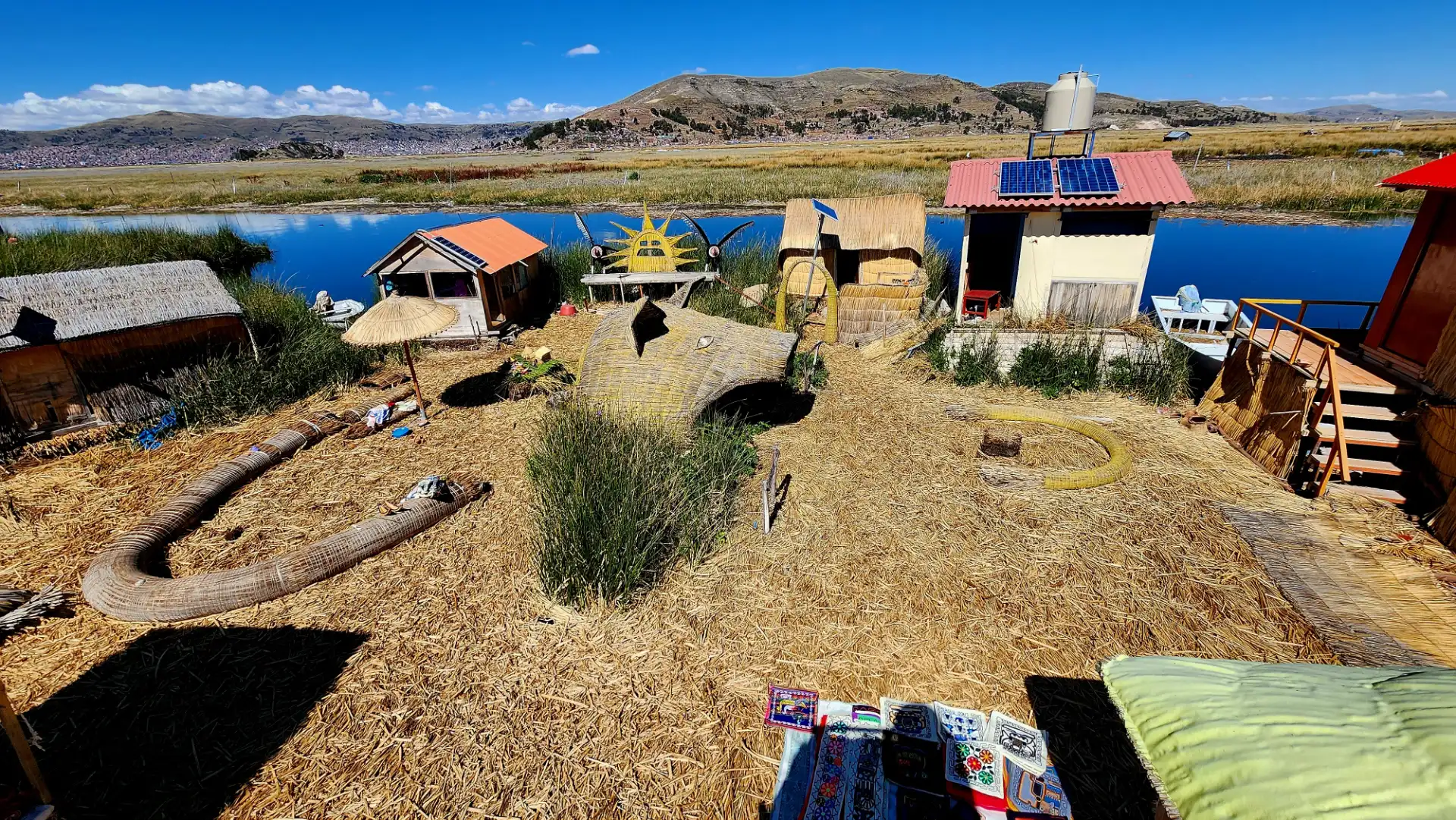
A boat takes you across Lake Titicaca (3,812 m) to the Uros floating islands, built from totora reeds by the families who live on them, and on to Taquile, an island whose textile art is recognised by UNESCO. A gentle walk opens wide views over the lake, and lunch is a traditional meal in a local home before the boat back to Puno. More in our Lake Titicaca guide.
Included: transfers, motorboat, guide, entrances and lunch.
Day 8: departure
A final transfer takes you to the airport or bus terminal for your onward journey.
What is included
| Included | Not included |
|---|---|
| Arrival and departure transfers, welcome tea and trip briefing | Dinners |
| Accommodation in a shared, fully equipped apartment in central Cusco | Private apartment (optional upgrade) |
| Professional guide on every excursion | Travel insurance |
| Ground transport, tourist train and Machu Picchu buses | Tips |
| Machu Picchu entrance, Cusco Tourist Ticket (BTC) and site entrances | Personal expenses and optional activities |
| Breakfasts and the lunches listed day by day | — |
| Lodging in Puno, boat and entrances on Lake Titicaca | — |
Tips for Puno and Lake Titicaca
- It is colder by the lake. Nights in Puno are chilly all year, so bring a warm jacket, hat and gloves.
- The sun on the water is intense. Wear sunscreen, sunglasses and a hat on the boat.
- Carry small notes and coins for crafts on the Uros islands and in Taquile.
- Plan your exit. Book your onward flight from Juliaca or your bus from Puno for day 8; we take you to the airport or terminal.
- Want more time on the lake? Our Lake Titicaca 2-day guide shows what a longer visit looks like.
Which Cusco package is right for you?
How this trip compares with our Cusco-only packages:
| Package | Days | What it adds | Price |
|---|---|---|---|
| Cusco Express | 3 days | City tour and Machu Picchu | US $490 |
| Cusco Essential | 4 days | + Sacred Valley | US $530 |
| Cusco Discovery | 5 days | + Rainbow Mountain | US $595 |
| Cusco Explorer | 6 days | + Humantay Lagoon | US $690 |
| Cusco Highlights | 7 days | + ATV ride to Moray and Maras | US $860 |
| Cusco Complete | 8 days | + South Valley | US $890 |
| Cusco & Lake Titicaca | 8 days | Cusco highlights + Puno and Lake Titicaca | US $950 |
| Cusco & Lake Titicaca | 9 days | The same + ATV ride | US $990 |
Frequently asked questions
By road on day 6: a full-day journey with guided stops at Andahuaylillas, Raqchi, La Raya and Pucará, arriving in Puno at around 5:00 pm.
3,812 m, about 400 m higher than Cusco. You reach it after several days of acclimatisation.
US $950 per person in a shared group, with 5% off for under-18s and an automatic discount for groups of 8 or more.
Yes. Lodging in Puno is included, as is the shared apartment in central Cusco.
In Puno, with a transfer to the airport or bus terminal on day 8.