Lake Titicaca travel guide: Puno, the Uros, Taquile and Amantani
At 3,812 m, Lake Titicaca is the highest navigable lake in the world and the cradle of Andean legend: according to myth, the first Inca rose from its waters. Today it is a place of floating reed islands, island communities with centuries-old textile traditions and vast blue horizons — and the perfect second stop after Cusco.
Lake Titicaca in brief
| Fact | Detail |
|---|---|
| Altitude | 3,812 m, about 400 m higher than Cusco |
| Countries | Shared by Peru and Bolivia |
| Base on the Peruvian side | Puno |
| Main islands to visit | Uros (floating islands), Taquile and Amantani |
| Tours with us | Day tour from US $70; 2 days with homestay from US $95 |
How to get to Puno from Cusco
By road, Cusco and Puno are a full day apart. The most rewarding way is the tourist route with stops at the church of Andahuaylillas, the Temple of Wiracocha at Raqchi, the La Raya pass (4,335 m) and Pucará — included in our Cusco and Titicaca packages. By air, the nearest airport is Juliaca, about an hour from Puno.
Coming from Cusco also helps with the altitude: after a few days at 3,400 m, the jump to 3,812 m is much easier than flying in directly from the coast.
Explore Lake Titicaca with us
Uros and Taquile in a day from US $70, or two days with an Amantani homestay from US $95.
The islands: Uros, Taquile and Amantani
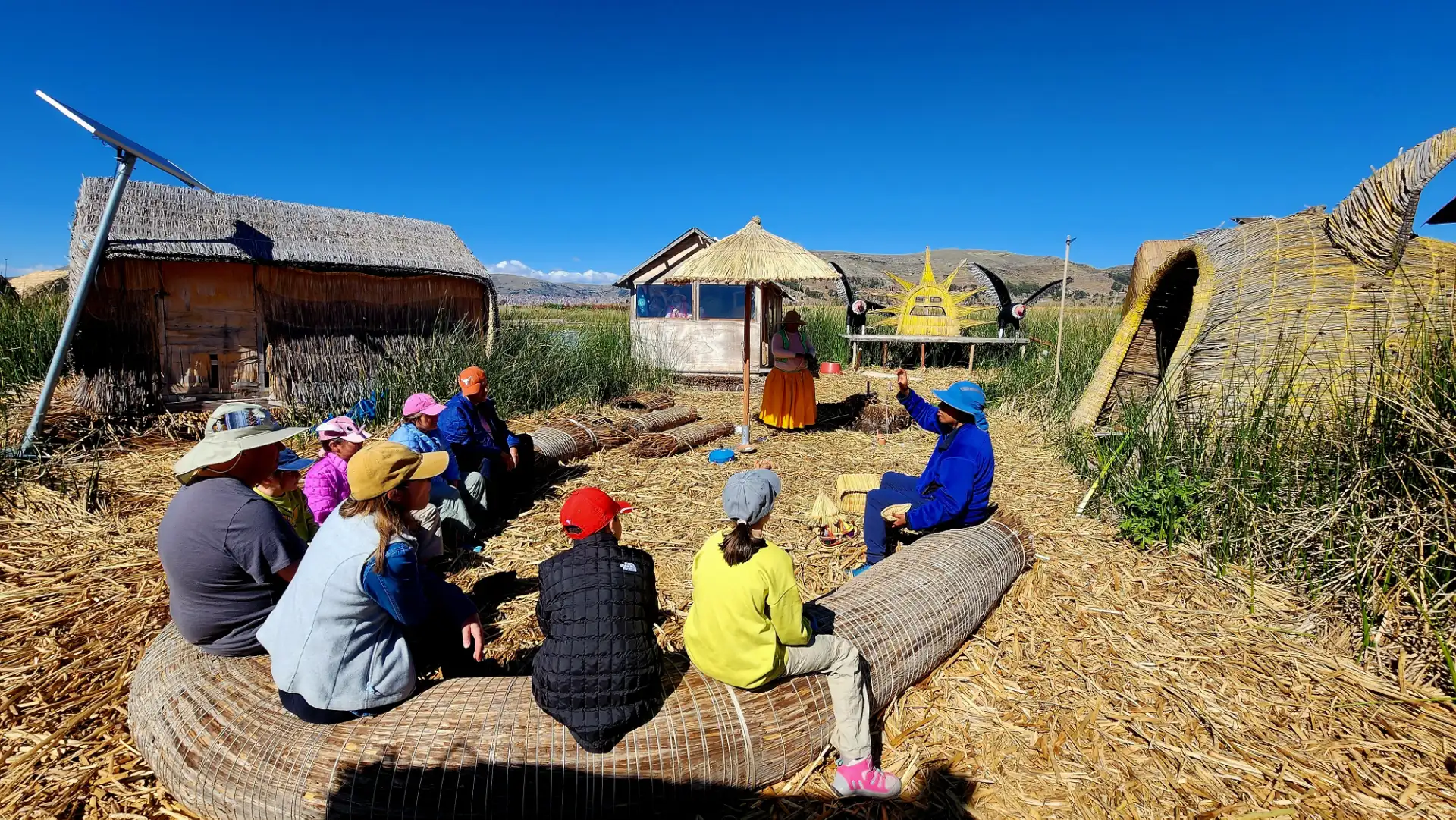
The Uros live on islands they build themselves from layers of totora reed, which they keep adding as the lower layers rot. A visit shows how the islands, houses and boats are made, and you can take an optional ride on a reed boat.
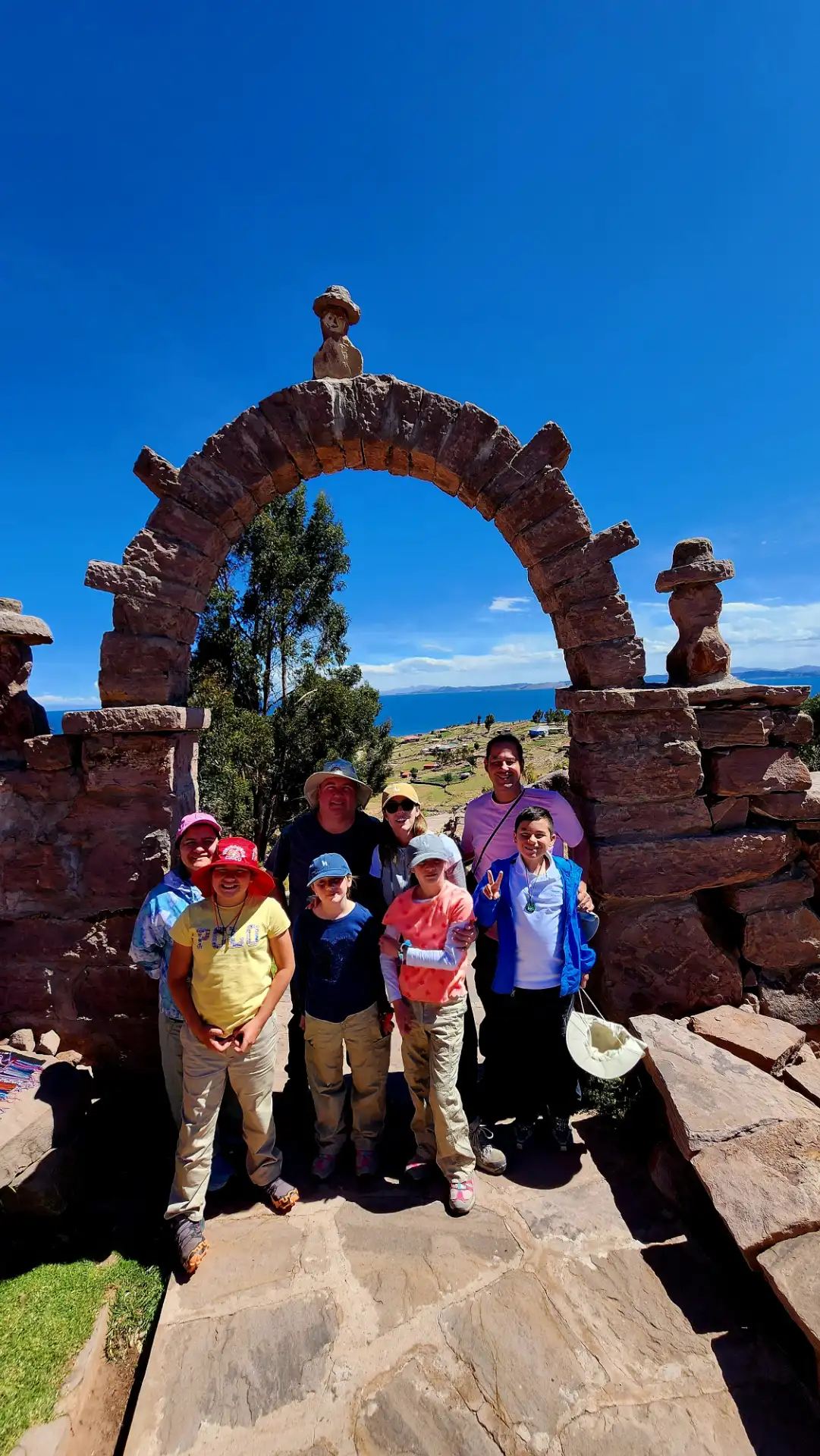
Taquile is a hilly island famous for its textile art, recognised by UNESCO, in which men knit and women weave. A path climbs to the main square with wide views over the lake.
Amantani, larger and quieter, is where families host travellers overnight. At sunset, visitors walk up to the hilltop temples of Pachatata and Pachamama.
One day or two?
| Option | What you see | Best for |
|---|---|---|
| Day tour, from US $70 | Uros and Taquile, lunch with a local family | Short stays and tight schedules |
| 2 days, from US $95 | Uros, a night with a family on Amantani, then Taquile | A deeper cultural experience |
Read the details in our day tour guide and 2-day guide.
Puno itself
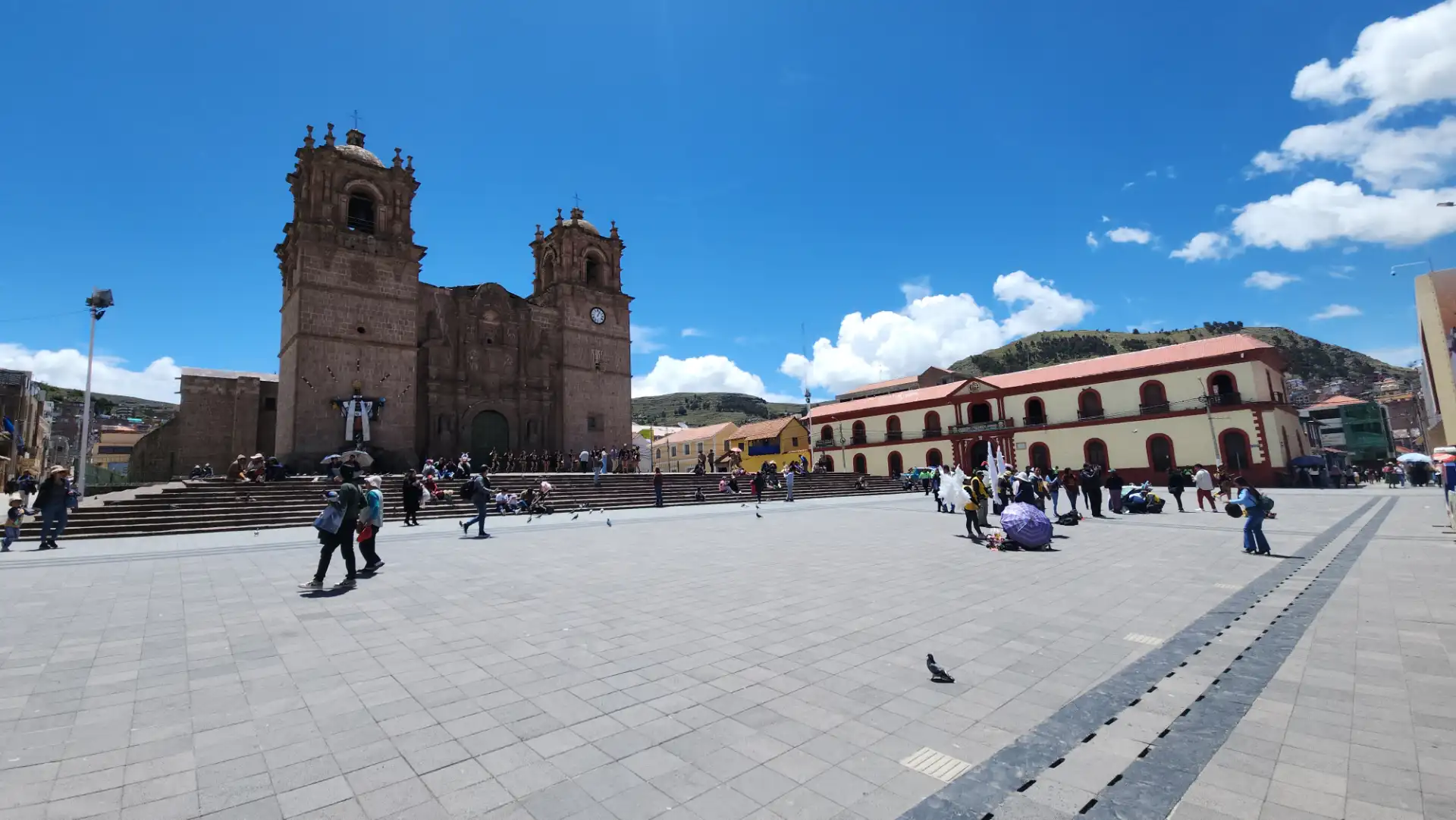
Puno is a lively lakeside city with a stone cathedral on its Plaza de Armas and a strong folk tradition. Its great festival is the Virgen de la Candelaria in February, with thousands of dancers in elaborate costumes, recognised by UNESCO as Intangible Cultural Heritage. Hotels fill up during the festival, so book early if you plan to go then.
Best time to visit
The dry season, May to October, brings sunny days and calm water but cold nights, often below freezing. The rainy season, December to March, is greener and quieter, with afternoon showers. Whatever the month, the sun on the lake is intense, and temperatures drop sharply once it sets.
Tips for Lake Titicaca
- Pack warm: a down jacket, hat and gloves for the evenings, plus sunscreen, sunglasses and a hat for the boat.
- Take it slowly on arrival: Puno is higher than Cusco. Our altitude guide applies here too.
- Carry small notes and coins for crafts and the optional reed-boat ride.
- Respect island life: ask before photographing people, and buy crafts directly from the families.
Frequently asked questions
3,812 m above sea level, which makes it the highest navigable lake in the world and about 400 m higher than Cusco.
By road to Puno in a full day, ideally on the tourist route with stops, or by plane to Juliaca, about an hour from Puno.
The Uros floating islands and Taquile in a day; add Amantani with an overnight homestay if you have two days.
One day covers the Uros and Taquile. Two days add a night with a local family on Amantani, which many travellers find the highlight.
May to October for sunny days, though nights are very cold. February is lively because of the Candelaria festival in Puno.