The History of Huchuy Qosqo, “Little Cusco”
On a natural terrace high above the Sacred Valley stands a royal Inca estate that no road has ever reached. Huchuy Qosqo — “Little Cusco” in Quechua — belonged to the Inca Wiracocha, and it is linked to one of the decisive moments in Inca history: the war against the Chankas, which brought Pachacuti to power. Here is its story, and how to see it today.
A name and a place
Huchuy means “small” in Quechua, and Qosqo is the Quechua name of Cusco. The name reflects the quality of the buildings, which reminded people of the capital. Spanish chroniclers of the 16th century knew the estate by another name, Caquia Xaquixaguana.
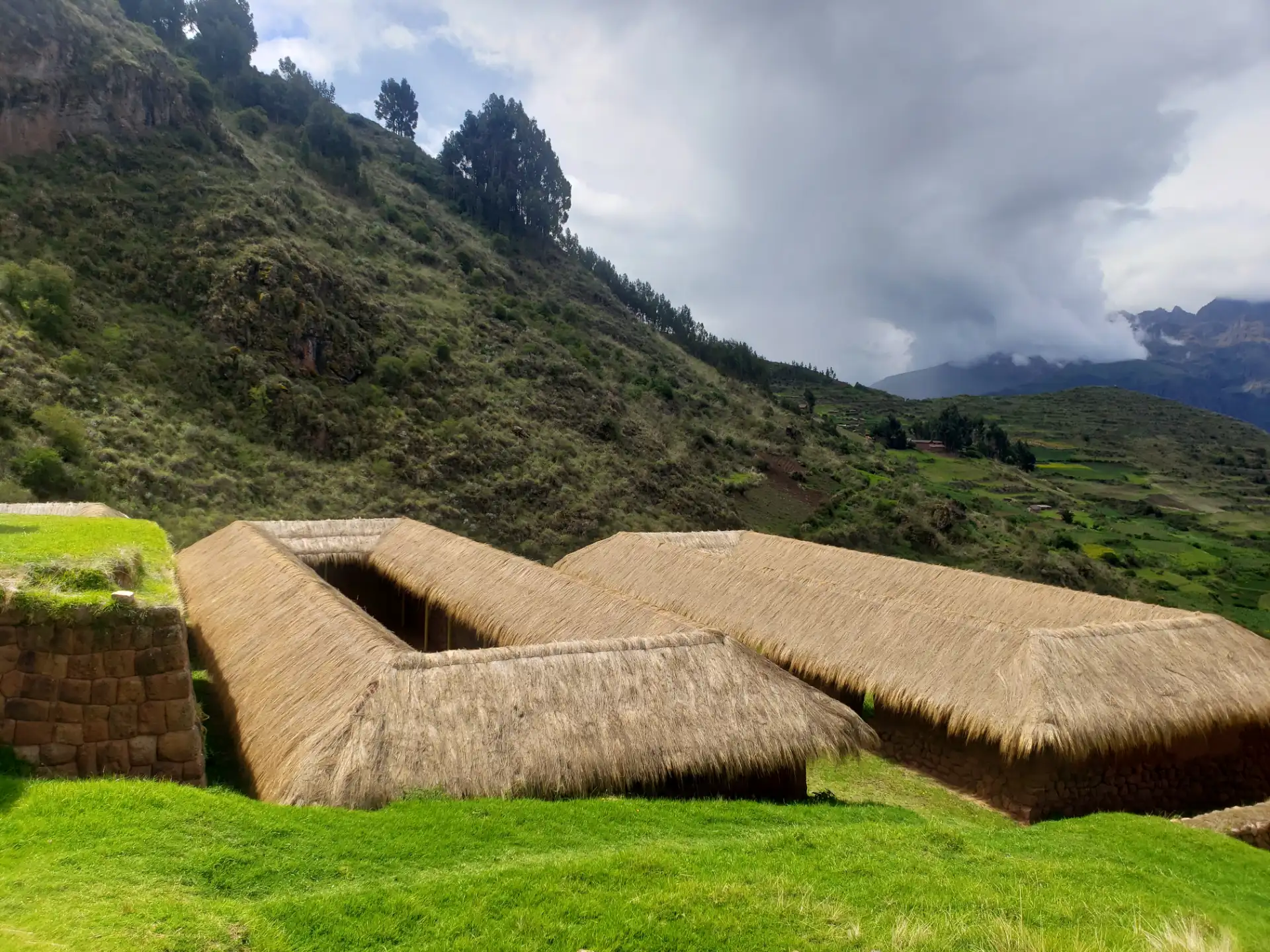
The site lies at about 3,688 m, on a broad shelf of land some 750 m above the village of Lamay and the Vilcanota River. From there the view sweeps over the valley and the snow peaks of the Urubamba range — a setting chosen to impress.
The estate of the Inca Wiracocha
Wiracocha was the eighth ruler in the Inca dynastic list, and Huchuy Qosqo was his country estate. Like later royal estates, it combined several roles: a palace for the ruler and his family, an administrative and storage centre, and productive farmland worked on terraces. Machu Picchu, built for Pachacuti, and the estates of the Sacred Valley belong to the same tradition, as our guide to the Inca sites of Cusco explains.
Walk to Little Cusco
A full-day hike over the Pucajasa pass and along original Inca trail to the estate of Wiracocha, with guide, transport and entrance.
The Chanka war and the rise of Pachacuti
According to the colonial chronicles, when the Chankas, a powerful people from the west, marched on Cusco, the elderly Wiracocha withdrew to this estate with his heir, leaving the city to its fate. One of his sons, Cusi Yupanqui, stayed to defend Cusco and defeated the invaders. He then took power under the name Pachacuti and began the expansion that turned a regional kingdom into an empire stretching along the Andes.
Historians debate the details of this story, which comes from accounts written after the Spanish conquest. But it explains why Huchuy Qosqo is remembered both as a place of royal leisure and as the refuge of a ruler who lost his throne.
What survives today
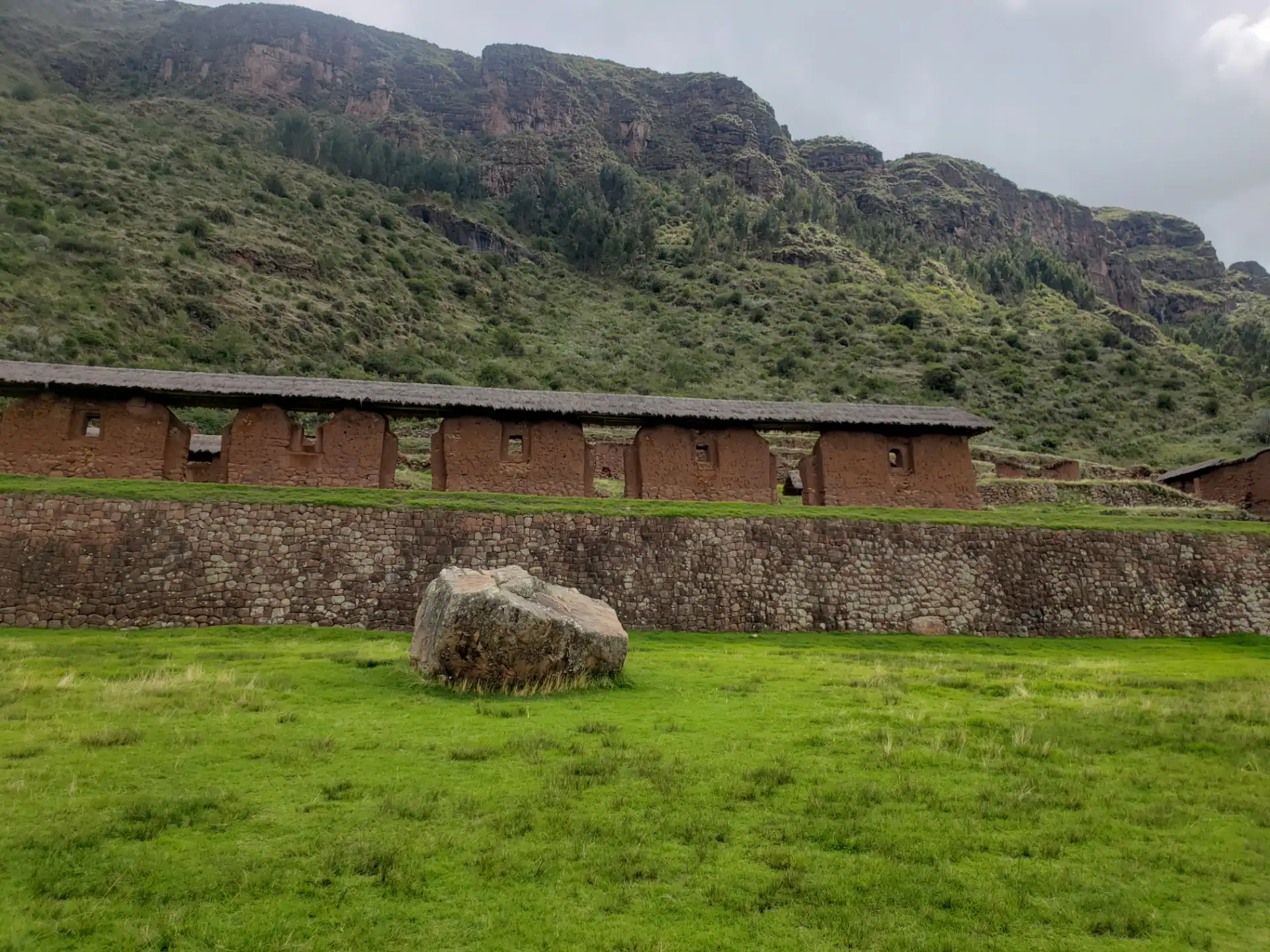
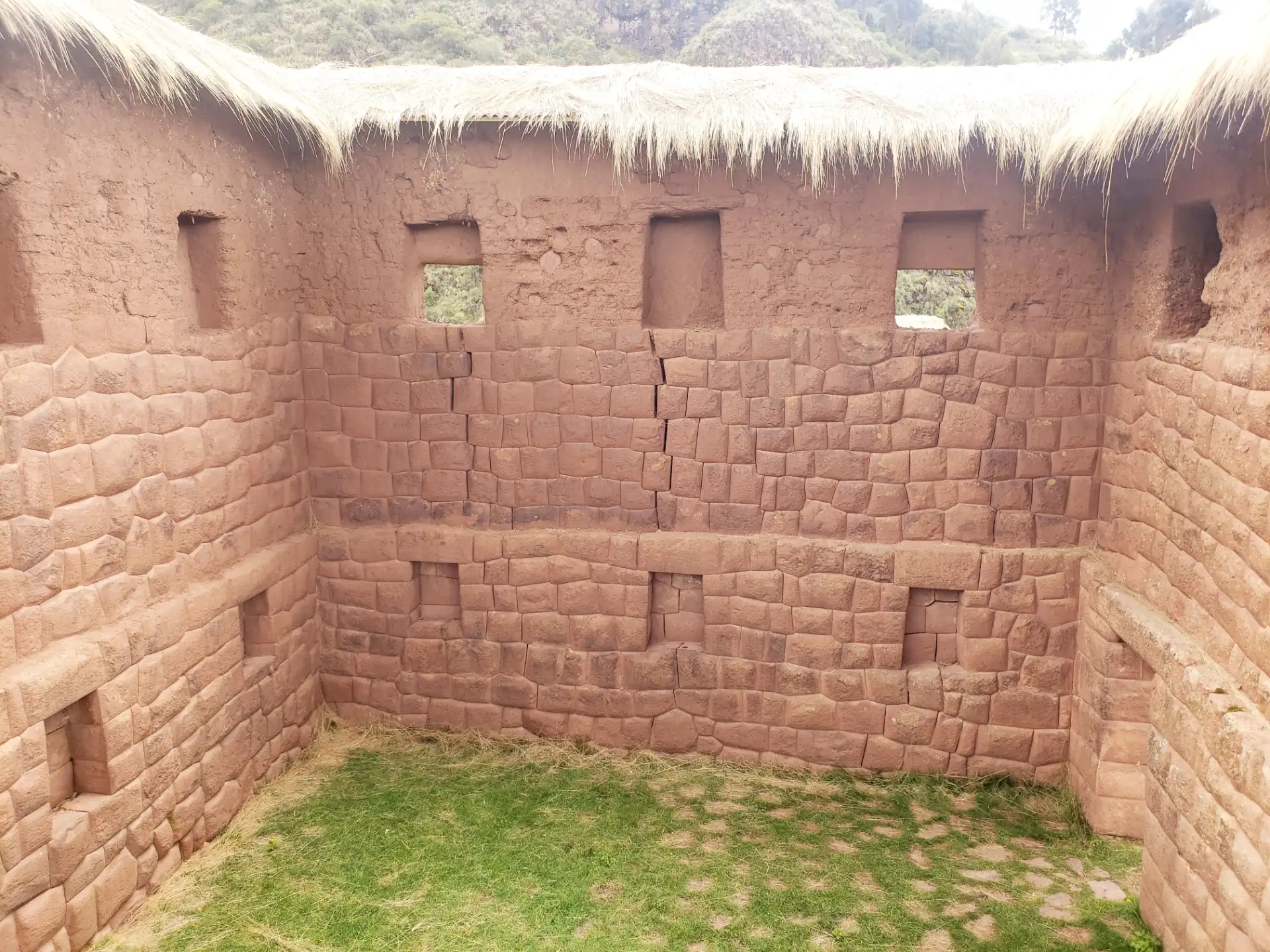
- The great hall (kallanka): a long building of about 40 metres, used for gatherings and to house people, one of the most impressive of its kind in the region.
- Stone and adobe: many walls have fine stone foundations with upper sections of adobe (sun-dried mud brick), a combination that rarely survives elsewhere.
- Trapezoidal niches and doorways, typical of Inca palace architecture.
- Terraces and canals: agricultural terraces and an irrigation system that brought water to the estate.
- Restored buildings: some structures have been given new thatched roofs, which help you imagine the estate in use.
Inca roads to Little Cusco
The estate was connected to Cusco by Inca roads, and parts of them are still walked today. One route climbs from Tambomachay, just above Cusco, over high passes and down through a narrow ravine; another comes from the Chinchero side over the Pucajasa pass. Both arrive on foot, which is why the site has kept its peaceful, isolated character.
How to visit Huchuy Qosqo
There is no road to the site, so every visit is a hike. You have two options with us:
- In one day: the Huchuy Qosqo day trek crosses the Pucajasa pass (4,393 m) and descends to Lamay, about 8 hours in total.
- On the way to Machu Picchu: the 3-day Huchuy Qosqo to Machu Picchu trek follows the Inca road from Tambomachay, camps one night and continues by train to the citadel.
Both need a couple of days of acclimatization in Cusco first, and the site entrance is included.
Frequently asked questions
“Little Cusco” in Quechua: huchuy means small and Qosqo is the Quechua name of Cusco.
It was the royal estate of the Inca Wiracocha, the eighth ruler in the Inca dynastic list.
According to the chronicles, an attack on Cusco by the Chankas. Wiracocha withdrew to his estate, while his son Pachacuti defended the city and then became Inca.
No. The site can only be reached on foot, on a day hike or as part of a multi-day trek.
Yes, if you enjoy hiking: it combines fine Inca architecture, wide views of the Sacred Valley and very few visitors.