Q’eswachaka: the Last Inca Rope Bridge
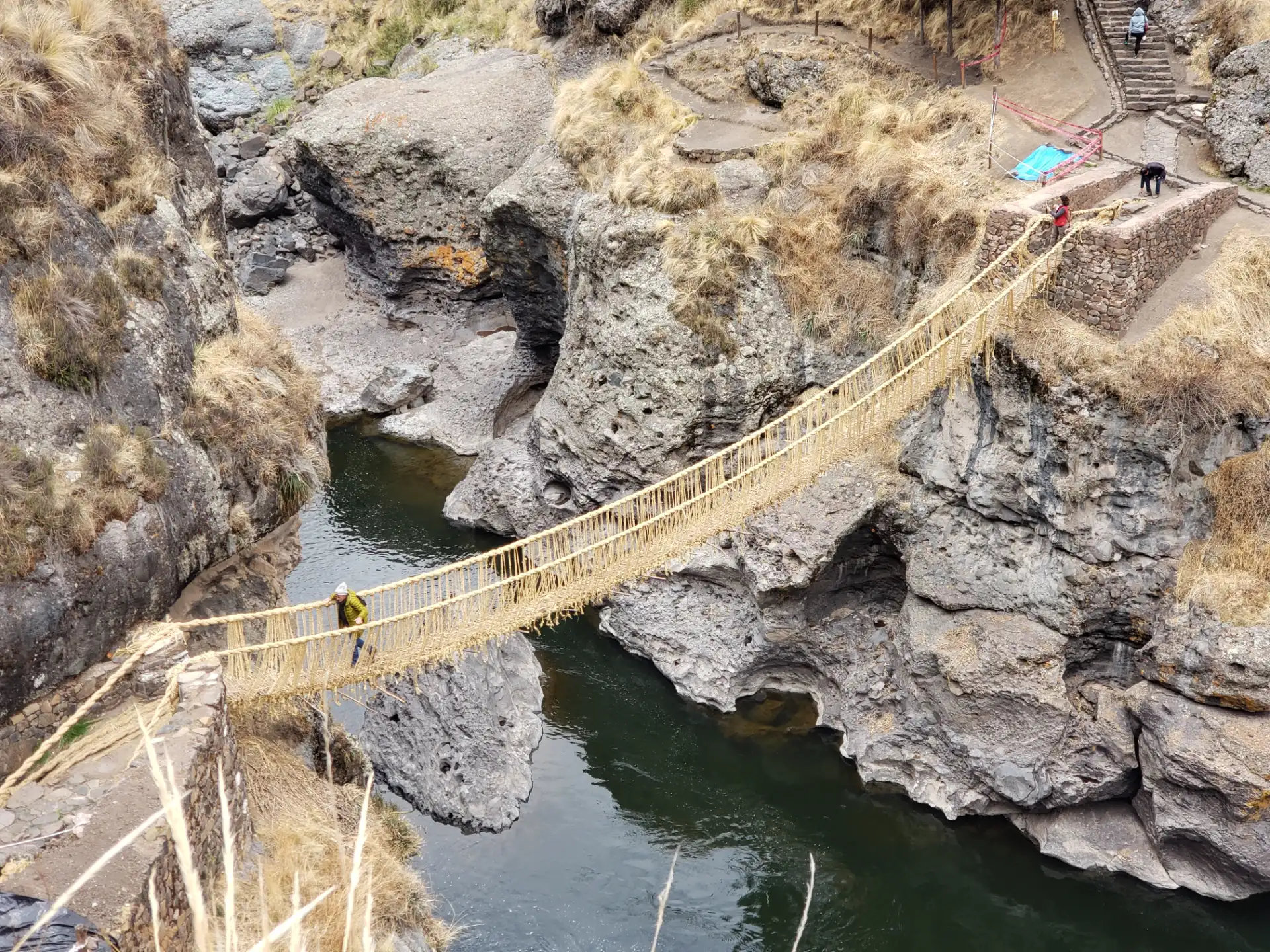
Over a gorge of the Apurímac River, south of Cusco, hangs a bridge made entirely of grass. Every June the communities around it take it down and weave a new one by hand, as their ancestors did when it was part of the Inca road. Q’eswachaka is the last Inca rope bridge still in use, and you can walk across it.
A bridge from the Inca road network
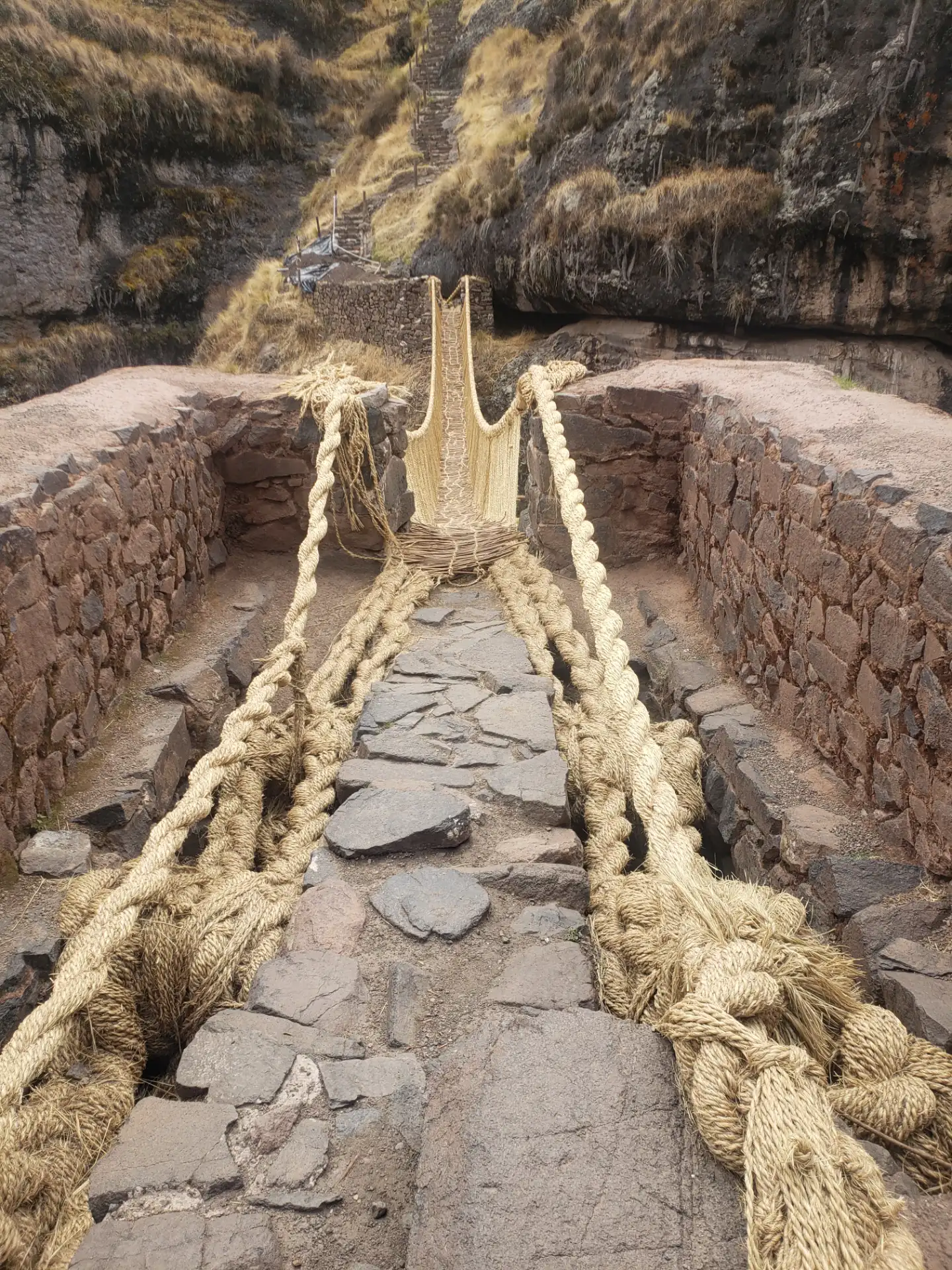
The Inca road system, the Qhapaq Ñan, crossed the deep valleys of the Andes on suspension bridges made of plant fibre. The Spanish chroniclers were amazed by them, and most disappeared after the conquest. Q’eswachaka survived because the local communities never stopped renewing it. It spans about 28 metres over the river, and its cables, deck and handrails are all braided from q’oya, a tough highland grass. In 2013 UNESCO recognised the knowledge and rituals of its renewal as Intangible Cultural Heritage.
The renewal every June
Each June, the Quechua communities of the Quehue district gather for several days of communal work (minka). Families arrive with ropes of twisted grass, which are braided into thick cables. A ritual specialist makes offerings to the mountain spirits and to Pachamama before the work begins. The old bridge is cut loose and falls into the river, the new cables are stretched across the gorge, and builders working over the void weave the deck and handrails. The end of the work is celebrated with music, dancing and food.
The skills and roles pass from one generation to the next, which is exactly what keeps the tradition alive. Our guide to Cusco’s festivals lists other celebrations in June.
Walk across the last Inca bridge
Q’eswachaka and the Four Lagoons in a day, with snack, buffet lunch, entrance, bilingual guide and oxygen — from US $40.
How the day works
| Time | Step |
|---|---|
| 4:00 am | Pickup in Cusco and drive across the high plateau of Canas, past the Four Lagoons |
| 8:30 am | Arrival in Quehue (3,700 m), history of the bridge and walk to the gorge |
| 10:00 am | At the bridge: how it is built and renewed |
| 12:30 pm | Andean buffet lunch |
| 1:30 pm | Crossing the bridge (optional) |
| 5:00 pm | Back in Cusco |
Crossing the bridge
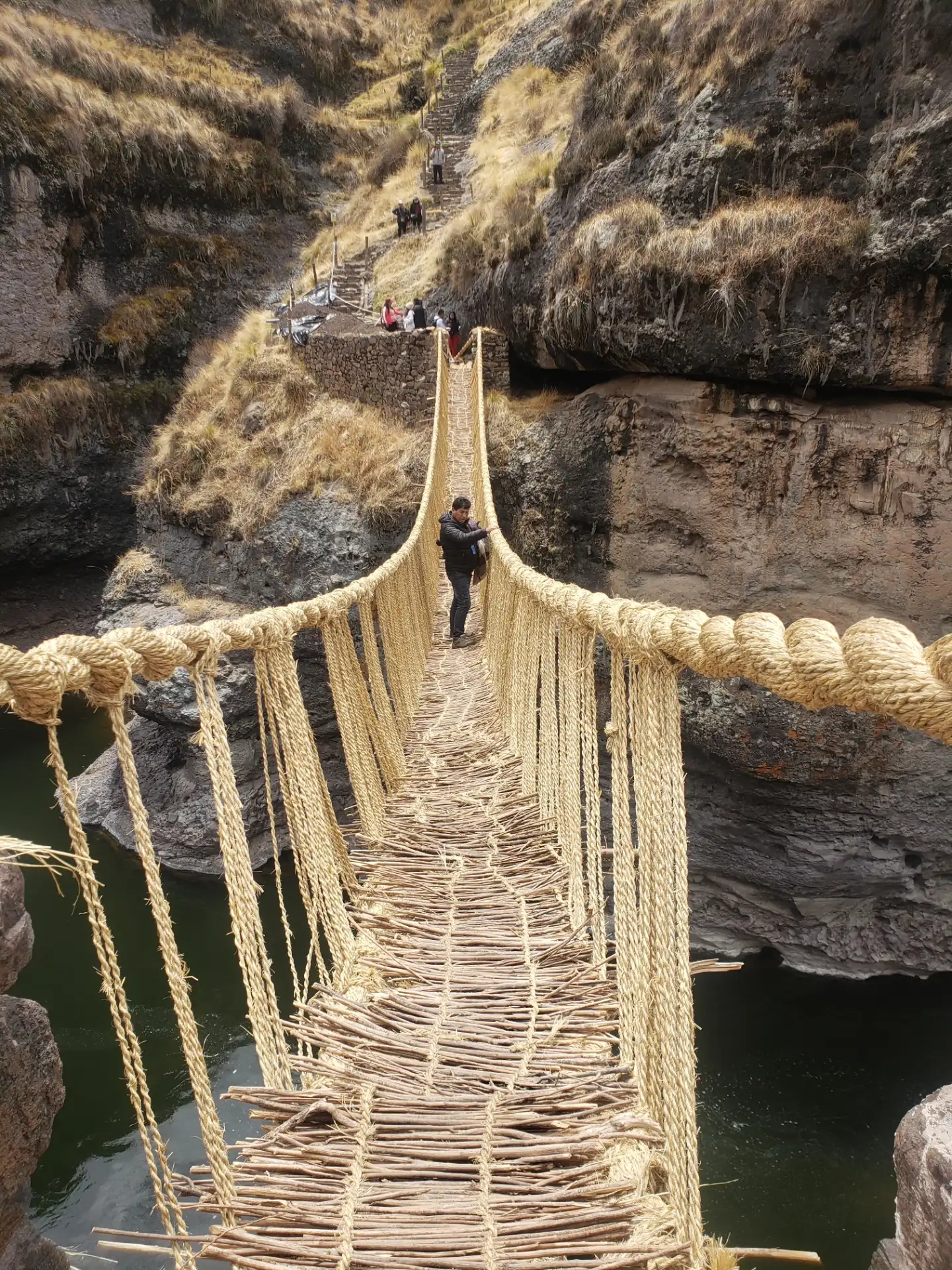
Walking across Q’eswachaka is the highlight of the day. The bridge sways and the river runs far below, so it takes a little balance and no fear of heights; it is always optional. The walk to the bridge is short, with some uneven ground and steps down to the river, and the altitude (about 3,600–3,700 m) is similar to Cusco, which makes this one of the easiest full-day trips from the city.
Tips for the visit
- When to go: the bridge can be visited all year. In June you may see the renewal; outside that period, it is quieter. The dry months (April to October) are the most comfortable.
- Clothing: a warm layer for the early morning, sun protection for midday.
- Shoes with grip for the steps down to the river.
- Respect: the bridge is a living heritage of the communities; follow your guide’s instructions when crossing.
- More off the beaten path: Waqrapukara, Pallay Punchu and our best day trips from Cusco.
Frequently asked questions
The last Inca rope bridge still in use: about 28 m of braided grass over the Apurímac River, rebuilt by hand every year.
Every June, over several days of communal work and ritual by the communities of the Quehue district.
Yes. Crossing is optional and needs a little balance; your guide explains how to do it safely.
About four hours by road. The full day runs from 4:00 am to about 5:00 pm.
No. The walk is short and the altitude, around 3,700 m, is similar to Cusco.