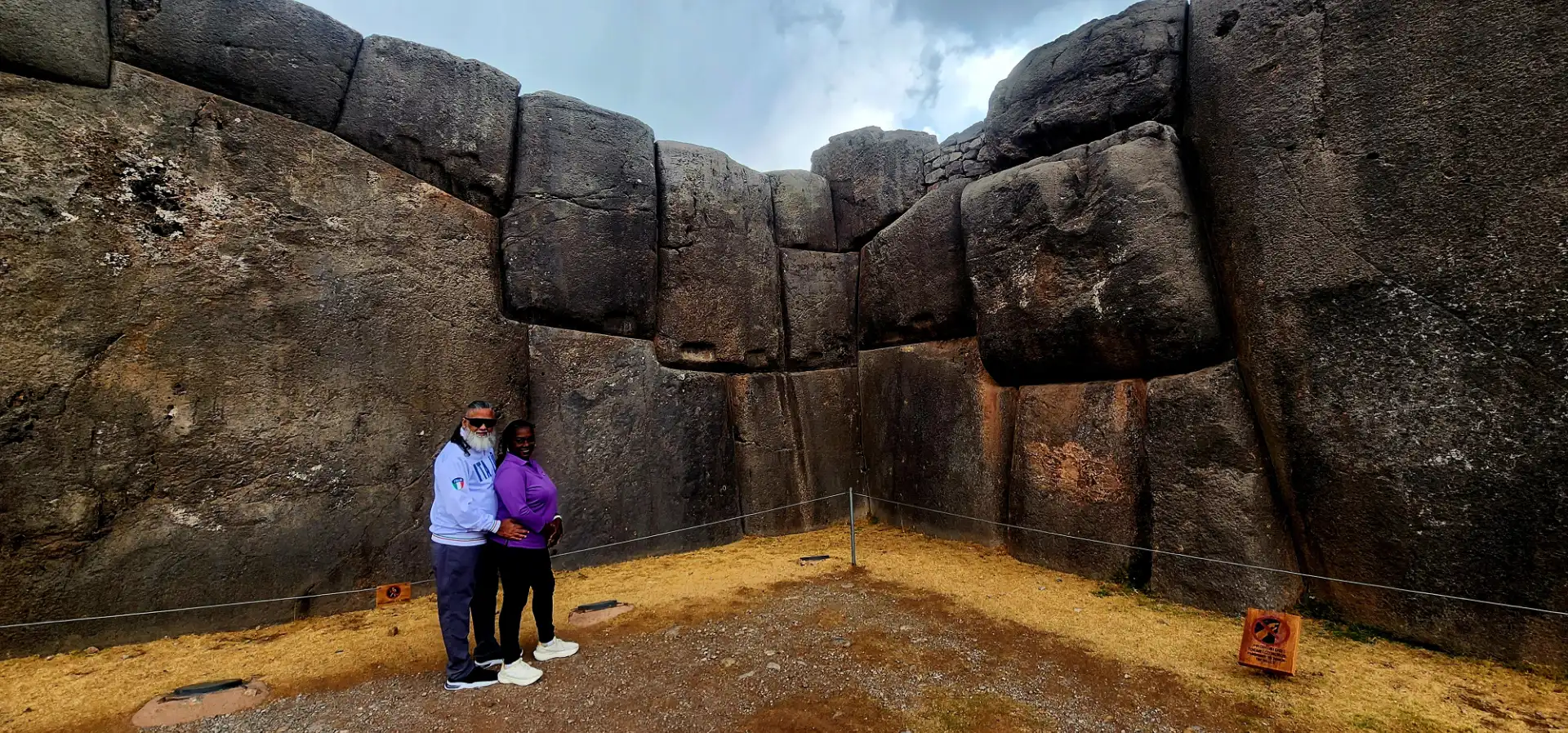
Sacsayhuamán: guide to the Inca fortress above Cusco
On the hill above Cusco, Sacsayhuamán is the most impressive Inca site you can reach in minutes from the city: huge zigzag walls built from stones so large and so perfectly fitted that they still astonish engineers today. Here is what to see, the story behind it and how to visit.
Sacsayhuamán at a glance
| Fact | Detail |
|---|---|
| Location | On the hill just north of Cusco’s historic centre |
| Altitude | About 3,700 m, higher than the city |
| Entrance | Cusco Tourist Ticket (Boleto Turístico) |
| From the Plaza de Armas | A short taxi ride, or a steep walk of about 30 minutes |
| Time needed | 1–2 hours |
The colossal walls
Sacsayhuamán is famous for its three tiers of zigzag walls, built from enormous limestone blocks — the largest are estimated to weigh well over 100 tonnes. They are fitted together without mortar, so tightly that you cannot slide a sheet of paper between them. How the Incas quarried, moved and shaped stones of this size is still one of the great questions of Andean archaeology.
See Sacsayhuamán with a local guide
Qorikancha, Sacsayhuamán, Qenqo, Puca Pucara and Tambomachay in one morning.
Fortress or temple?
The Spanish called it a fortress, and it did play a military role: in 1536, during the great Inca uprising led by Manco Inca, it was the scene of fierce fighting for control of Cusco. Many historians, however, believe its main purpose was ceremonial — a great religious complex overlooking the capital. After the conquest, the Spanish took many of its smaller stones to build colonial Cusco; the largest blocks were simply too heavy to move, which is why they survive.
Inti Raymi at Sacsayhuamán
Every 24 June, the esplanade in front of the walls becomes the stage for the main ceremony of Inti Raymi, the Inca Festival of the Sun, a large re-enactment with hundreds of performers in costume. If you travel in June, plan ahead: see our guide to Inti Raymi and Cusco’s festivals.
The other sites nearby
Sacsayhuamán is the first of four Inca sites on the road above Cusco: Qenqo, a carved rock shrine; Puca Pucara, a small control post; and Tambomachay, the ceremonial fountains. All four are included in the Boleto Turístico and on our Cusco City Tour (US $18), together with the Qorikancha. Read more in Cusco’s top Inca sites.
Tips for your visit
- It is higher than the city: walk slowly, especially on your first days.
- Bring a hat, sunscreen and water; there is little shade.
- Go in the morning or late afternoon for softer light and fewer people.
- Keep your Boleto Turístico at hand; it is also valid for Qenqo, Puca Pucara and Tambomachay.
Check which entrances you need in our Boleto Turístico guide.
Frequently asked questions
A great Inca complex on the hill above Cusco, famous for its zigzag walls of giant, perfectly fitted stones. It had both ceremonial and military roles.
Yes, entry is with the Cusco Tourist Ticket (Boleto Turístico), which also covers Qenqo, Puca Pucara and Tambomachay.
Yes, it is a steep walk of about 30 minutes from the Plaza de Armas. If you have just arrived, a taxi or a city tour is easier.
The largest blocks are estimated to weigh well over 100 tonnes, fitted together without mortar.
Every 24 June, when the main ceremony of the Festival of the Sun takes place in front of the walls.