What to pack for the Inca Trail: the complete checklist
On the Inca Trail you will walk through freezing dawns at 4,000 m, warm afternoons in the cloud forest and, quite possibly, a downpour or two — all in four days. Packing well makes a huge difference to how much you enjoy it. Porters carry the camp, so you only need a daypack with the essentials. Here is exactly what to bring, what you can rent and what to leave behind.
How luggage works on the trail
On our Classic Inca Trail, porters carry the tents, kitchen, food and sleeping mattresses. You carry a daypack with what you need during the day. If you prefer not to carry your sleeping bag and spare clothes, you can hire an extra porter for a personal bag, with a weight limit set by the trail rules. Everything else stays in your Cusco hotel, which will store your luggage until you return.
Documents and money
- Original passport — the same one used to book your permit; it is checked at the trail checkpoint and at Machu Picchu.
- Student card, if you booked a student rate.
- Travel insurance details.
- Cash in soles for toilets, snacks, drinks and tips for the crew at the end of the trek.
Ready for the Inca Trail?
Permit, porters, chef, Machu Picchu and the train back — from US $820.
Clothing
- Moisture-wicking T-shirts (2–3) and one long-sleeved shirt for sun protection.
- Hiking trousers (zip-off ones are practical) and leggings or thermal bottoms for the night.
- A warm fleece and a down or synthetic jacket — nights at the high camps can drop below 0 °C.
- A waterproof jacket and a rain poncho that covers your backpack.
- Warm hat, gloves and a buff or scarf.
- Sun hat and sunglasses.
- Hiking socks (one pair per day) and comfortable clothes for camp.
Footwear
Broken-in hiking boots with ankle support and good grip are the single most important item: the trail is made of thousands of uneven stone steps, often wet. Bring light sandals or trainers for the campsites. Never start the trek in brand-new boots.
Gear and accessories
- Daypack of 25–35 L with a rain cover.
- Sleeping bag rated to about −5 °C (can be rented in Cusco).
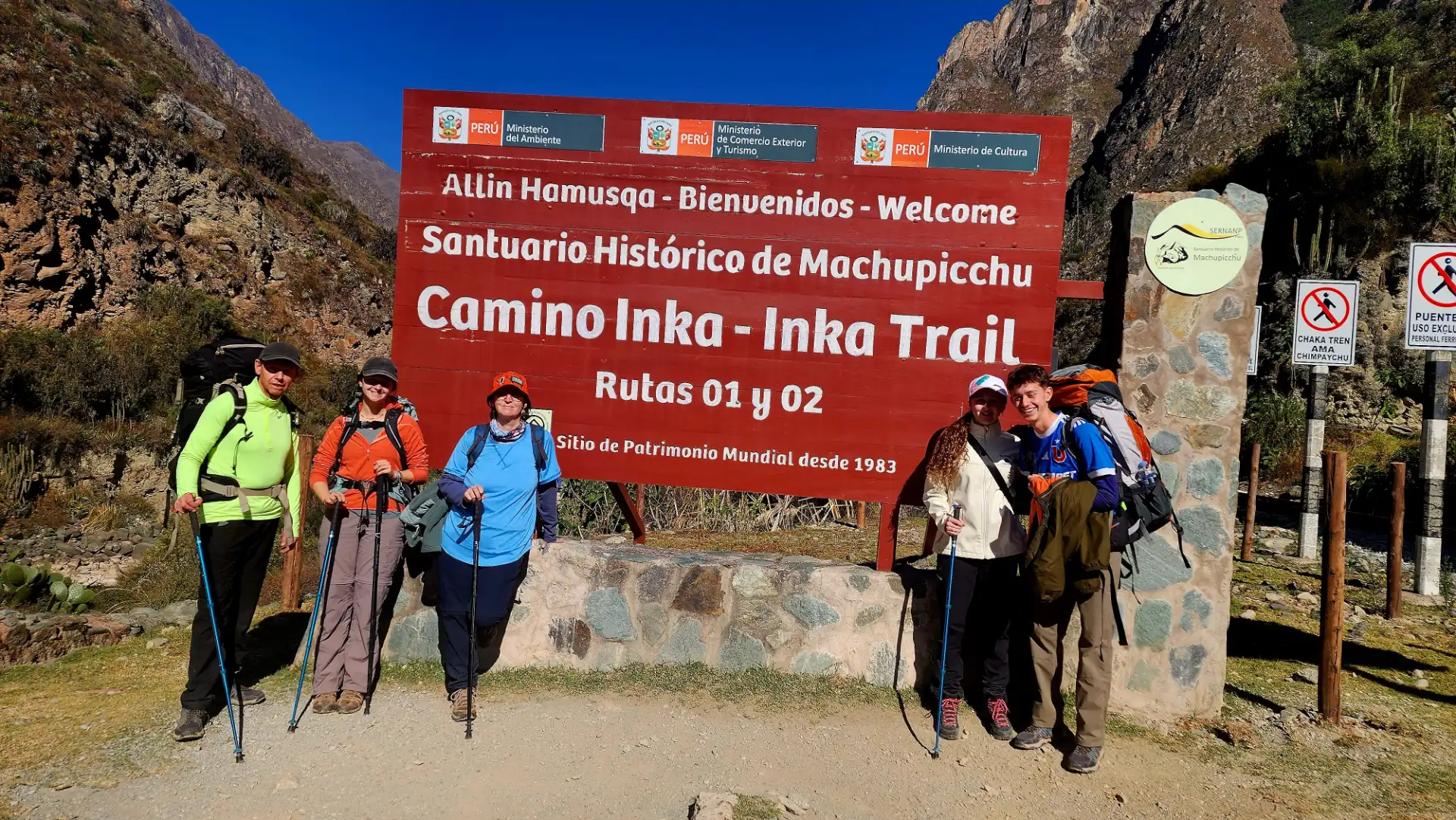
- Trekking poles with rubber tips — very useful on the descents (can be rented in Cusco).
- Headlamp with spare batteries.
- Reusable water bottle or hydration bladder (2 L capacity); your crew provides boiled water.
- Small towel, wet wipes and hand sanitiser.
- Power bank — there is no electricity at the camps.
Health and personal care
- Sunscreen SPF 50+ and lip balm with SPF.
- Insect repellent for the lower, humid sections.
- Personal medication, painkillers, blister plasters and anything your doctor recommends for altitude.
- Toilet paper in a small bag, and a bag to carry your rubbish out.
What to leave in Cusco
Leave large suitcases, laptops, valuables you do not need and extra clothes at your hotel. Drones are not allowed on the trail or at Machu Picchu, and single-use plastics are discouraged. Less weight means more energy for the climb to Dead Woman’s Pass.
Before you go
Prepare your body as well as your bag: read our Inca Trail training guide, our altitude guide and the complete Inca Trail guide. Hiking a shorter route? The Short Inca Trail sleeps in a hotel, so you need far less.
Frequently asked questions
A daypack of 25–35 L is enough, because porters carry the tents, food and kitchen.
Yes, unless you rent one in Cusco. Choose one rated to about −5 °C, as nights at the high camps can be below freezing.
They are not mandatory but highly recommended for the long stone descents. Use rubber tips to protect the trail.
Nights at the higher camps can drop below 0 °C, especially from June to August, while afternoons in the cloud forest are warm and humid.
Yes. An extra porter can carry your personal items within the weight limit set by the trail rules.