The Inca Trail to Machu Picchu: the complete guide for 2026
The Inca Trail is the original stone road the Incas built to reach Machu Picchu, and walking it is one of the great treks of the world: four days of high passes, cloud forest and ruins you can only reach on foot, ending with sunrise at the Sun Gate. It is also tightly regulated, with limited permits. This guide explains the route, the difficulty, how permits work, when to go and how to prepare.
The classic route, day by day
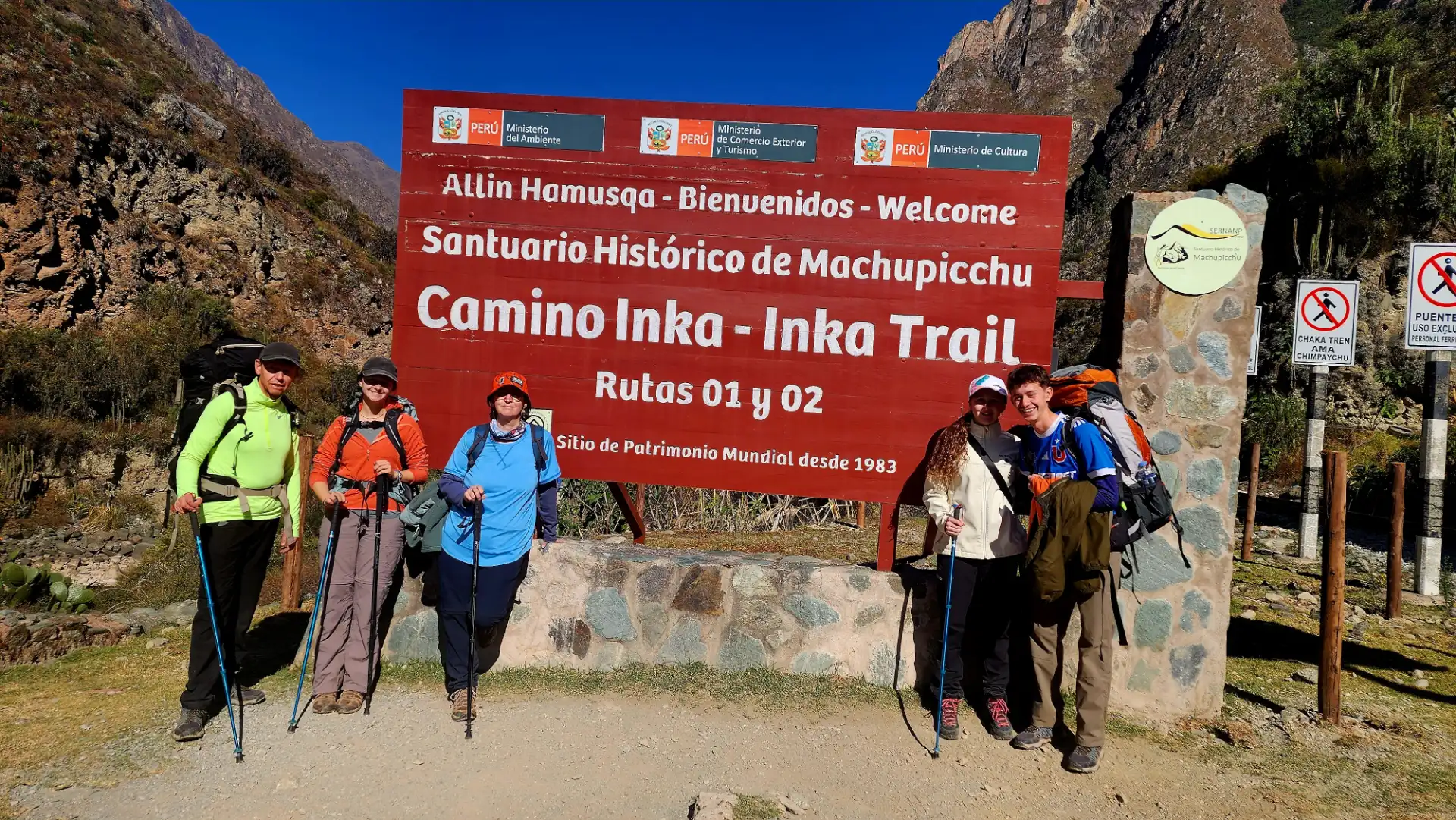
The classic trek starts at Kilometre 82 (Piscacucho), about two hours by road from Cusco, and covers roughly 40–45 km over four days.
| Day | Route | Distance | Highest point / camp |
|---|---|---|---|
| 1 | Km 82 (Piscacucho) → Wayllabamba | 14 km | Camp at 3,000 m |
| 2 | Wayllabamba → Dead Woman’s Pass → Pacaymayo | 10 km | Pass at 4,215 m · camp at 3,700 m |
| 3 | Pacaymayo → Phuyupatamarca → Wiñay Wayna | 16 km | Camp at 2,600 m |
| 4 | Wiñay Wayna → Sun Gate → Machu Picchu | Short final stage | Sunrise at Inti Punku, guided visit |
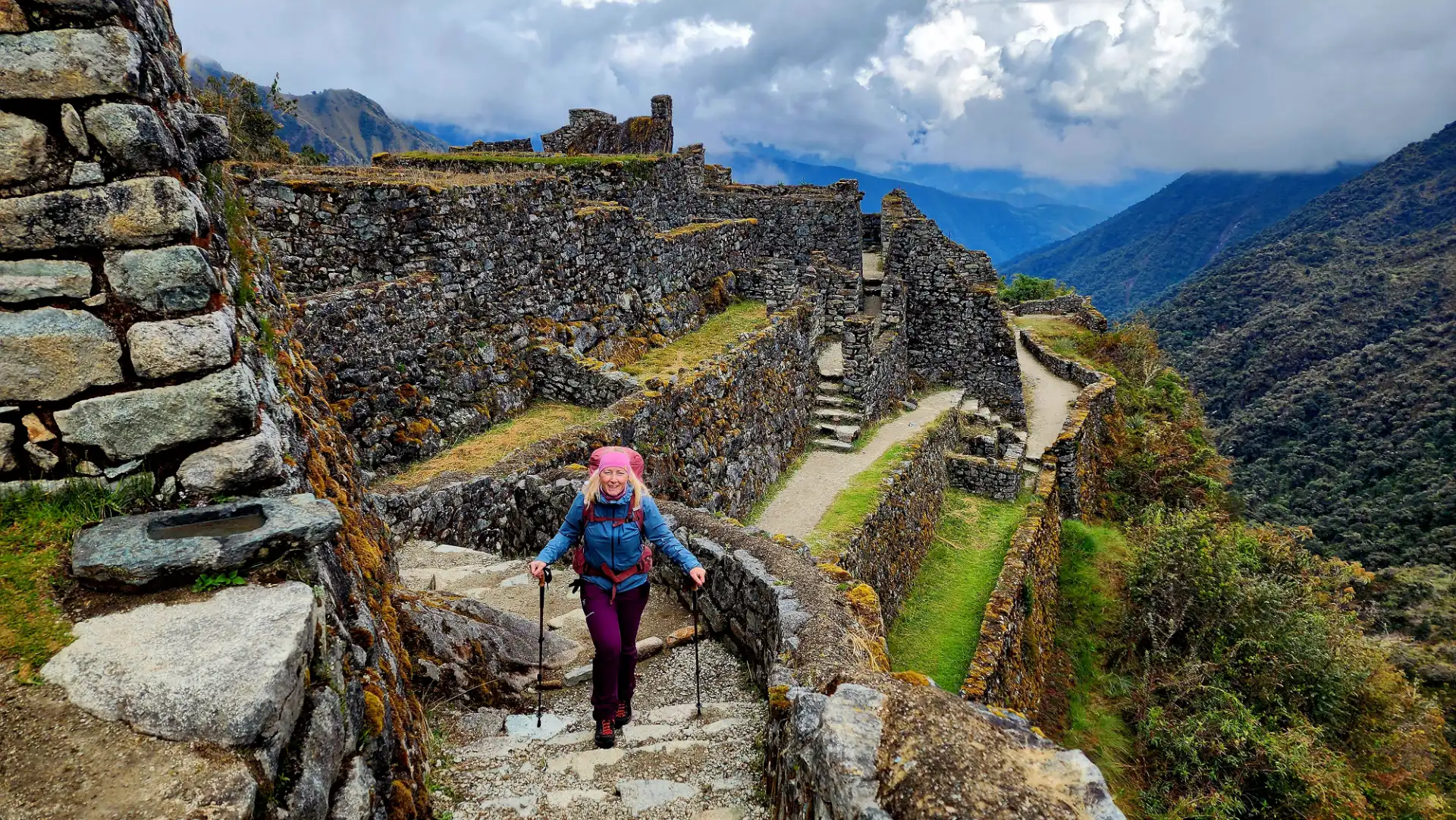
Day 2 is the hardest: a long climb to Dead Woman’s Pass (Warmiwañusca) at 4,215 m, followed by a steep stone descent. Day 3 is the most beautiful, with the ruins of Runkurakay, Sayacmarca, Phuyupatamarca and Wiñay Wayna among orchids and cloud forest. On day 4 you wake before dawn to reach the Sun Gate as the light hits Machu Picchu.
How hard is the Inca Trail?
It is a moderate to demanding trek. The distances are manageable — 10 to 16 km a day — but the trail is made of uneven Inca steps, the second day climbs about 1,200 m, and you sleep at altitude. Anyone with reasonable fitness who walks regularly can do it, especially after two or three days of acclimatization in Cusco. Porters carry the tents, food and kitchen, so you only carry a daypack. Our Inca Trail training guide explains how to prepare.
Walk the Inca Trail with us
Permit, guide, porters, meals, Machu Picchu entrance and train back — from US $820.
Permits: why you must book early
The Ministry of Culture limits the number of people on the trail each day, including guides, cooks and porters, and permits can only be booked through a licensed operator with your passport details. For the dry season (May to September), permits often sell out four to six months ahead; for the rest of the year, several weeks to a few months is usually enough. The permit is personal and cannot be transferred or changed to another name. The trail closes every February for maintenance.
What is included in our trek
- Transport from Cusco to Km 82 and the return train from Aguas Calientes, with transfer to Cusco.
- Inca Trail permit and Machu Picchu entrance.
- Professional guide (plus an assistant guide for larger groups).
- Trail chef and all meals on the trek.
- Porters for the tents, kitchen and mattresses.
- Campsite equipment, first-aid kit, oxygen and radio.
Not included: sleeping bag and walking poles (both can be rented in Cusco), an extra porter for your personal bag, and tips. See all the details on our Classic Inca Trail 4-day tour (from US $820).
Best time to hike the Inca Trail
The dry season from May to September brings the most stable weather and clear views from the passes, with cold nights at the higher camps. April and October are excellent shoulder months. From November to March there is more rain and mud, but fewer hikers and very green landscapes. Remember that the trail is closed in February. More in the best time to hike the Inca Trail.
What to pack
- A comfortable daypack (25–35 L) with rain cover.
- Broken-in hiking boots and a pair of light shoes for camp.
- Warm layers and a down jacket for the nights, which can drop below freezing at the higher camps.
- Rain jacket or poncho, hat, sunglasses and sunscreen.
- Headlamp, water bottle, insect repellent and personal medication.
- Your original passport — it is checked at the trail checkpoint and at Machu Picchu.
Full list in what to pack for the Inca Trail.
Shorter versions and alternatives
Short on time? The Short Inca Trail (2 days, from US $585) walks the final section past Wiñay Wayna to the Sun Gate and sleeps in a hotel in Aguas Calientes, and the one-day Inca Trail (from US $490) does it in a single day. If permits are sold out, the Salkantay and Lares treks also finish at Machu Picchu. Compare them in short vs classic Inca Trail and Inca Trail vs Salkantay vs Lares.
Respect for the porters
The trek would not be possible without the porters, mostly men from Quechua farming communities, who carry the camp at astonishing speed. Rules limit the weight they carry, and good operators provide proper equipment, food, shelter and fair pay. Tipping at the end of the trek is customary and much appreciated. Read more about porter welfare on the Inca Trail.
Frequently asked questions
The classic route covers roughly 40–45 km in four days, from Km 82 to Machu Picchu. The short version is about 12 km in one day of walking.
For May to September, four to six months ahead. For other months, several weeks to a few months is usually enough. Permits are limited and personal.
Moderate to demanding. The hardest part is the climb to Dead Woman’s Pass at 4,215 m on day 2. With good acclimatization and regular walking beforehand, most people complete it.
It is open every month except February, when it closes for maintenance. Machu Picchu itself stays open.
Only a daypack. Porters carry the tents, food and kitchen equipment. You can hire an extra porter for your personal bag.
Dead Woman’s Pass (Warmiwañusca), at 4,215 m.