Ausangate trek for first-timers: what you need to know
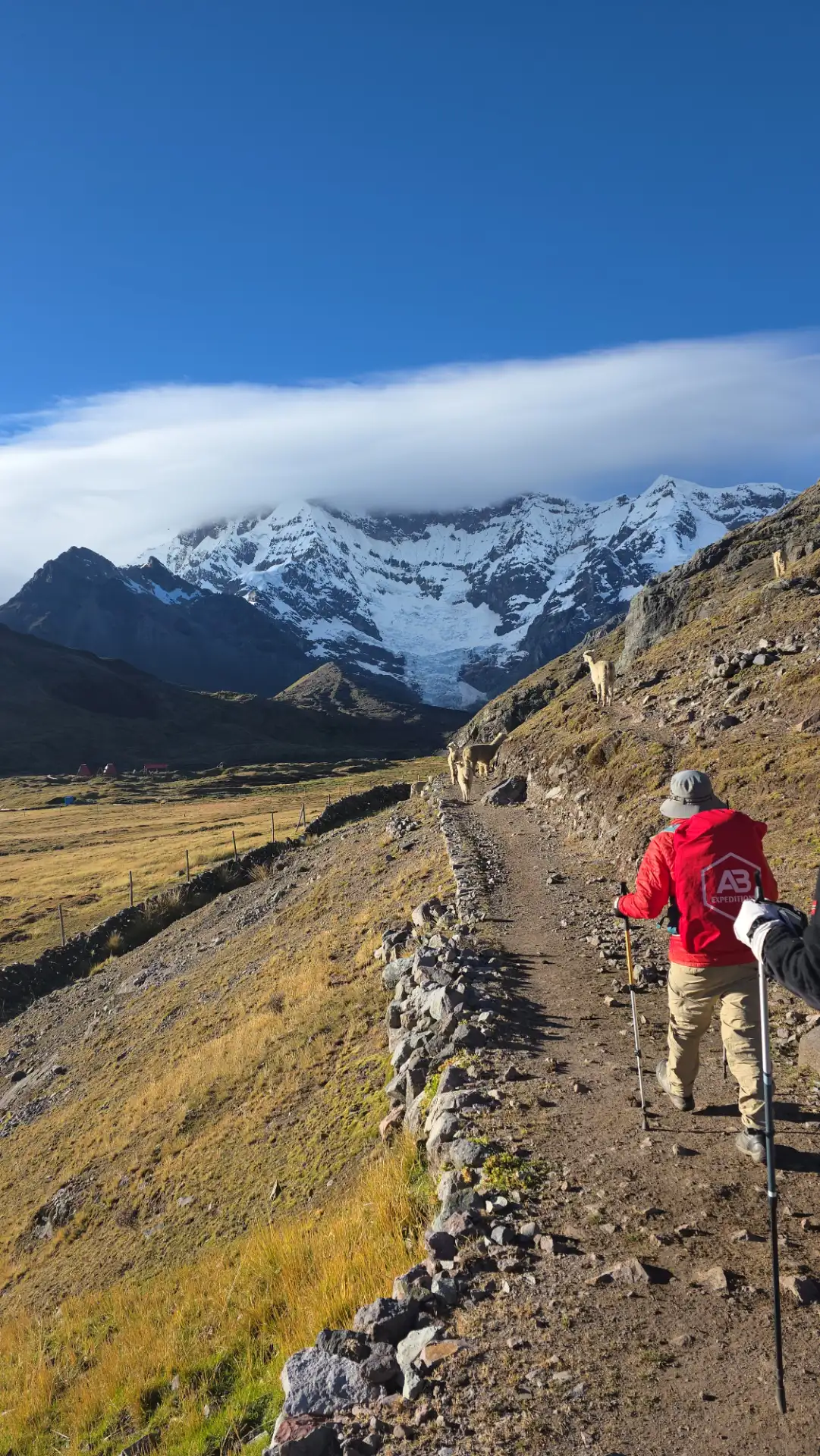
The Ausangate region is one of the most spectacular in Peru: turquoise and red lagoons, glaciers, herds of alpacas and the sacred 6,384 m Ausangate itself. It is also high and remote. If it is your first big Andean trek, this guide helps you choose the right option and arrive ready to enjoy it.
Three ways to experience Ausangate
| Option | Days | Highest point | Best for | From |
|---|---|---|---|---|
| 7 Lagoons of Ausangate | 1 | High, from Pacchanta (about 4,200 m) | A first taste, with hot springs | US $40 |
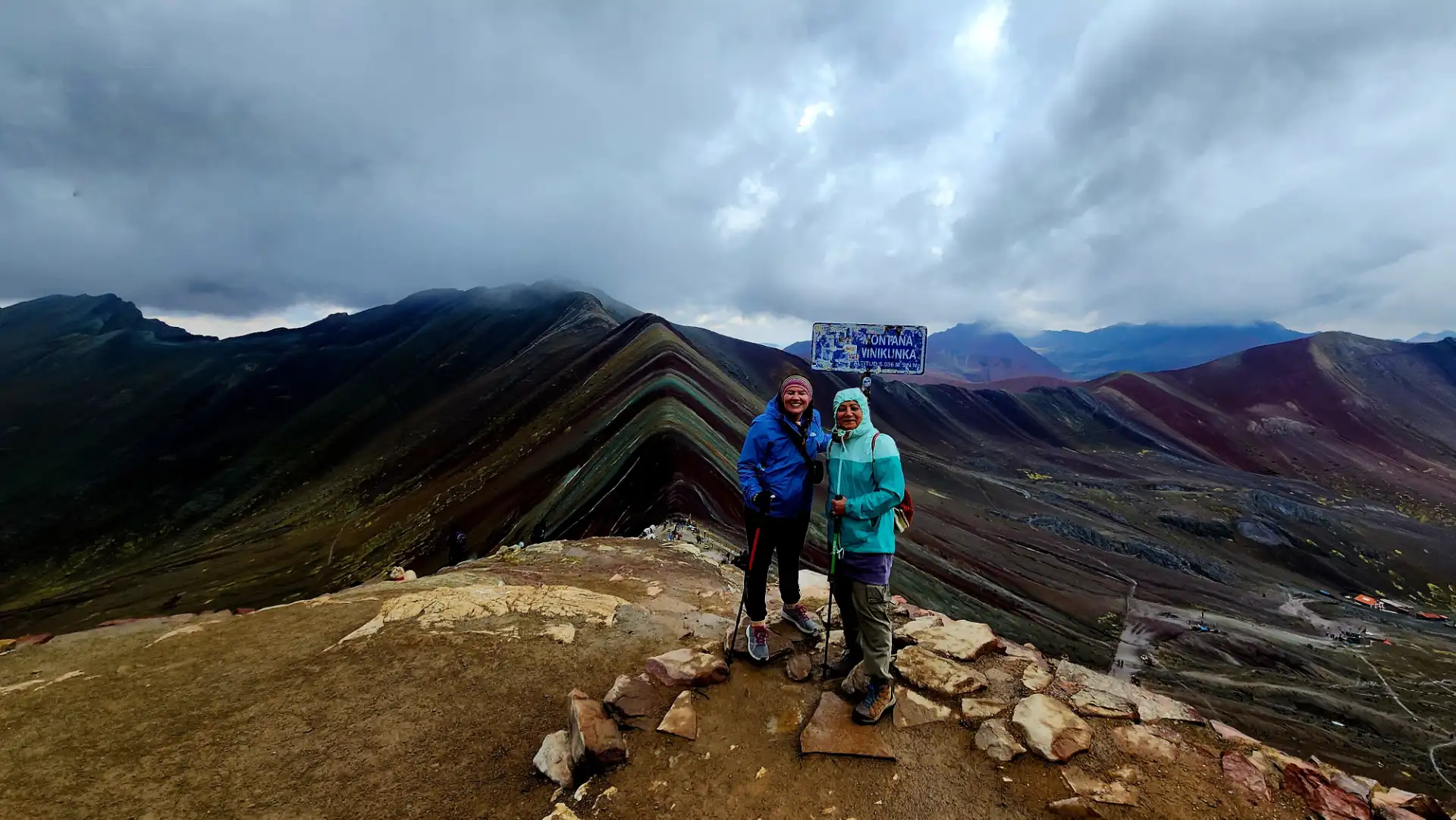
| Ausangate and Rainbow Mountain | 4 | About 5,020 m | Ending at Rainbow Mountain on foot | US $450 |
| Ausangate circuit | 5 | 5,200 m | Experienced hikers who want the full loop | US $475 |
How hard is it really?
The paths are not technical, but almost everything happens above 4,000 m and the passes approach or exceed 5,000 m. Days are long, and nights can drop well below freezing in the dry season. The real challenge is the altitude, not the distance: many fit people struggle if they arrive without acclimatizing. Walk slowly, keep a steady rhythm and listen to your guide.
Not sure which Ausangate trek suits you?
Tell us your experience and dates, and we will recommend the right route.
Acclimatization: the golden rule
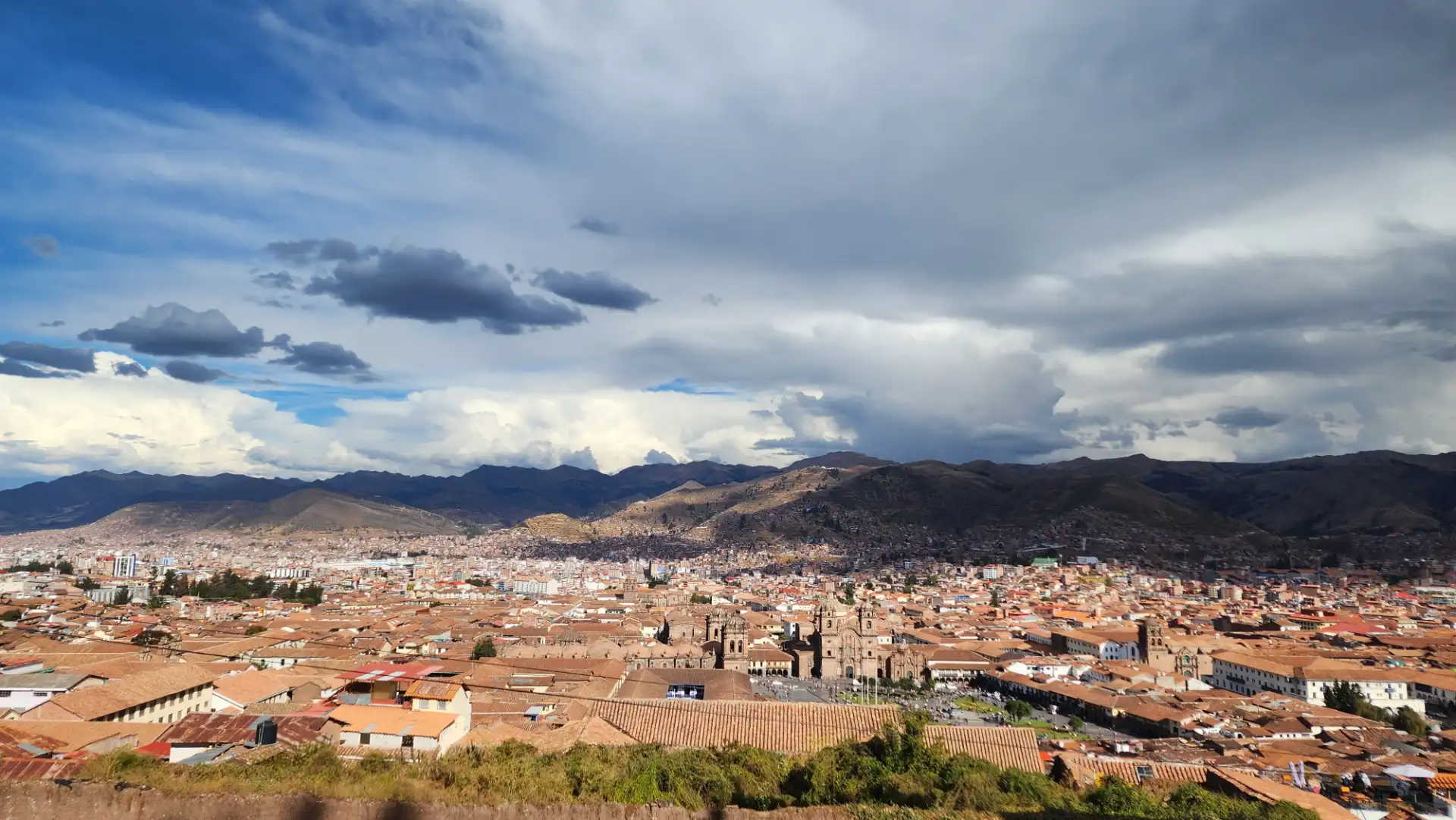
- Spend at least three or four days in Cusco before the trek.
- Do one or two high day trips first, such as Rainbow Mountain or Humantay Lake.
- Drink plenty of water, eat well and avoid alcohol before and during the trek.
- Tell your guide at once if you have a severe headache, nausea or breathlessness at rest; descending is the best treatment.
Read our altitude sickness guide.
What to pack
- A warm sleeping bag (rentable in Cusco), down jacket, thermal layers, hat and gloves.
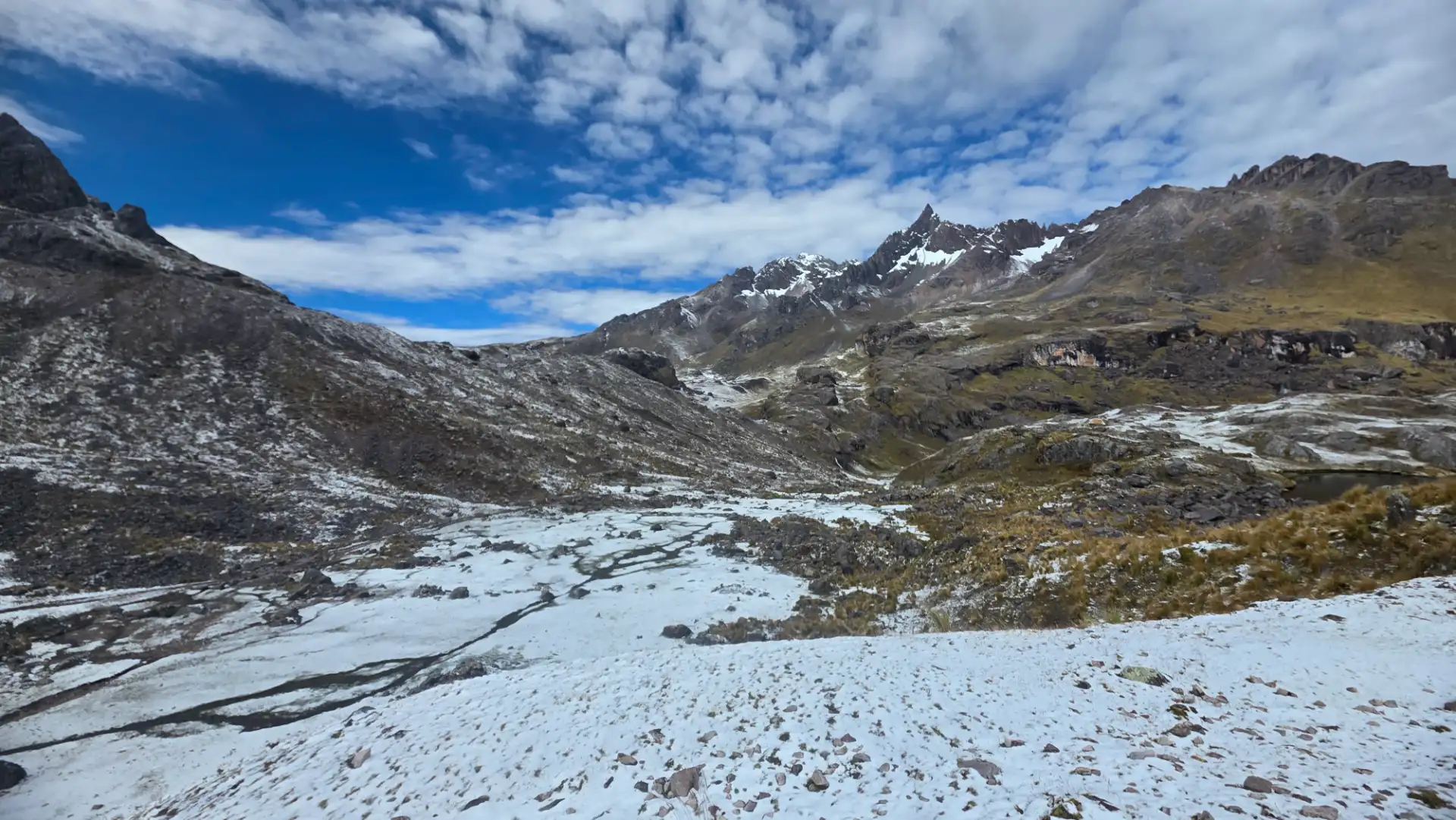
- Waterproof jacket and trousers: snow and hail are possible even in the dry season.
- Broken-in hiking boots, trekking poles, sunglasses and high-factor sunscreen.
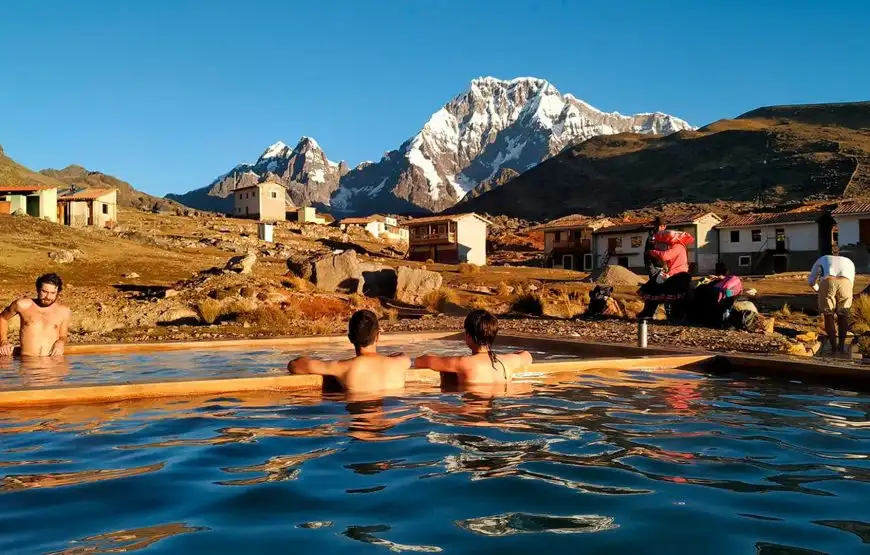
- A swimsuit for the hot springs and cash in soles for small extras.
Our Cusco packing list has more ideas.
What our team takes care of
On our treks, horses and muleteers carry the camping gear and an emergency horse travels with the group. A chef prepares hot meals and boiled water, and the guide carries oxygen and a first-aid kit. You walk with a light daypack and arrive at a camp that is already set up. All you need to bring is good preparation and the right clothing.
When to go
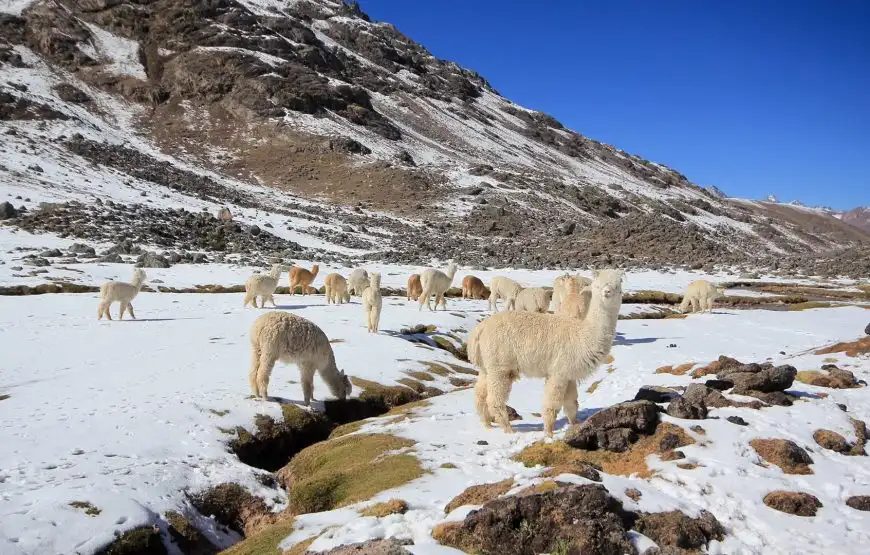
The dry season, from May to September, is the best time: clear skies, firm trails and freezing nights. The rainy season brings snow and mud to the passes. For the details of each route, read our 7 Lagoons guide, the Ausangate and Rainbow Mountain guide and the Ausangate 5-day guide.
Frequently asked questions
The full circuit is demanding. First-timers should start with the 7 Lagoons day trip or the 4-day Ausangate and Rainbow Mountain trek, after good acclimatization.
Camps are above 4,000 m and the passes reach about 4,900–5,200 m depending on the route.
At least three or four days in Cusco, ideally including one or two high day trips.
In the dry season, nights often drop well below freezing. Bring a warm sleeping bag and down jacket.
Yes: Pacchanta on the 7 Lagoons and 5-day treks, and Upis on the 4-day trek to Rainbow Mountain.