Peruvian food: 30 dishes you have to try, and where to eat them
Peru has some of the most exciting food in the world, and it is not an exaggeration. Its kitchens draw on three very different landscapes, the Pacific coast, the high Andes and the Amazon, and on five centuries of mixing. Inca ingredients met Spanish, African, Chinese and Japanese cooks. The result is ceviche cured in lime juice, smoky Andean stews, Chinese-Peruvian chifa and Amazonian fish baked in leaves. This guide lists the 30 dishes and drinks you should try, region by region. For each one you get what it is, where to find it and what it costs, plus how to eat well and safely in Lima and Cusco.
Peruvian food at a glance
| # | Must-try | Region | What it is | Typical price |
|---|---|---|---|---|
| 1 | Ceviche | Coast | Raw fish cured in lime with chilli and red onion | S/30–60 |
| 2 | Lomo saltado | Coast (Chinese-Peruvian) | Stir-fried beef, tomato, onion, chips and rice | S/30–55 |
| 3 | Ají de gallina | Coast | Shredded chicken in a creamy yellow-chilli sauce | S/20–40 |
| 4 | Causa | Coast | Layered cold potato terrine with a filling | S/15–35 |
| 5 | Anticuchos | Coast (street food) | Grilled marinated beef-heart skewers | S/10–25 |
| 6 | Cuy al horno | Andes | Roast guinea pig, a festive dish | S/50–90 |
| 7 | Rocoto relleno | Andes (Arequipa) | Stuffed hot pepper baked with cheese | S/20–35 |
| 8 | Papa a la huancaína | Andes / coast | Potatoes in a spicy cheese sauce | S/12–25 |
| 9 | Pisco sour | Everywhere | Pisco, lime, sugar, egg white, bitters | S/18–35 |
| 10 | Chicha morada | Everywhere | Spiced purple-corn drink, no alcohol | S/5–12 |
Lunch is the big meal, usually between 1 and 3 PM. Many restaurants serve a set menú del día (soup, main course and a drink) for S/12–25. Cevicherías often close by late afternoon, because fresh fish is a lunchtime tradition. Dinner is lighter and later.
Why Peruvian food is so good
Three things make Peruvian cuisine unique. First, biodiversity: Peru grows thousands of native potato varieties, dozens of chillies (ají amarillo, rocoto, ají panca), quinoa, corn of every colour and Amazonian fruits few people outside Peru have tasted. Second, the Humboldt Current off the coast brings cold, nutrient-rich water and some of the best seafood on the planet. Third, migration. Spanish cooks brought beef, pork, dairy and frying; African cooks shaped dishes like anticuchos and tacu tacu. Chinese immigrants created chifa, and Japanese immigrants created Nikkei cuisine, which refined the way Peru treats raw fish.
| Influence | Arrived | Gave Peru |
|---|---|---|
| Andean (Inca and earlier) | Thousands of years | Potatoes, quinoa, corn, chillies, guinea pig, chuño (freeze-dried potato) |
| Spanish | 16th century | Beef, pork, dairy, wheat, onions, lime, frying, desserts |
| African | 16th–19th centuries | Anticuchos, tacu tacu, sweets like picarones |
| Chinese (chifa) | 19th century | Stir-frying, soy sauce, arroz chaufa, lomo saltado |
| Japanese (Nikkei) | Late 19th – 20th century | Short-cured ceviche, tiradito, fine knife work |
For the background, see the overview of Peruvian cuisine.
Coastal classics (1–10)
1. Ceviche
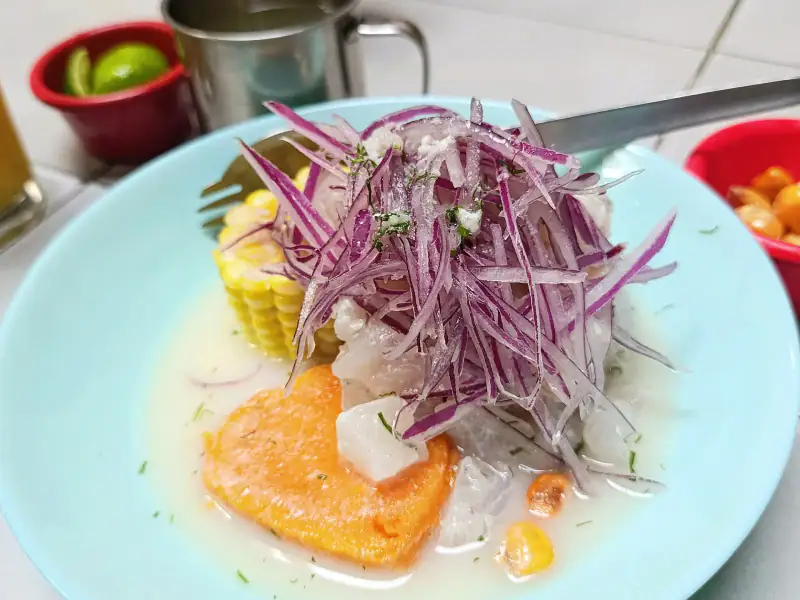
Peru’s national dish: chunks of raw white fish “cooked” for a few minutes in fresh lime juice with red onion, ají limo chilli and coriander. It comes with sweet potato and big-kernel corn. The leftover juice, leche de tigre, is drunk as a shot. In 2023 the practices around ceviche were added to UNESCO’s list of Intangible Cultural Heritage; see ceviche. Eat it at lunch in a busy cevichería.
2. Tiradito
The Nikkei cousin of ceviche: thin slices of raw fish, sashimi-style, under a sauce of yellow chilli and lime, with no onion.
3. Lomo saltado
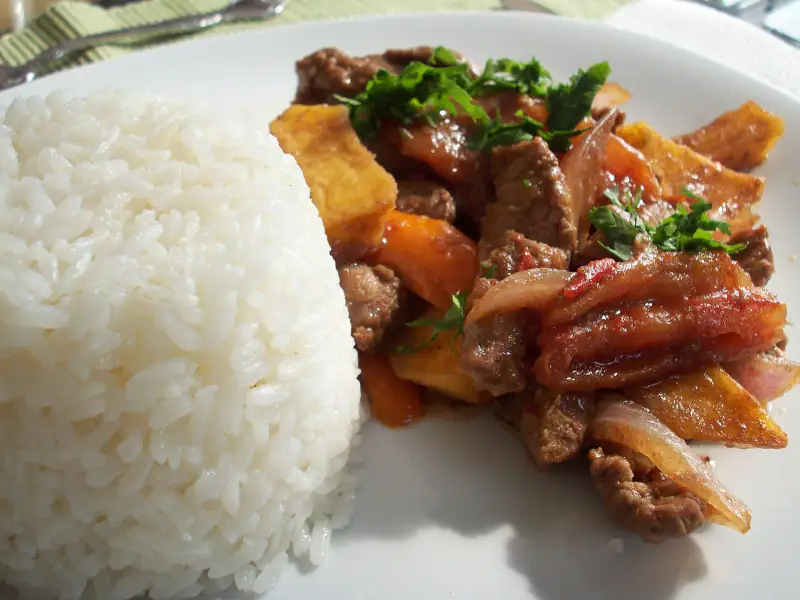
The most popular main course in Peru, and the perfect example of fusion. Strips of beef are stir-fried in a wok with soy sauce, tomato and onion, then served with chips and rice.
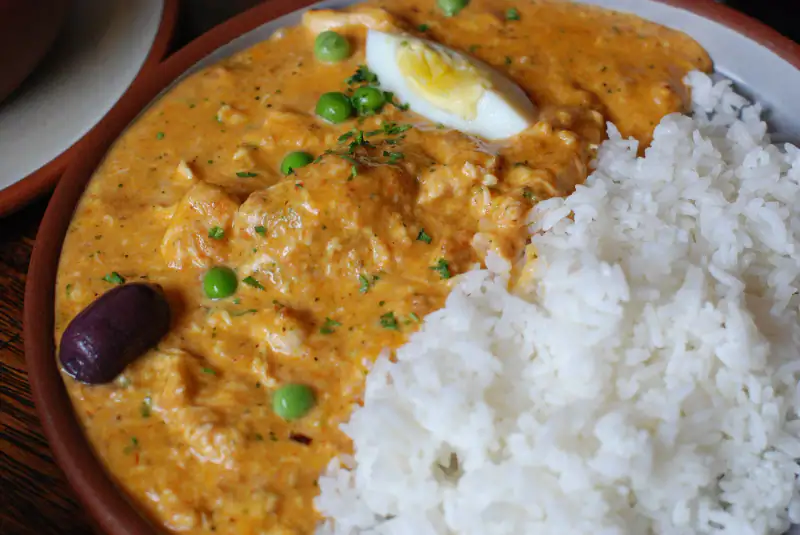
4. Ají de gallina
Shredded chicken in a creamy, mildly spicy sauce of yellow chilli, bread, milk and pecans, with rice, potato, an egg and an olive. Comfort food at its best.
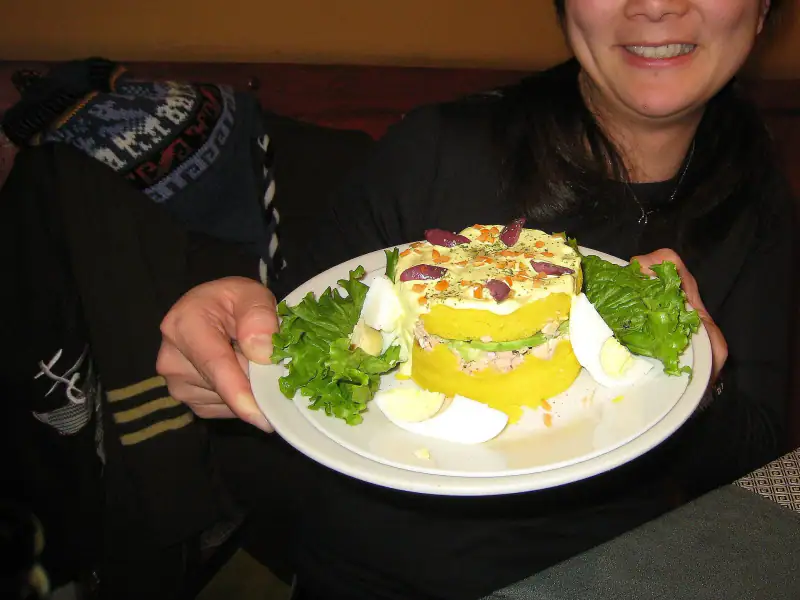
5. Causa limeña
A cold terrine of yellow potato mashed with lime and chilli, layered with tuna, chicken or crab and avocado. It looks like a cake and tastes like summer.
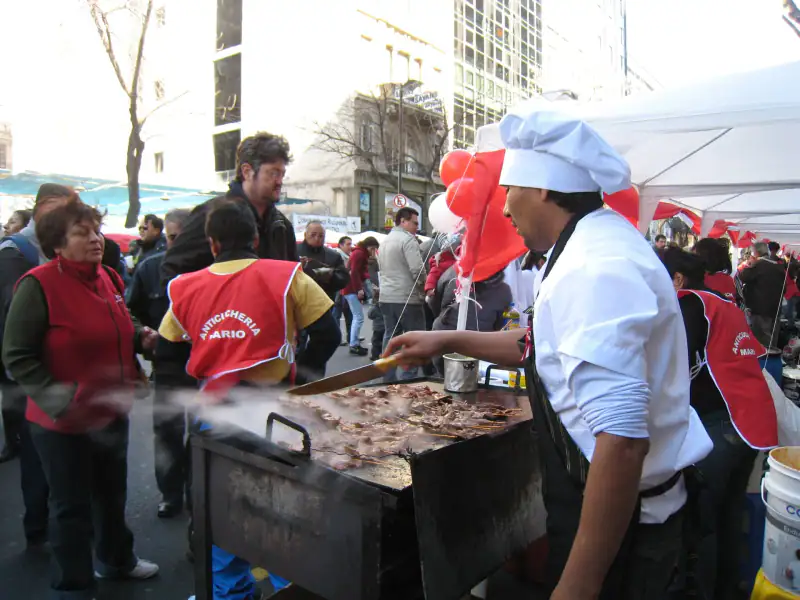
6. Anticuchos
Skewers of beef heart marinated in ají panca, vinegar and cumin, grilled over charcoal on street corners at night and served with a potato and corn. Tender and smoky; give them a try.
7. Arroz con pollo (rice cooked green with coriander, with chicken), 8. Tacu tacu (a crispy cake of rice and beans, often topped with steak), 9. Carapulcra (a stew of dried potato and pork) and 10. Pollo a la brasa (spit-roasted chicken with chips, the dish Peruvians order most often) complete the coastal list.
Andean dishes from Cusco and the highlands (11–20)
Highland cooking is hearty, built for cold nights and long days in the fields. Cusco is the best place to try it, from market stalls to its many picanterías.
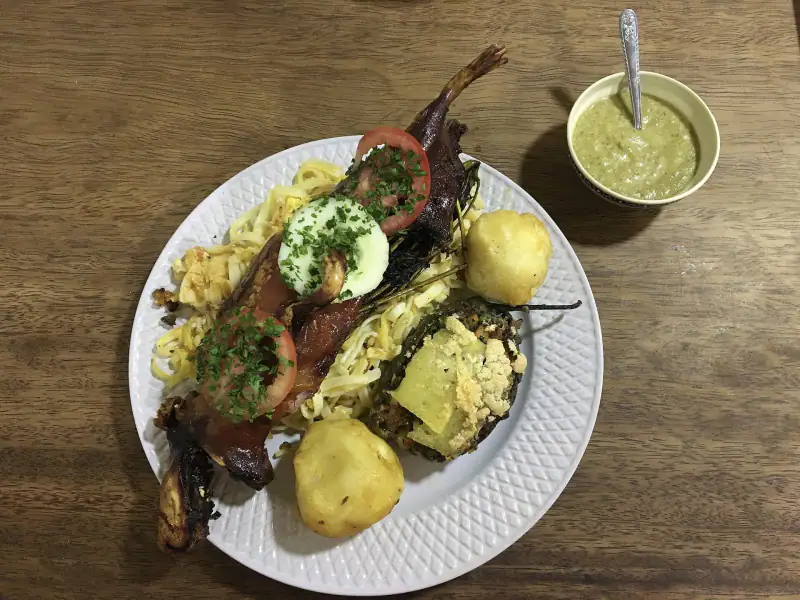
11. Cuy al horno
Guinea pig has been raised in Andean kitchens for thousands of years and is still a dish for celebrations. In Cusco it is roasted in a wood oven, often stuffed with herbs, and served with potatoes and a stuffed pepper. The village of Tipón, in the South Valley, is famous for it.
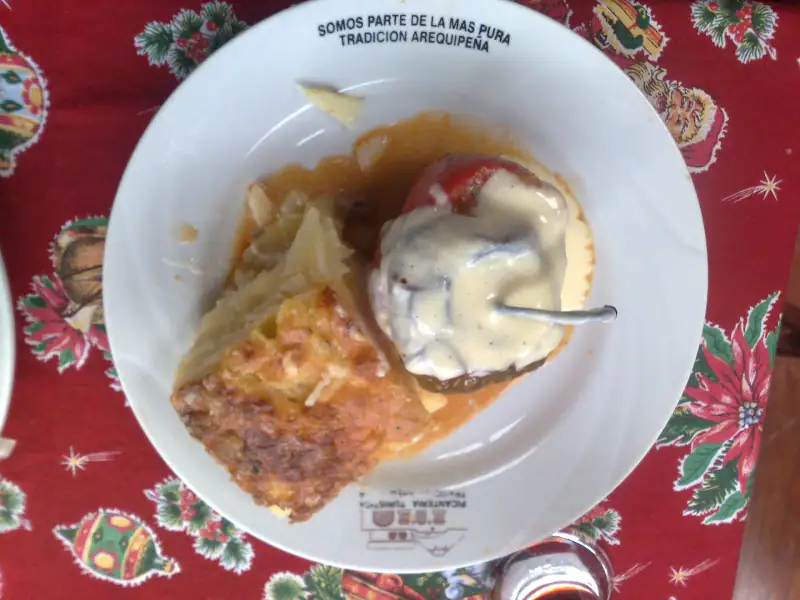
12. Rocoto relleno
A fiery red rocoto pepper, blanched to tame the heat, stuffed with minced beef, raisins and olives, topped with cheese and baked. It is the signature dish of Arequipa and a favourite in Cusco.
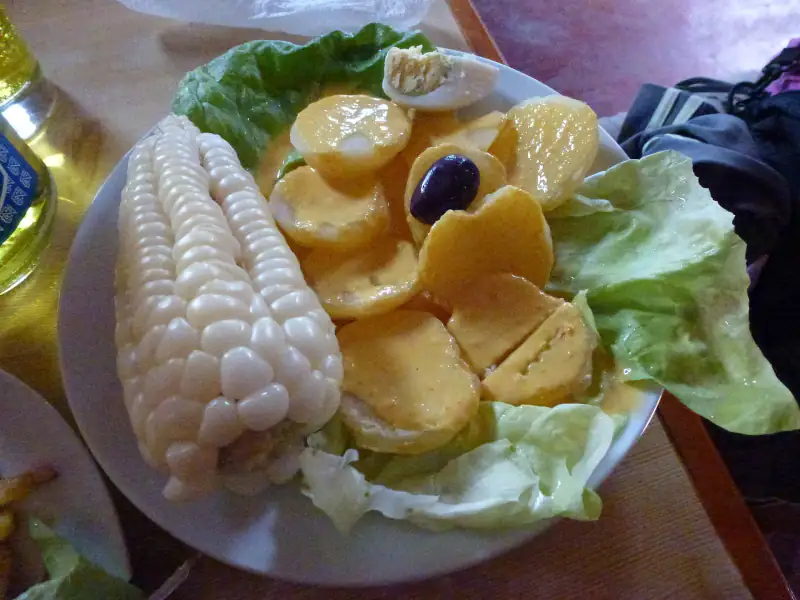
13. Papa a la huancaína
Boiled yellow potatoes covered with a smooth sauce of fresh cheese, yellow chilli and milk. It is a typical starter, mild and creamy.
| # | Dish | What it is | Best place to try |
|---|---|---|---|
| 14 | Chiriuchu | Cold festive platter: guinea pig, chicken, sausage, seaweed, cheese, corn | Cusco, Corpus Christi |
| 15 | Pachamanca | Meats, potatoes and beans cooked under hot stones in the earth | Sacred Valley, countryside restaurants |
| 16 | Chicharrón | Pork fried in its own fat, with mote corn and mint | Saylla, near Cusco |
| 17 | Adobo cusqueño | Pork marinated in chicha and spices, a Sunday breakfast | Cusco picanterías |
| 18 | Lechón | Roast suckling pig with tamales | Cusco markets, Sunday mornings |
| 19 | Trucha | Rainbow trout, fried or in ceviche | Lake Titicaca, Sacred Valley |
| 20 | Sopa de quinua | Quinoa and vegetable soup | Everywhere in the Andes |
Alpaca steak, olluquito (a tuber stew) and chuño (freeze-dried potato) are also worth a try. For restaurants and markets in Cusco, see our Cusco food guide and best markets in Cusco. In the Sacred Valley, our sister site has a guide to Andean food in the Sacred Valley.
Amazonian flavours (21–23)
| # | Dish | What it is | Where |
|---|---|---|---|
| 21 | Juane | Rice with chicken, olives and egg, wrapped and steamed in bijao leaves | Amazon cities; festival of San Juan (24 June) |
| 22 | Tacacho con cecina | Mashed fried plantain balls with smoked pork | Amazon, some Lima restaurants |
| 23 | Patarashca | River fish cooked in leaves over the fire | Amazon lodges and towns |
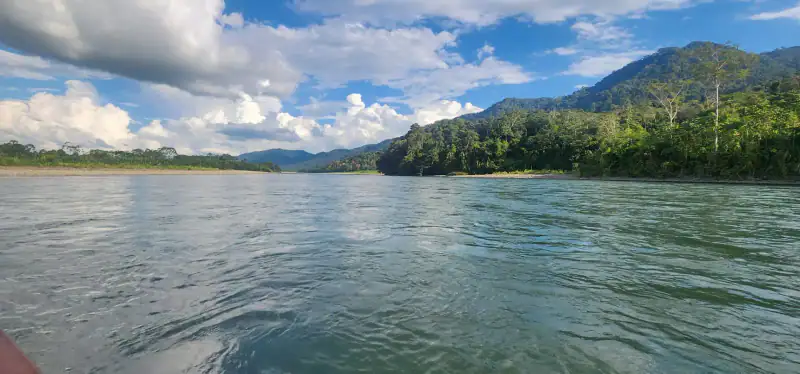
Fruits like camu camu, aguaje and cocona turn up in juices and ice creams. On a trip to Manu, lodge kitchens often cook local fish and fruit.
Street food and desserts (24–27)
| # | Treat | What it is | When / where | Price |
|---|---|---|---|---|
| 24 | Picarones | Sweet-potato and squash doughnuts with fig-leaf syrup | Evenings, street stalls | S/5–10 |
| 25 | Suspiro a la limeña | Caramel custard topped with port meringue | Lima restaurants | S/10–18 |
| 26 | Mazamorra morada | Purple-corn pudding with fruit | Markets, often with arroz con leche | S/3–8 |
| 27 | Turrón de Doña Pepa | Anise biscuit layers with fruit syrup and sprinkles | October (Señor de los Milagros) | S/5–15 |
Other bites: alfajores (shortbread with manjar blanco), salchipapas (sausage and chips), choclo con queso (giant corn with cheese, sold on the road to the Sacred Valley) and emoliente, a warm herbal drink sold from street carts in the mornings.
What to drink (28–30)
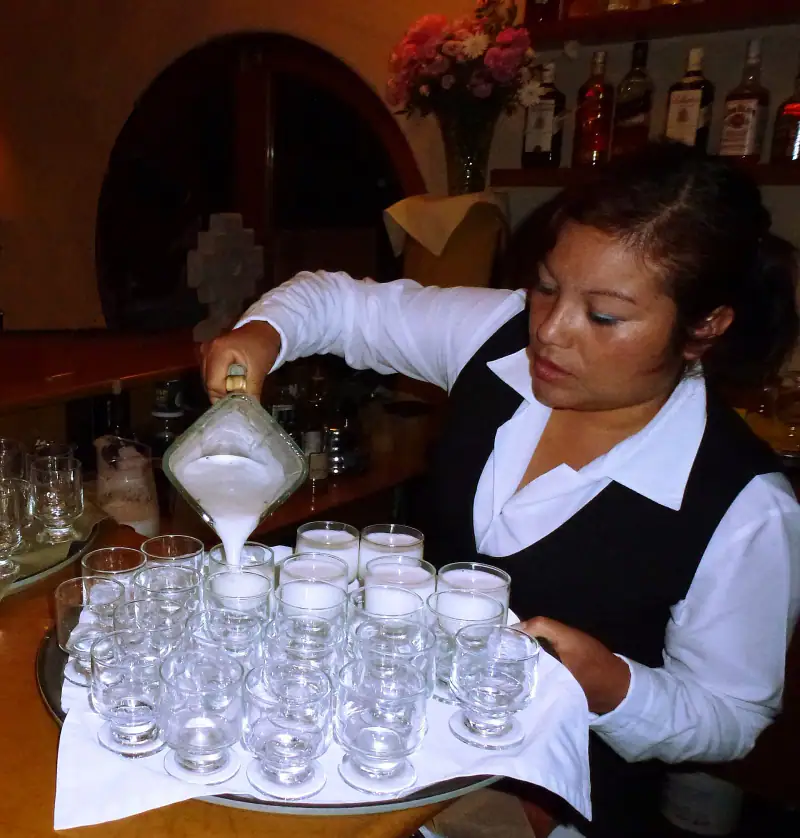
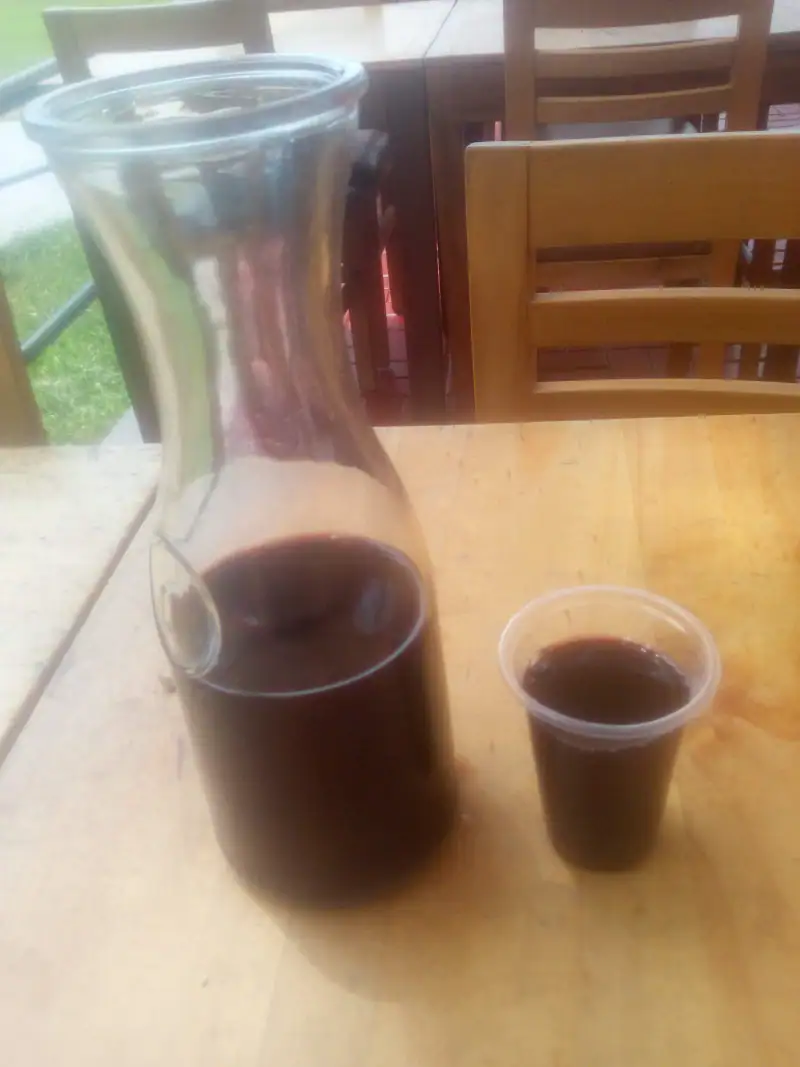
28. Pisco sour. Pisco is a grape brandy with a protected designation of origin in Peru. Shaken with lime, sugar syrup and egg white and topped with a few drops of bitters, it becomes the national cocktail. The chilcano (pisco with ginger ale and lime) is lighter. 29. Chicha morada. Purple corn boiled with pineapple, cinnamon and cloves: sweet, refreshing and alcohol-free. Chicha de jora is its ancient fermented cousin, sold in Andean villages where a red flag hangs over the door. 30. Coca tea and coffee. Mate de coca helps with the altitude, and Peru grows excellent coffee in the valleys below Cusco. And the local soft drink is Inca Kola, golden and bubble-gum sweet.
Where to eat: the types of restaurants
| Type | What it serves | Price level | Tip |
|---|---|---|---|
| Cevichería | Ceviche, tiradito, seafood rice | S/30–70 | Go at lunchtime |
| Picantería | Andean home cooking, chicha | S/15–40 | The real taste of Cusco and Arequipa |
| Chifa | Chinese-Peruvian: chaufa, wantán, tallarín saltado | S/20–45 | Huge portions, great value |
| Pollería | Pollo a la brasa with chips and salad | S/20–40 | A family favourite on weekends |
| Market stalls | Soups, juices, set lunches | S/6–15 | San Pedro in Cusco, Surquillo in Lima |
| Menú restaurants | Set lunch: soup, main, drink | S/12–25 | Look for the chalkboard outside |
| Fine dining | Tasting menus with Peruvian ingredients | S/400–900 | Book weeks ahead in Lima and Cusco |
In Cusco, eat lunch at San Pedro Market, dinner in San Blas, and try a picantería on the outskirts at least once. Our list of the 35 best things to do in Cusco includes a cooking class. Visiting Machu Picchu? The guide to Aguas Calientes on our Machu Picchu site lists where to eat before the train.
Eating safely, and eating at altitude
| Tip | Why |
|---|---|
| Drink bottled or filtered water, never tap water | Tap water is not safe to drink in Peru |
| Eat ceviche at lunch in busy places | Fresh fish turnover; locals do the same |
| Choose hot, freshly cooked street food | Busy stalls with high turnover are the safest |
| Peel fruit or wash it with bottled water | Avoid stomach trouble on day one |
| Eat light on your first nights in Cusco | Digestion is slower at 3,400 m; heavy dinners and alcohol worsen altitude sickness |
| Carry rehydration salts | Useful for both altitude and stomach upsets |
Peru is easier than you might think: papa a la huancaína, causa, quinoa soups, tacu tacu, vegetable saltados and chifa dishes all come meat-free, and Cusco has many vegetarian restaurants. See vegetarian and vegan Cusco. Read more on health in our altitude sickness guide.
Food experiences in and around Cusco
| Experience | Where | How |
|---|---|---|
| Cooking class with a market visit | Cusco | Half day; most include a pisco sour lesson |
| Lunch in the Sacred Valley | Urubamba | Included in our Sacred Valley tour (from US $35) and the Valle Sagrado Peru tour |
| Cuy in Tipón | South Valley | Combine with our South Valley tour (from US $35) |
| Chicharrón Sunday in Saylla | Near Cusco | 20 minutes by taxi |
| Breakfast and lunch on a mountain day | Rainbow Mountain, Humantay | Included in our Rainbow Mountain and Humantay tours |
| Corpus Christi chiriuchu | Cusco | Late May or June, depending on the year |
Taste Cusco with local guides
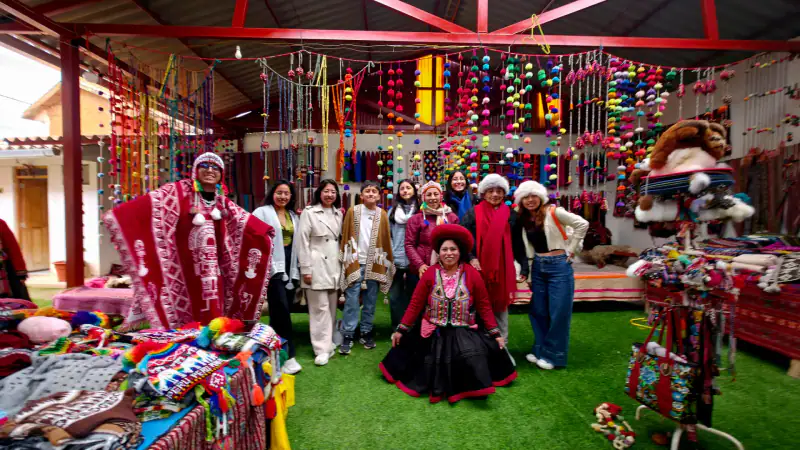
Our day tours include traditional lunches in the Sacred Valley, at Rainbow Mountain and at Humantay Lake.
Frequently asked questions
Ceviche, raw fish cured in lime juice with chilli and red onion, served with sweet potato and corn. In 2023 the practices around ceviche were inscribed on UNESCO’s list of Intangible Cultural Heritage.
Cuy al horno (roast guinea pig), chiriuchu, chicharrón, adobo, lechón, quinoa soup and Andean corn and potatoes. Cusco also has excellent restaurants serving modern Peruvian cuisine.
It is flavourful rather than very hot. Ají amarillo gives colour and gentle heat; rocoto is properly hot. Spicy sauces are usually served on the side.
Generally yes, if you choose busy stalls where food is cooked hot in front of you. Avoid tap water and ice of unknown origin, and eat raw seafood only at reputable places at lunchtime.
Papa a la huancaína, causa, quinoa soup, tacu tacu, vegetable saltado, chifa dishes and fresh fruit juices. Cusco and Lima have many vegetarian restaurants.
Pisco sour is the national cocktail. Chicha morada is the most popular non-alcoholic drink, and Inca Kola is the national soft drink.
Yes. Guinea pig (cuy) has been eaten in the Andes for thousands of years and is a dish for celebrations, especially in Cusco, Arequipa and the central highlands.
A market lunch costs S/10–15, a set menú del día S/15–25 and a main course in a tourist restaurant S/35–60. Tasting menus in top restaurants start around S/400.
Cover photo: Peruvian ceviche. Photo: Juan Carlos Fonseca Mata / Wikimedia Commons, CC BY-SA 4.0.