Rainbow Mountain weather by month: the best time to visit Vinicunca (and what each season really looks like)
Rainbow Mountain can be visited on every day of the year, but it is not the same mountain every month. In July you get deep blue skies and frozen mornings. In February you may walk through hail, find the stripes dusted with fresh snow and share the summit with almost nobody. Our guides have climbed Vinicunca hundreds of times in every season. This guide sets out what the weather is really like at 5,030 m, month by month: temperatures, rain, wind, light, crowds and how bright the colours look. It also tells you which month suits which kind of traveller, what to wear and when the ATV is the smarter choice.
The short answer
For the best chance of a clear sky and bright stripes with fewer people, go in April, May, September or October. For guaranteed dry weather, go from June to August and accept the cold and the crowds. In the rainy season, go anyway if those are your dates: start early, pack a rain shell and keep the ATV in mind.
Why the weather at Vinicunca is so different from Cusco
Cusco sits at 3,400 m. The trailhead is at about 4,400 m and the viewpoint at 5,030 m, roughly 1,600 m higher than the city. As a rule of thumb, air cools by about 6 °C for every 1,000 m you climb, so the summit is usually 8 to 10 °C colder than Cusco at the same hour. The mountain also stands next to the glaciers of the Ausangate range (6,384 m), which makes its own weather. Clouds build over the ice from late morning, and afternoon wind is common in every season.
The Peruvian Andes have two seasons rather than four. The dry season (May to September) brings stable high pressure, very low humidity, strong sun and nights well below freezing. The rainy season (December to March) brings moist air up from the Amazon. Mornings are often clear, but clouds pile up by late morning, with showers, hail or snow by early afternoon. April, October and November are the transition months, and in our experience they are often the most beautiful.
For the forecast before your tour, Peru’s national weather service SENAMHI publishes daily outlooks for the Cusco region, and the background of the mountain is summarised on Wikipedia.
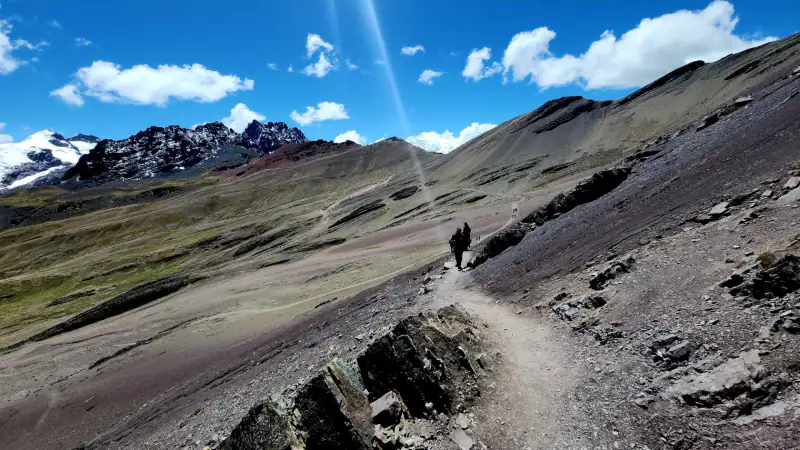
Rainbow Mountain weather month by month
This table sums up conditions on a typical tour, which reaches the summit between about 10:30 AM and 11:30 AM. Rainfall figures are long-term monthly averages for Cusco, given as a guide. The mountain usually gets a little more, and showers there are often snow or hail.
| Month | Sky & precipitation | At the top (late morning) | Cusco rain | Crowds | Our verdict |
|---|---|---|---|---|---|
| January | Clouds by 10–11 AM, frequent showers, hail or snow | 0–8 °C | ≈ 150 mm | Low (busy at New Year) | Possible, be flexible |
| February | The wettest month; snow can hide the stripes for a day or two | 0–7 °C | ≈ 135 mm | Very low | For the adventurous |
| March | Wet but improving; very green valleys | 1–8 °C | ≈ 110 mm | Low (busier at Easter) | Fair |
| April | Mostly sunny mornings, occasional afternoon showers | 2–10 °C | ≈ 45 mm | Moderate | Excellent |
| May | Dry, clear and crisp | 2–12 °C | ≈ 10 mm | Moderate | Excellent |
| June | Dry and sunny; freezing at dawn | 0–12 °C | ≈ 5 mm | High | Very good |
| July | The driest and coldest month; strong sun | −2 to 11 °C | ≈ 5 mm | Very high | Very good, busy |
| August | Dry, windy afternoons | 0–12 °C | ≈ 10 mm | Very high | Very good, busy |
| September | Dry, slightly warmer, first clouds | 2–13 °C | ≈ 25 mm | High | Excellent |
| October | Sunny mornings, some afternoon rain | 3–13 °C | ≈ 50 mm | Moderate | Excellent |
| November | More cloud, showers most afternoons | 2–12 °C | ≈ 75 mm | Low–moderate | Good |
| December | Rainy season begins; snow on the peaks | 1–10 °C | ≈ 120 mm | Low (busy at Christmas) | Fair–good |
For the city itself, see our Cusco weather by month guide. You will spend the evenings there, and it is warmer.
Dry season (May to September): blue skies, cold mornings, crowds
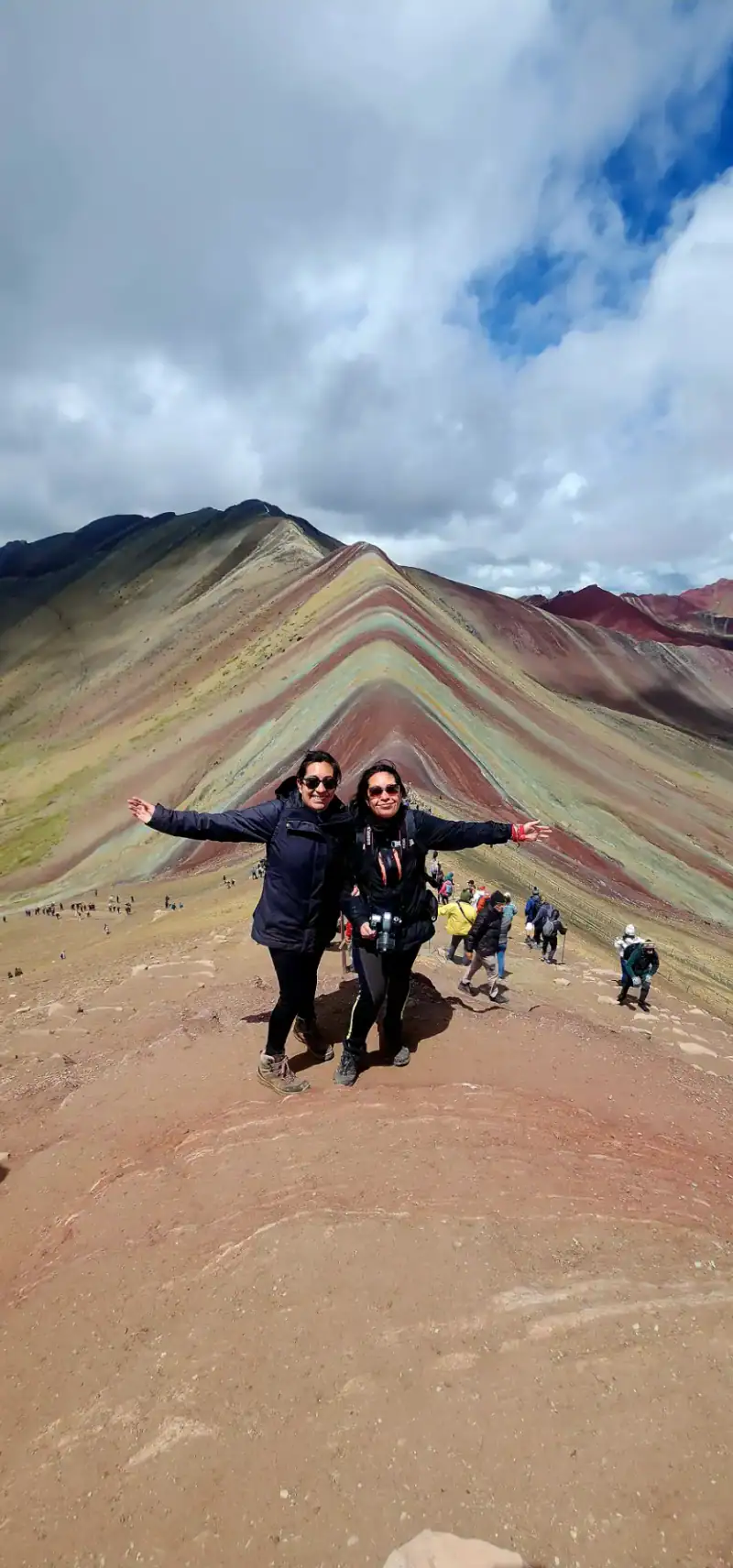
This is the classic Rainbow Mountain season, and it shows. Rain is almost non-existent and the sky is often cloudless from dawn to mid-afternoon. The sun is extremely strong at 5,000 m, so UV damage can happen in minutes even when the air feels cold. The stripes are sharp and the snow line of Ausangate stands out clearly behind the ridge.
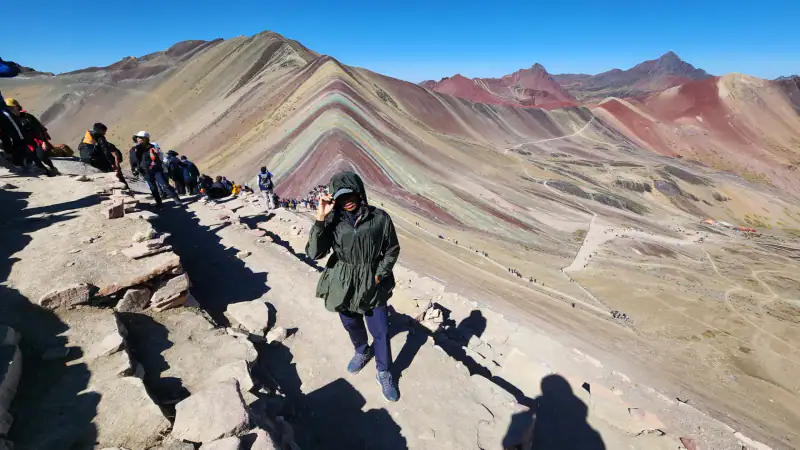
The price of perfect weather is cold and company. Our pickup is at 4:00 AM, and in June and July the temperature in the high valleys before sunrise is often −5 to −10 °C. By the time you start walking at about 8:00 AM it has climbed to around freezing, and on the summit at 11:00 AM you can be comfortable in sunshine, then shivering five minutes later when the wind picks up. Wear layers you can take off and put back on quickly.
July and August are also Peru’s holiday months for European and North American travellers, and the national holidays on 28–29 July bring many Peruvian visitors. On those days the summit path is a steady line of people. It is still a wonderful experience. Just do not expect solitude, and take your summit photos quickly, then walk a little along the ridge, where it is quieter.
Shoulder months (April, October, November): our favourite time
If your dates are flexible, aim for April or October. The rain has eased in April or not yet set in by October. Mornings are usually bright, the air is a little warmer than in July, and there are noticeably fewer people. April has an extra bonus: after the rainy season the valleys of the approach walk are green, so grazing alpacas and llamas stand against fresh grass rather than dry brown slopes.
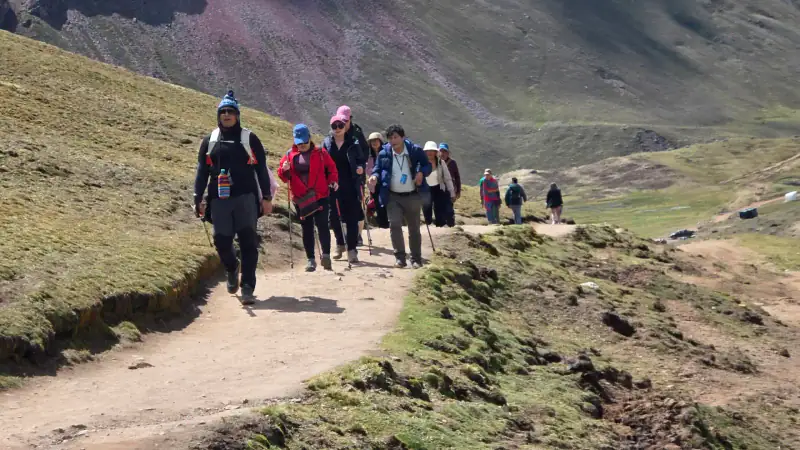
The catch is the afternoon. Clouds can build earlier than in the dry season, so a steady pace on the way up matters. Our groups aim to be at the viewpoint by 11:00 AM, before the cloud usually arrives. November is similar to October but a little wetter, and it is a good month for budget travellers because demand is low.
Rainy season (December to March): snow, mist and empty trails
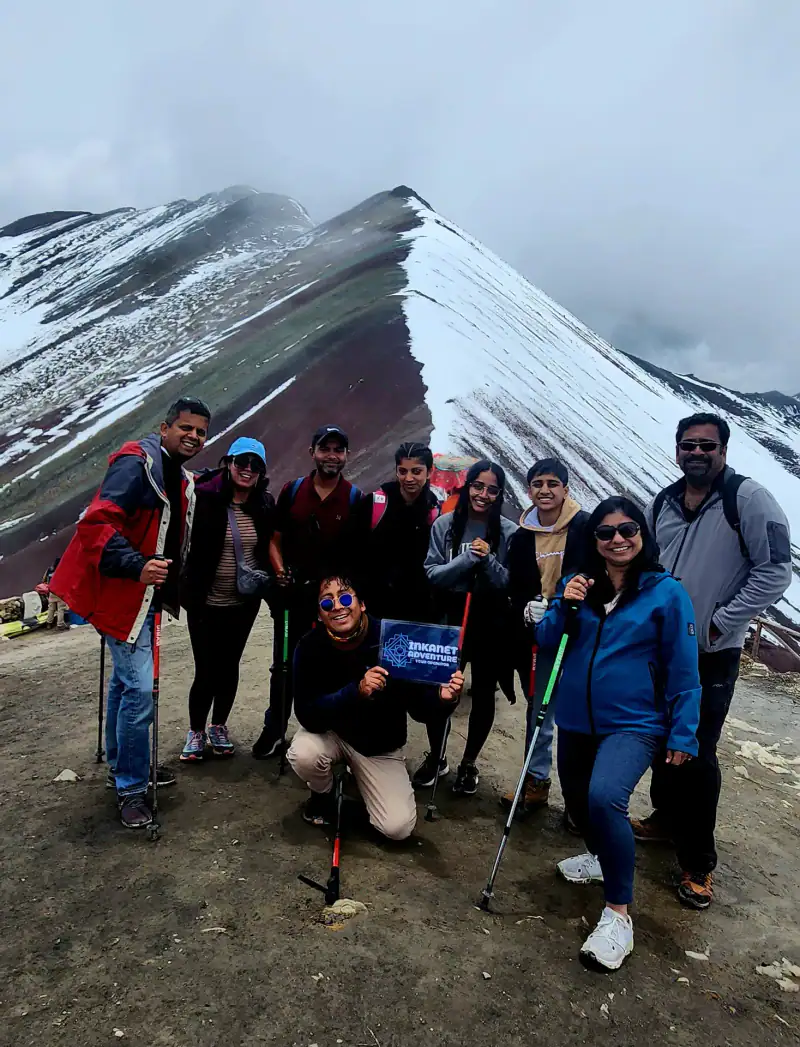
Many travellers worry that the rainy season means a wasted day. It rarely does. A typical wet-season day starts with a clear or partly cloudy morning, followed by thickening cloud and showers from late morning. At 5,000 m those showers are often hail or wet snow, not rain.
What you need to know:
- Snow can cover the stripes. After a heavy night snowfall the upper ridge may be white. It usually melts within a day or two in the strong sun, and a light dusting actually makes the colours below stand out. A full white-out is uncommon, but it happens a few times each season, mostly in February.
- The road is the bigger issue. The last stretch of road to the trailhead is unpaved and can turn muddy. On rare days of landslides, tours are rerouted or postponed, and we will always tell you the evening before.
- Visibility changes by the minute. Mist can hide the ridge, then clear for ten minutes. Be patient at the top. Our guides know the moments to wait.
- You will have the mountain almost to yourself. In February it is common to share the viewpoint with only a handful of groups.
Yes, with a good operator. The path is wide and not exposed. The main risks are cold and wet clothing, so a proper waterproof jacket and gloves matter more than anything. Our guides carry oxygen and a first-aid kit and turn back if a storm with lightning approaches the ridge.
When are the colours brightest?
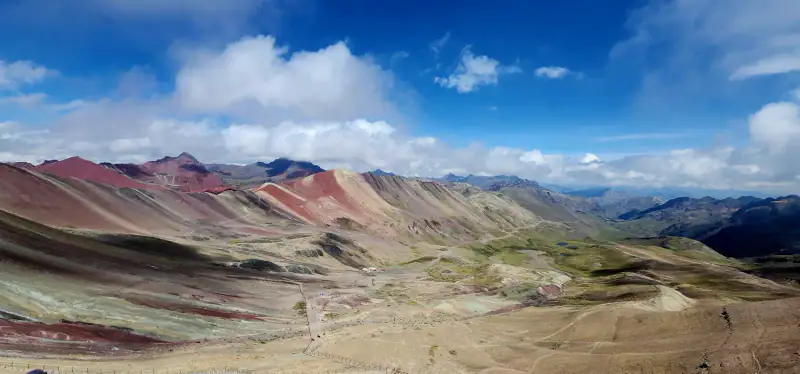
The stripes of Vinicunca come from mineral-rich sediments laid down in layers and then tilted by the rise of the Andes. Geologists attribute the reds and pinks to clays rich in iron oxide, the ochres and yellows to iron sulphides and limonite, the greens to chlorite, and the lilacs and purples to goethite and oxidized limonite. Three things change how they look:
- Moisture. Like a wet pebble, the surface looks deeper after a light shower or a melting frost. This is why the colours are often richer in April and after a wet-season morning than at the end of a dusty August.
- Light. Soft, even light, such as thin high cloud, shows the stripes most evenly. Hard midday sun in July is beautiful but flattens the colours a little. Cameras love the light just after a cloud passes.
- Snow. A thin dusting on the top frames the colours; heavy snow hides them. In practice this only matters from January to March.
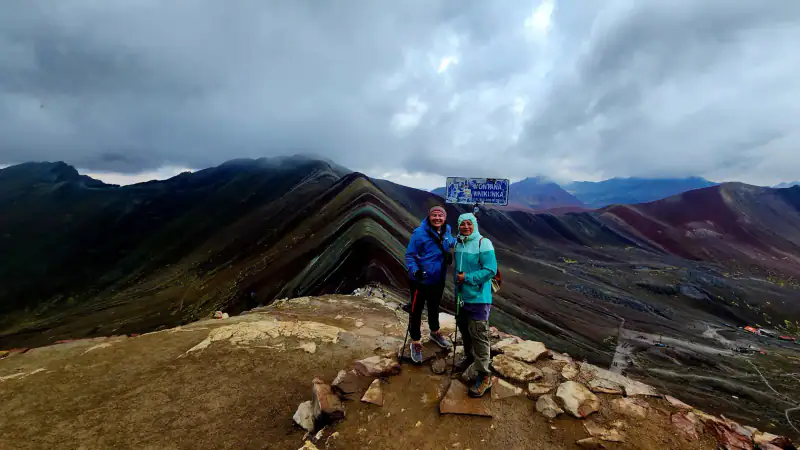
Do not trust heavily edited photos online. The real mountain is clearly striped but in softer, earthier tones than many images suggest, and it is spectacular in person. For more on the geology and the history of the site, read our complete Vinicunca guide.
How the weather changes during a tour day
Weather at Vinicunca follows a daily rhythm that matters as much as the month. This is the timeline of our Rainbow Mountain hike and what to expect at each stage:
| Time | Where | Typical conditions | What to wear |
|---|---|---|---|
| 4:00 AM | Pickup in Cusco (3,400 m) | Dark, 0–6 °C (colder June–Aug) | All your layers, hat and gloves |
| 6:00 AM | Breakfast in Cusipata | Dawn, frost on the fields in the dry season | Warm layers |
| 8:00 AM | Trailhead (≈ 4,400 m) | Coldest point of the walk, often below 0 °C | Fleece, jacket, gloves |
| 8:30–10:30 AM | Climb through the valley | Sun warms you quickly; little wind | Base layer, sun hat, sunscreen |
| 10:30–11:30 AM | Summit (5,030 m) | Wind picks up; clouds may form, especially Nov–April | Windproof jacket back on |
| 11:30 AM–1:00 PM | Descent | Showers possible in the wet season | Rain shell to hand |
| 5:30 PM | Back in Cusco | Evening chill | — |
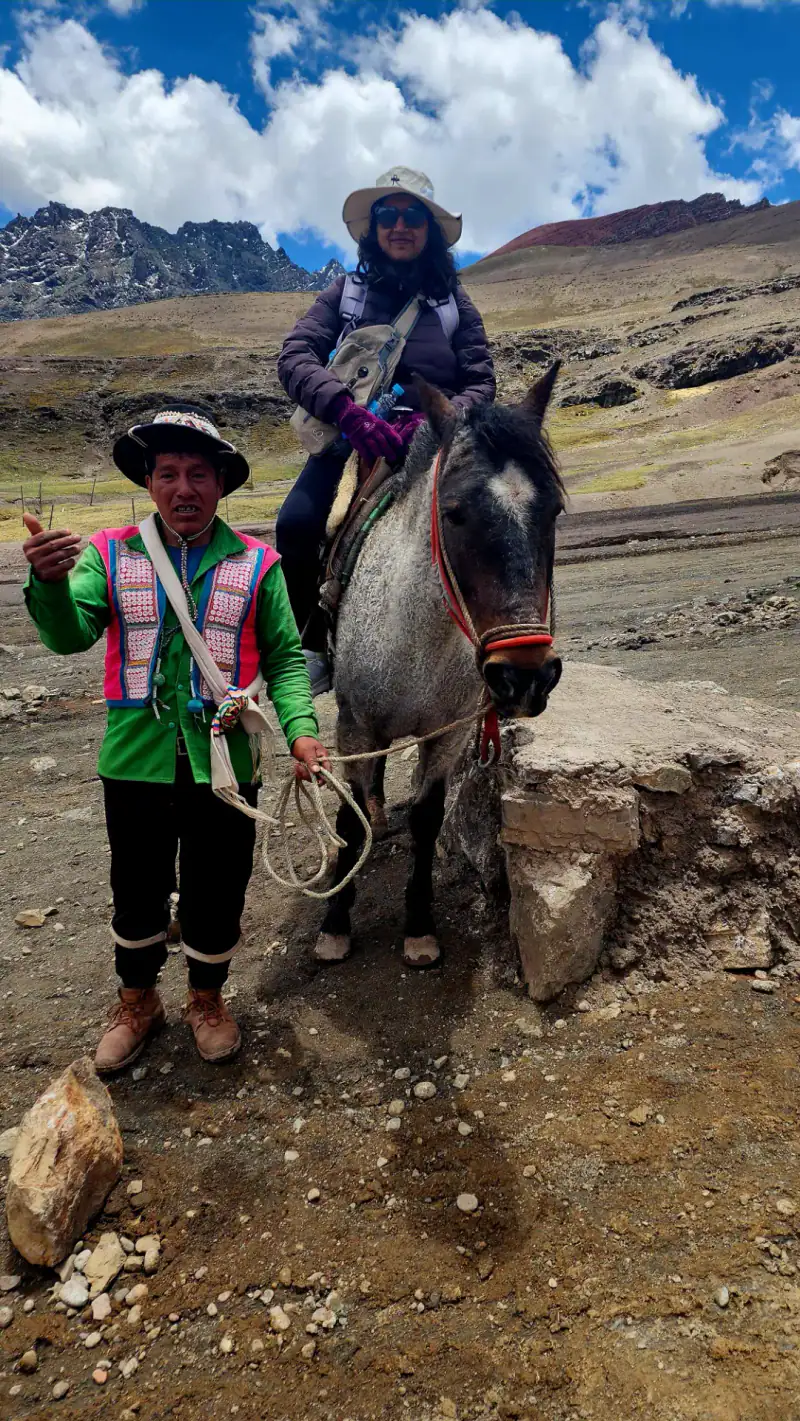
The lesson is the same in every month: the morning is your friend. If you are walking slowly, tell your guide early. Hiring a horse for part of the climb (about US $20, paid to the local community) can make the difference between a clear summit and a cloudy one.
Crowds by month and how to avoid them
Almost every tour leaves Cusco at the same hour, so most visitors reach the viewpoint within the same two-hour window. You cannot avoid the crowds entirely, but you can choose your month and your moment.
| Period | Crowd level | Tip |
|---|---|---|
| Mid-June to end of August | Very high | Keep a steady pace, take photos at the viewpoint, then walk 5 minutes along the ridge or to the Red Valley. |
| 28–29 July and Easter week | Peak | Book ahead. Expect queues at the summit sign. |
| Christmas to New Year | High | Many South American visitors. Rain likely in the afternoon. |
| April–May, September–October | Moderate | The sweet spot for weather and space. |
| February–March, November | Low | The quietest months. Pack for rain. |
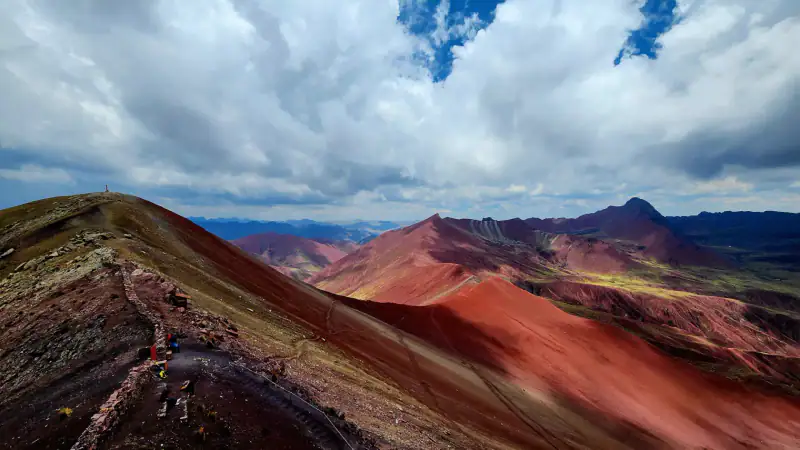
Two more ideas if you want space. Combine the summit with the Red Valley (local entrance about S/10), a short extra walk from the top that most visitors skip. Or visit Palcoyo, a quieter rainbow mountain with three striped ridges and an easier walk, which we compare in Palcoyo vs Vinicunca.
Rain, cold or short on energy? When to choose the ATV
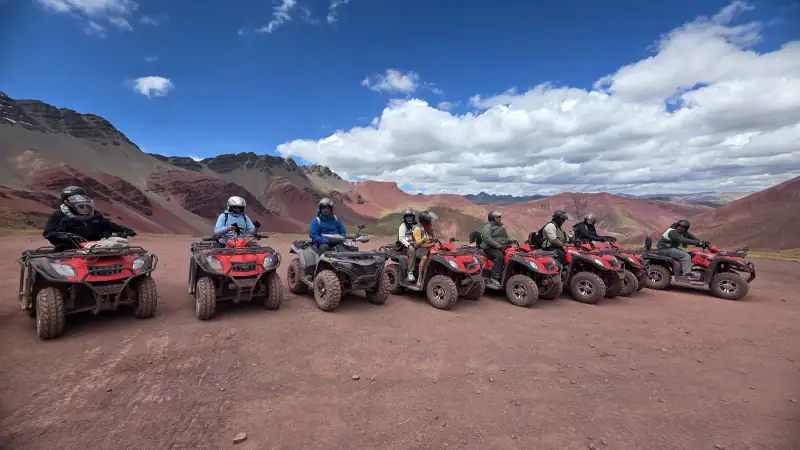
The weather is one of the best reasons to choose the ATV. The Rainbow Mountain ATV Express (US $90, entrance included) replaces almost all of the walking with a quad ride through the valleys. You park a five-minute walk below the viewpoint. That means you spend much less time exposed at altitude, and you can reach the summit while the sky is still clear.
| Situation | Hike (from US $35) | ATV Express (US $90) |
|---|---|---|
| Dry season, fit and acclimatized | Ideal, the classic experience | Good if you prefer less effort |
| Rainy season afternoon showers | Fine with good rain gear | Better, less time exposed |
| First or second day in Cusco | Not recommended | Better, but still high |
| Children or older travellers | Possible with a horse | Better |
| Photographers wanting time at the top | Good | Good, and you arrive fresher |
There is also the Rainbow Mountain and Red Valley ATV tour (from US $65), which adds the Red Valley by quad. No licence or previous experience is needed for either. For a full comparison, read Rainbow Mountain by ATV or on foot.
What to wear in each season
The secret is layers, in every month. You start below freezing and climb in strong sun, and the summit can be windy. A simple system works best:
| Item | Dry season (May–Sept) | Rainy season (Dec–March) | Shoulder months |
|---|---|---|---|
| Base layer | Thermal top (merino or synthetic) | Thermal top | Thermal or light long-sleeve |
| Mid layer | Warm fleece or light down | Fleece | Fleece |
| Outer layer | Windproof jacket | Waterproof jacket and ideally rain trousers | Waterproof shell |
| Legs | Hiking trousers; thermal leggings in June–Aug | Quick-dry trousers, no jeans | Hiking trousers |
| Feet | Broken-in hiking shoes | Waterproof boots, spare socks | Hiking shoes or boots |
| Head & hands | Warm hat, sun hat, gloves | Warm hat, waterproof gloves | Hat and light gloves |
| Sun | SPF 50, lip balm, sunglasses | SPF 50 (the UV is still strong) | SPF 50, sunglasses |
Also bring 1–1.5 litres of water, snacks, a small backpack and cash in soles for the entrance (S/30), the Red Valley, a horse and the toilets. Our full Cusco packing list covers the rest of your trip.
Altitude: the factor that matters more than the weather
Whatever the month, the biggest factor on the day is how well you have acclimatized, not the weather. Vinicunca is 1,600 m higher than Cusco, and the thin air makes the cold feel colder and the climb feel steeper. Plan Rainbow Mountain for your third or fourth day in the region, after an easier day such as the Sacred Valley (2,800–3,000 m) or Humantay Lake.
Drink water, eat lightly the night before, skip alcohol and walk slowly from the very first step. If you get a strong headache, nausea or dizziness, tell your guide. All our guides carry oxygen. Our altitude sickness guide explains the symptoms and remedies, and our guide to hiking in Cusco shows how to order your hikes so that each one prepares you for the next.
Which month is best for you?
| You are… | Best months | Why |
|---|---|---|
| Looking for a clear sky above all | June–August | Almost no rain, the most reliable views |
| Wanting good weather with fewer people | April, May, September, October | Sunny mornings, moderate crowds |
| A photographer | April, October | Green valleys, soft light, clouds for drama |
| Travelling on a budget or hating crowds | November, February, March | Few visitors; accept some rain |
| Hoping to see snow on the stripes | January–March | A dusting is common after cold nights |
| Combining with the Inca Trail | May, September, October | Trail open, less crowded than July |
| Visiting for Inti Raymi | June | Book early. See our June planner. |
Planning June? Read our planner for Inti Raymi with Machu Picchu and the Inca Trail. Still wondering whether the day is for you? We answer honestly in Is Rainbow Mountain worth it?
Ready to see the stripes?
Daily shared tours from Cusco with 4:00 AM pickup, breakfast, lunch, oxygen and a local guide, for groups of 14–18 max.
Frequently asked questions
May and September offer the best mix of dry weather and moderate crowds, with April and October close behind. June to August are the driest months but also the coldest and busiest.
Yes. Tours run every day of the year. From December to March expect clear or partly cloudy mornings and showers, hail or snow from late morning. Bring a waterproof jacket and gloves.
Sometimes, between January and March. A light dusting is common after cold nights and usually melts within a day or two. A heavy snowfall that hides the stripes completely happens only a few times each season.
At the summit in the late morning it is usually between 0 and 14 °C, colder with wind. Before sunrise at the trailhead it can drop to −5 or −10 °C in June and July.
Before about 11:30 AM. Clouds and wind usually build from late morning, especially between November and April. Our hike reaches the top between 10:30 and 11:30 AM.
From mid-June to August and on Peruvian holidays, yes. April, May, September and October are calmer, and February, March and November are the quietest months.
They are clearly striped but softer and earthier than many edited photos. They look richest after light moisture and under soft light, and least vivid under heavy snow.
It is a good option. The ATV Express leaves you a five-minute walk from the viewpoint, so you spend less time exposed to cold, wind and rain at 5,000 m.