Inti Raymi 2027, Machu Picchu and the Inca Trail: how to plan the perfect June trip
On Thursday 24 June 2027 Cusco will once again stage Inti Raymi, the Inca Festival of the Sun: hundreds of performers in Inca dress, a ceremony spoken in Quechua and tens of thousands of spectators on the slopes of Sacsayhuamán. June is also the clearest month of the year at Machu Picchu and on the Inca Trail, which is exactly why it is the hardest month to book. This guide is written by our team in Cusco, who work the festival week every year. It explains how the day unfolds, how to get a seat (or watch for free), how to fit the Inca Trail, Machu Picchu and Rainbow Mountain around 24 June, and what to book first, starting now.
Inti Raymi 2027 at a glance
Inti Raymi is a single day, but it sits inside a whole month of celebrations. Cusco calls June its mes jubilar, its festival month, and from the first week there are parades of schools, neighbourhoods and folk-dance groups almost every day in the Plaza de Armas. If you can, plan to be in Cusco from around 18–19 June. That gives you time to acclimatize, see one of the big day trips and arrive at 24 June rested rather than breathless.
Book the Inca Trail permit first (June dates sell out months ahead), then Machu Picchu tickets and the train, then your Cusco hotel for 20–25 June, then the Inti Raymi seat. Day trips such as Rainbow Mountain can wait until you know your dates.
What Inti Raymi is, and why it is held on 24 June
In the Inca empire, Inti Raymi (“festival of the sun” in Quechua) was the most important ceremony of the year. It marked the June solstice, when the sun reaches its lowest point in the southern sky and the new agricultural cycle begins. The Sapa Inca, considered a son of the sun, led offerings and rites in Cusco, the capital of Tawantinsuyu. The festival was suppressed during the colonial period, and the version you will see today is a revival first staged in 1944, written by Cusco intellectuals from the descriptions of colonial chroniclers such as the Inca Garcilaso de la Vega.
The astronomical solstice falls on 20 or 21 June, but the modern festival is always held on 24 June. It is the same day as Peru’s Day of the Peasant (Día del Campesino) and the feast of Saint John. It is theatre rather than a religious service, but it is performed with real devotion. The actors are local, the script is in Quechua and the costumes, music and choreography are prepared for months. For many Cusqueños it is the proudest day of the year. For a visitor, it is a unique window onto Andean identity, as long as you understand what you are watching. Our guide to Inti Raymi and the festivals of Cusco tells the story in more detail, and Wikipedia’s Inti Raymi article collects the historical sources.
The day hour by hour: the three stages
The ceremony moves through three historic places, all within walking distance of each other. Exact times are announced by the organiser, Cusco’s municipal festivals company, a few weeks before. The pattern below is the one the festival has followed in recent years.
| Approx. time | Stage | What happens | How to watch |
|---|---|---|---|
| 8:00–9:30 | Qorikancha, the Temple of the Sun | The Inca greets the rising sun from the esplanade of the temple; opening rites and dances | Free, from the gardens and Avenida El Sol; arrive by 7:00 |
| 10:00–12:00 | Plaza de Armas (Huacaypata) | Procession of the court into the main square; meeting with the city authorities | Free; balconies of cafés are booked weeks ahead |
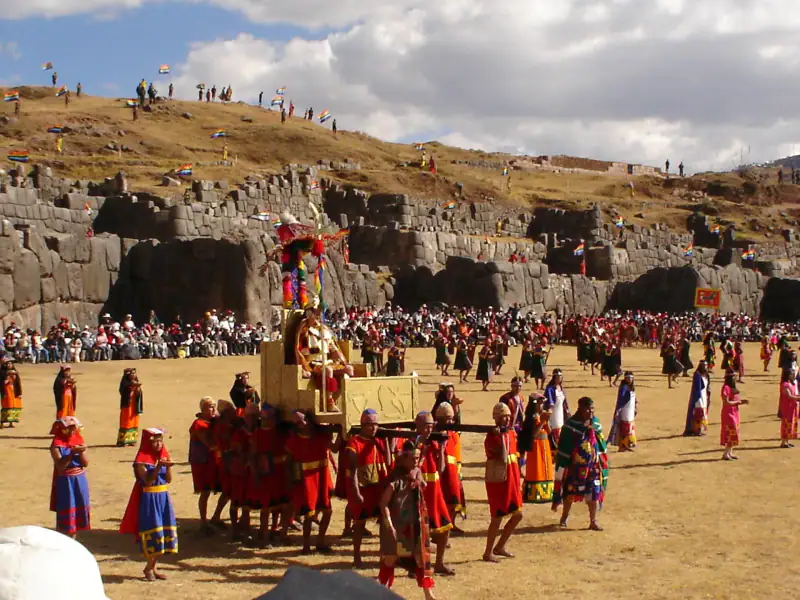
| 13:00–16:30 | Sacsayhuamán | Main ceremony: the Inca arrives on his litter, offerings, the sacred fire, the reading of omens and massed dances | Paid grandstand seats, or free from the hills above |
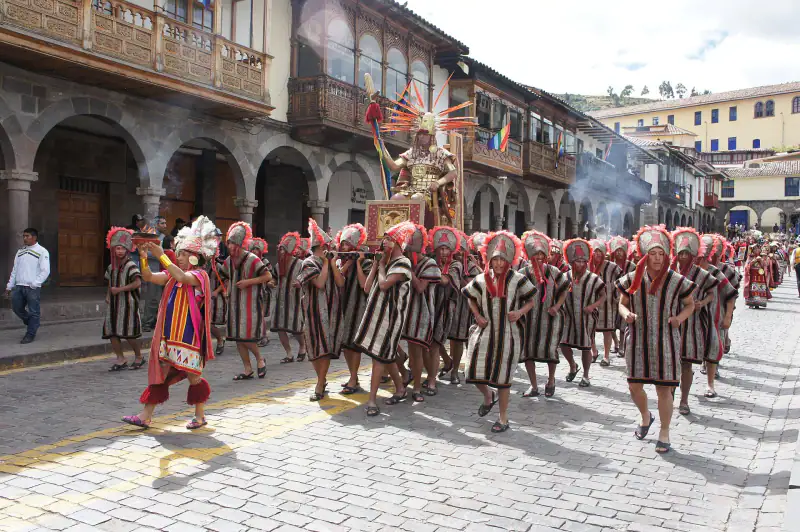
Between the Plaza de Armas and Sacsayhuamán the performers walk up the steep streets of San Cristóbal. Spectators heading for the hills walk up at the same time, so the climb is slow and crowded. The 3,400 m altitude of the city and roughly 3,700 m at Sacsayhuamán make it tiring if you only arrived the day before.
Inti Raymi tickets: grandstand seats or free viewing?
Only the main ceremony at Sacsayhuamán has paid seating. Temporary grandstands are built along the esplanade and sold by the official organiser and authorised agencies. In recent years seats have been priced in US dollars, typically from around US $150 per person, with the central stands closest to the action costing considerably more. Prices for 2027 are not published yet. Seats are numbered, sold out well before the day in most years, and come with a fixed entry time in the early afternoon.
| Grandstand seat | Free hillside | |
|---|---|---|
| View | Front-on, close to the performers | Distant, from above; better with binoculars |
| Arrival | About an hour before the start | 7:00–9:00 to get a decent spot |
| Comfort | Your own seat, toilets nearby | Grass and rock, few toilets, strong sun |
| Cost | From ≈ US $150 (2027 prices pending) | Free |
| Best for | Photographers, older travellers, a once-in-a-lifetime trip | Budget travellers and those happy to wait |
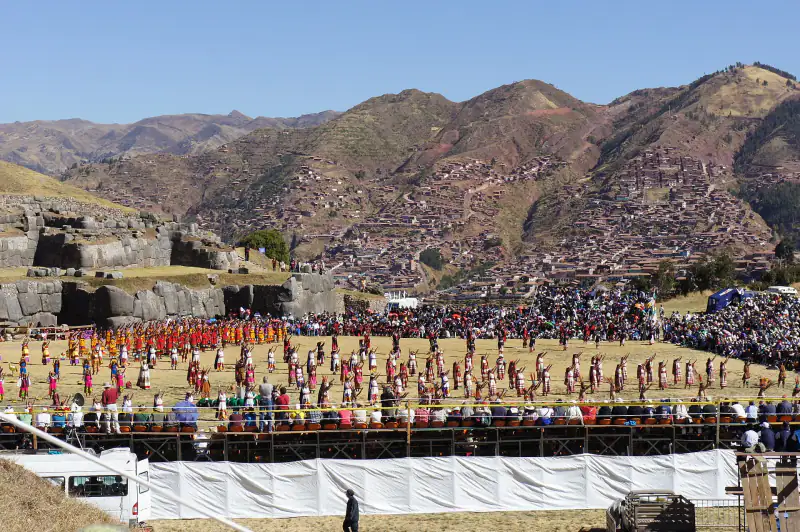
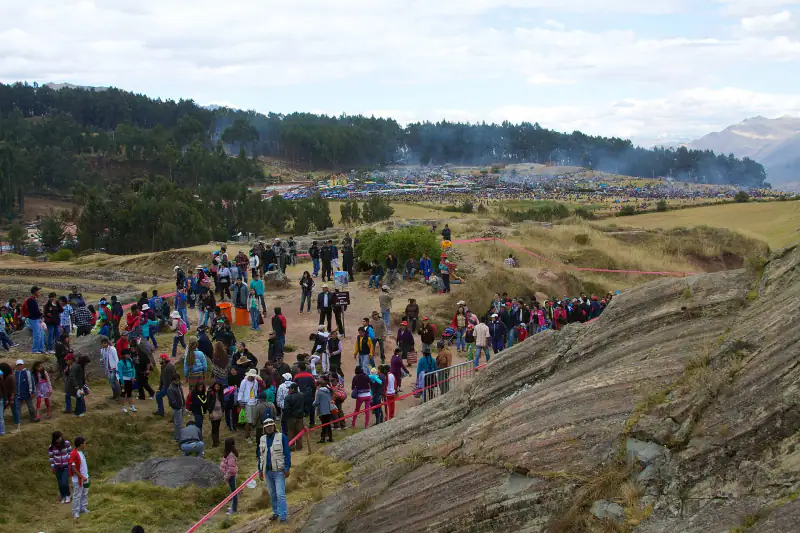
The free option is very popular with local families, and the atmosphere on the hillside is part of the experience: picnics, music and vendors selling chicha and roasted corn. The trade-off is distance and waiting. You will see the colours and the choreography, but not the faces or the details of the ritual. Whichever you choose, buy seats only from the official organiser or a registered Peruvian tour operator. Every June there are reports of fake tickets sold online.
The festival calendar around Inti Raymi 2027
If your dates are flexible, it is worth knowing what else happens in late May and June. Several of these festivals depend on the date of Easter, so they move every year. These are the 2027 dates.
| Date (2027) | Festival | Where | Worth knowing |
|---|---|---|---|
| Days before 23 May | Qoyllur Rit’i pilgrimage | Sinakara valley, below Ausangate (≈ 4,700 m) | A demanding high-altitude pilgrimage, not a tourist show; go only with an experienced guide |
| Thu 27 May | Corpus Christi | Cusco Cathedral and Plaza de Armas | Fifteen saints and virgins are carried into the square; try chiriuchu, the festival dish |
| Usually 2nd week of June | Renewal of the Q’eswachaka bridge | Apurímac canyon, ≈ 3.5 h from Cusco | Four communities weave a new Inca rope bridge by hand; read the story of the last Inca bridge |
| All of June | Cusco’s festival month | Plaza de Armas | Daily parades of schools and dance groups |
| Thu 24 June | Inti Raymi | Qorikancha · Plaza de Armas · Sacsayhuamán | The main event; the city is at its busiest from 20 to 25 June |
You can visit the Q’eswachaka bridge on our full-day Q’eswachaka tour any month. The renewal ceremony itself is a community event, and visitors are welcome to watch respectfully.
Machu Picchu in June: when to go and which ticket to book
June is the start of the best visibility of the year at Machu Picchu, with dry trails and the classic view of Huayna Picchu usually clear by mid-morning. It is also high season, so tickets and trains go early. For a festival trip we recommend visiting the citadel before 24 June. Trains and buses are calmer in the days just before the festival, and you then spend 24 June in Cusco without watching the clock.
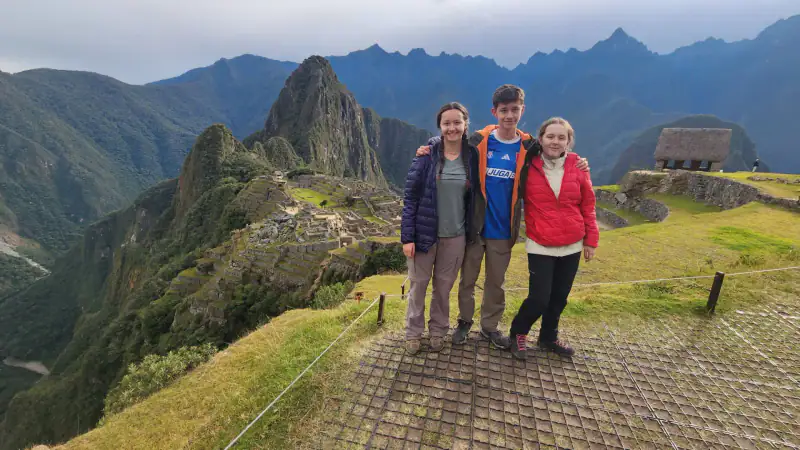
- Ticket: since 2024 entry is by timed ticket on fixed circuits. For a first visit, book Circuit 2, route 2-A (Classic); our guide to Machu Picchu tickets and circuits explains every route. You can follow open dates in our Machu Picchu availability calendar.
- Price of the entrance: about S/163 for foreign adults in 2026 (≈ US $45), more with Huayna Picchu or Machu Picchu Mountain. Tickets are sold on the Ministry of Culture’s official platform, tuboleto.cultura.pe.
- Day trip or overnight: our Machu Picchu day tour (from US $375) goes and returns in one long day. The 2-day tour (from US $425) adds a night in Aguas Calientes and an early, quieter entry.
- Trains: both operators, PeruRail and Inca Rail, run from Ollantaytambo. In June the convenient morning departures sell out first.
Machu Picchu before the festival
Entrance on the right circuit, train, bus and guide arranged together. From US $375.
Walking the Inca Trail in June 2027
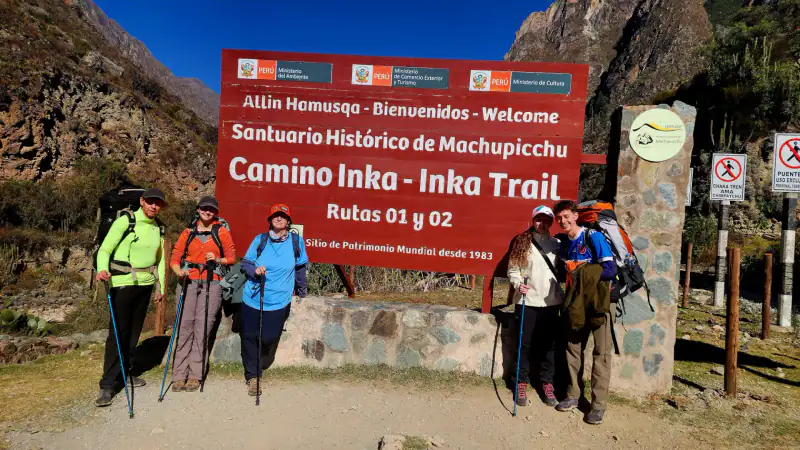
Walking into Machu Picchu through the Sun Gate is the most memorable way to arrive, and June is one of the best months for it: dry stone steps, clear passes and cold, starry nights at camp. The catch is the permit. The Ministry of Culture allows about 500 people a day on the Classic Inca Trail, guides and porters included, which leaves roughly 200 places for trekkers. Permits are sold only through licensed operators with your passport details. June dates are among the first to sell out, so if you want the trail in June 2027, now is the time to book. Our live Inca Trail permit calendar shows the dates that are still open, and how Inca Trail permits work explains the rules.
| Option | Days | Walking | Highest point | From | Fits a festival trip if… |
|---|---|---|---|---|---|
| Classic Inca Trail | 4 | 40–45 km | 4,215 m (Dead Woman’s Pass) | US $820 | You start by 18 June and are back in Cusco on the 21st |
| Short Inca Trail | 2 | ≈ 10 km | 2,720 m (Sun Gate) | US $585 | You want the Sun Gate with less time and effort |
| One-day Inca Trail | 1 | 12–15 km | 2,720 m | US $490 | You have a single day free before or after the 24th |
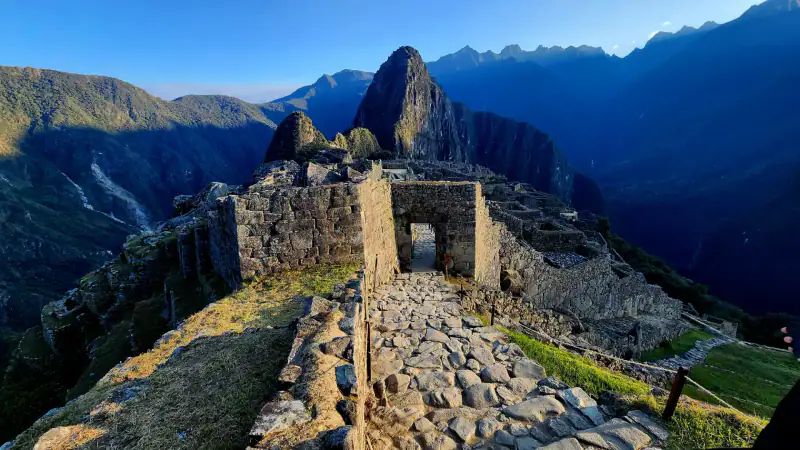
The golden rule for June is simple: finish the trek before 23 June, or start it on the 25th. The Classic Inca Trail ends with a guided visit of Machu Picchu and the train back to Cusco in the evening of day 4. You need at least one full night’s sleep before a long day on your feet at Inti Raymi. If the Classic trail is full, the Short Inca Trail uses a separate quota and often still has space. The Salkantay and Lares routes need no Inca Trail permit at all (see alternative treks to Machu Picchu).
Rainbow Mountain, on foot or by ATV, in June
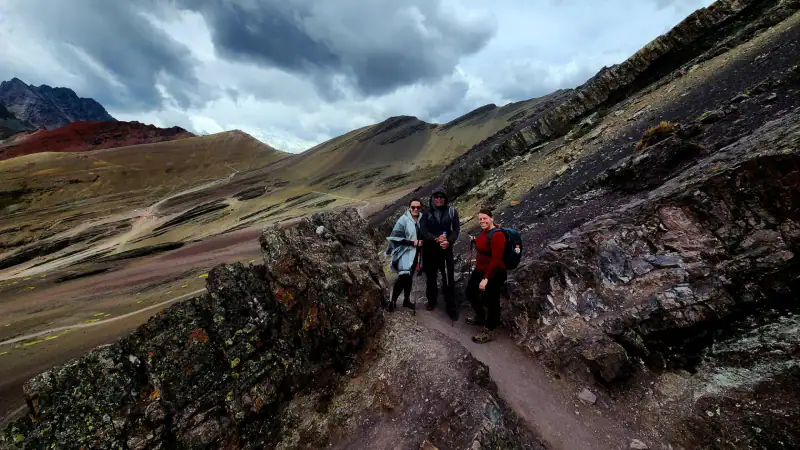
June gives the sharpest colours at Rainbow Mountain (Vinicunca, 5,030 m): blue skies, no rain and often a dusting of snow on the peaks behind. It also gives the coldest dawns of the year, below freezing at the trailhead, so dress in layers. Because it is the highest point of most trips, schedule it after two or three days in Cusco and never on the day before Inti Raymi if you plan to hike. You will want fresh legs for the 24th.
| Option | On foot | Departure | Price | Best for |
|---|---|---|---|---|
| Classic hike | ≈ 3 h up + 1.5 h down | 4:00 AM | US $35 + S/30 entrance in cash | Fit, acclimatized hikers |
| ATV + Red Valley | ≈ 2 h in total | 4:00 or 6:00 AM | US $65 per quad (1 rider) or US $120 (2 riders) + S/30 | Adventure and two landscapes |
| ATV Express | 5 min each way | 6:00 AM | US $90, entrance included | Minimal effort, short trips |
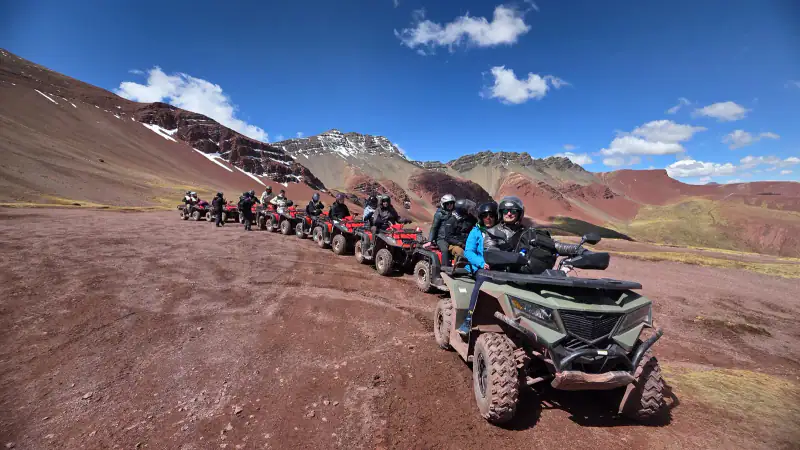
On a festival trip the ATV options make a lot of sense. They save energy at altitude, and the Express version is back in Cusco in time for an evening in the plaza. We compare the three in detail in Rainbow Mountain by ATV or on foot. If you would rather hike elsewhere, our guide to the best hikes in Cusco ranks every route by effort and altitude.
Two sample itineraries for June 2027
Both plans put the easy, lower excursions first, the high-altitude days in the middle and 24 June in Cusco with nothing else booked. Adjust the start date to your flights, but keep the order.
Plan A · 11 days with the Classic Inca Trail
| Day | Date | Plan | Sleep |
|---|---|---|---|
| 1 | Tue 15 June | Arrive in Cusco, rest, coca tea and an early night | Cusco |
| 2 | Wed 16 June | Cusco city tour in the afternoon (half day) | Cusco |
| 3 | Thu 17 June | Sacred Valley full day, lower and warmer (≈ 2,800 m) | Cusco |
| 4–7 | Fri 18 – Mon 21 June | Classic Inca Trail; Machu Picchu on the morning of day 7, train back that evening | Camps, then Cusco |
| 8 | Tue 22 June | Rest day: San Pedro market, a massage, festival parades | Cusco |
| 9 | Wed 23 June | Rainbow Mountain ATV Express (back mid-afternoon) | Cusco |
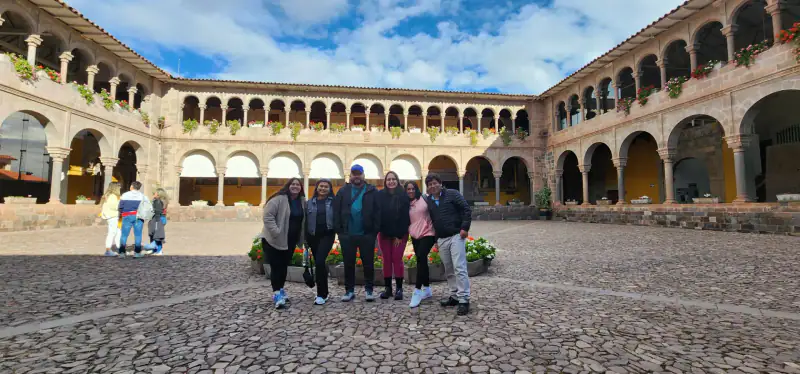
| 10 | Thu 24 June | Inti Raymi: Qorikancha, Plaza de Armas, Sacsayhuamán | Cusco |
| 11 | Fri 25 June | Fly home or continue to Puno or the Amazon | — |
Plan B · 7 days without a trek
| Day | Date | Plan | Sleep |
|---|---|---|---|
| 1 | Fri 18 June | Arrive in Cusco and rest | Cusco |
| 2 | Sat 19 June | City tour and a walk through San Blas | Cusco |
| 3 | Sun 20 June | Sacred Valley full day | Cusco |
| 4–5 | Mon 21 – Tue 22 June | Machu Picchu 2 days with a night in Aguas Calientes | Aguas Calientes, then Cusco |
| 6 | Wed 23 June | Humantay Lake or the Rainbow Mountain ATV Express | Cusco |
| 7 | Thu 24 June | Inti Raymi; fly out on the 25th | Cusco |
Short on time? Swap the Classic trail in Plan A for the Short Inca Trail on 20–21 June and the trip shrinks to nine days. Travelling with children or older relatives? Plan B with the ATV Express is the gentlest version. More ideas in Cusco in June.
What to book, and when: the countdown to 24 June 2027
| When | Book | Why |
|---|---|---|
| Now (Nov–Dec 2026) | Inca Trail permit | Fixed daily quota, personal and non-transferable; June sells out first |
| Jan–Feb 2027 | Machu Picchu ticket, especially Huayna Picchu, and the train | Timed tickets per circuit; the best hours go first |
| Jan–Mar 2027 | Hotel in Cusco for 20–25 June | Central hotels fill up and prices rise for the festival week |
| As soon as sales open | Inti Raymi grandstand seat | Numbered seats, limited stands; buy only from official sellers |
| May–June 2027 | Day trips: Rainbow Mountain, Humantay, Sacred Valley | Shared groups leave daily; book online up to a few hours before pickup |
A practical tip: send us your dates once you know them. Inca Trail permits, Machu Picchu tickets and trains are named and cannot be refunded once issued, so we check all three against each other before we buy anything.
How much does a June trip cost?
Indicative prices per person for the experiences in this guide, excluding flights and hotels. Our prices are the same in June as in any other month. What rises during the festival week is accommodation.
| Experience | Price per person | Notes |
|---|---|---|
| Classic Inca Trail, 4 days | from US $820 | Permit, Machu Picchu entrance, guide, porters, meals, train back |
| Short Inca Trail, 2 days | from US $585 | Hotel night in Aguas Calientes |
| Machu Picchu day tour | from US $375 | Train, bus, entrance and guide |
| Rainbow Mountain hike | US $35 + S/30 | Entrance paid in cash on the day |
| Rainbow Mountain ATV Express | US $90 | Entrance included |
| Cusco city tour | from US $18 | Entrances not included (tourist ticket) |
| Inti Raymi grandstand seat | from ≈ US $150 | 2027 prices not yet published |
June weather and what to pack
June is the heart of the dry season: sunny days around 19 °C in Cusco, nights near 0 °C and frost at dawn on high excursions. Rain is rare. At Sacsayhuamán you will spend hours in strong sun at 3,700 m, then the temperature drops quickly after 4:00 PM.
- Down jacket or warm fleece, hat and gloves for mornings, evenings and the trek camps.
- Sun hat, sunglasses and SPF 50+ sunscreen; the UV index at this altitude is very high.
- A small cushion or foldable mat and snacks if you plan to watch from the hills.
- Water, lip balm and a reusable bottle; the air is very dry.
- Your original passport, which you need for Machu Picchu and the Inca Trail checkpoint.
The full list is in our Cusco packing list and, for the trek, what to pack for the Inca Trail.
Altitude: the part most people underestimate
Cusco sits at 3,400 m, Sacsayhuamán at about 3,700 m, Dead Woman’s Pass at 4,215 m and Rainbow Mountain at 5,030 m. Most travellers feel mild symptoms the first day or two: headache, shortness of breath and poor sleep. Take it easy on arrival, drink water, eat light and save the highest days for later in the trip. Read our altitude sickness guide before you fly, and ask your doctor about medication if you have had problems at altitude before.
A worsening headache, vomiting, confusion or breathlessness at rest are warning signs. Tell your guide straight away. Our teams carry oxygen and a first-aid kit on every high-altitude tour.
Practical tips for 24 June
- Start early. Have breakfast by 7:00 and walk to Qorikancha. Taxis are scarce and many streets close to traffic.
- Travel light. Bring a small backpack with water, snacks, layers and sun protection. Keep phones and wallets in a front pocket, because crowds attract pickpockets.
- Book lunch, or skip it. Restaurants near the plaza are full. Many people eat early, or picnic on the hills.
- Respect the ceremony. Do not climb on Inca walls, fly drones or enter the performance area. This is a sacred site and a protected heritage zone (UNESCO lists the City of Cusco).
- Plan the evening. The party continues in the city; keep the next morning free if you can.
Frequently asked questions
Thursday 24 June 2027. It starts in the morning at Qorikancha, continues in the Plaza de Armas and ends with the main ceremony at Sacsayhuamán in the afternoon.
Only the grandstands at Sacsayhuamán are paid. In recent years seats have started at around US $150 per person, with central stands costing more. Prices for 2027 are not yet published. The other two stages are free.
Yes. The ceremonies at Qorikancha and the Plaza de Armas are free, and thousands of people watch the main ceremony from the hills above Sacsayhuamán. Arrive between 7:00 and 9:00 for a good spot.
Yes. Finish the Classic Inca Trail by 21–22 June, or start it on 25 June, so you are in Cusco and rested on the 24th. Book the permit first: June dates sell out months in advance.
Before, ideally. Trains and hotels are calmer in the days just before the festival, and you can then enjoy 24 June in Cusco without an early train the next day.
Yes, every day. June has the clearest skies and very cold dawns. You can hike (US $35 plus the S/30 entrance) or ride an ATV (Express US $90 with the entrance included).
Seven days is a comfortable minimum without a trek. With the Classic Inca Trail, allow ten or eleven days so you can acclimatize before the trail and rest before the festival.
Yes, especially from 20 to 25 June. Book permits, tickets and hotels early. Day tours still run daily and can usually be booked a few days ahead.